












Seven days of uncertainty following a breast biopsy become a deeply personal reckoning with cancer, family history and fear. From that experience, Euronews reporter Monica Pinna explores Europe's persistent inequalities in early detection and care.
Nine o'clock on an ordinary Monday morning. The designated day of an appointment I'd put off for a year, maybe two — too long.
 ADVERTISEMENT
I get undressed and enter the room. It's all just routine — isn't it?
"Madame, don’t move. I have to move you into the right position. Turn slightly. Not like that. Let me do it. Stay still. You're too stiff; relax.” The woman is touching me, moving, flattening and squeezing one of my breasts into the machine. It ends up looking as flat as a slice of the Italian sliced cheese 'Sottilette'.
And then the other one. “Turn around. Let me move it.” The process starts again with my breasts being squeezed sideways, which is unpleasantly painful, something many women are familiar with.
When it's over, I'm left alone in a tiny room — half naked, waiting. In that small barren space, my mind races, hitting highs and lows, thinking of the glimpse I got of the X-ray images of my breasts, of the shapes and shadows, looking like the branches in a stylised painting of a giant oak tree.
Is there cancer hidden in those pictures that I can’t interpret? Don't we all think that after looking at those black-and-white encrypted images?
I’m not even sure how long I've been surrounded by those four claustrophobic walls when the door finally opens and I'm moved to another dark room to wait for a doctor and the next examination. But first the smiling doctor says: “Your mammogram is absolutely fine.” And the frown you didn’t even realise was carved into your forehead disappears. You breathe in deeply and then exhale for a long time.
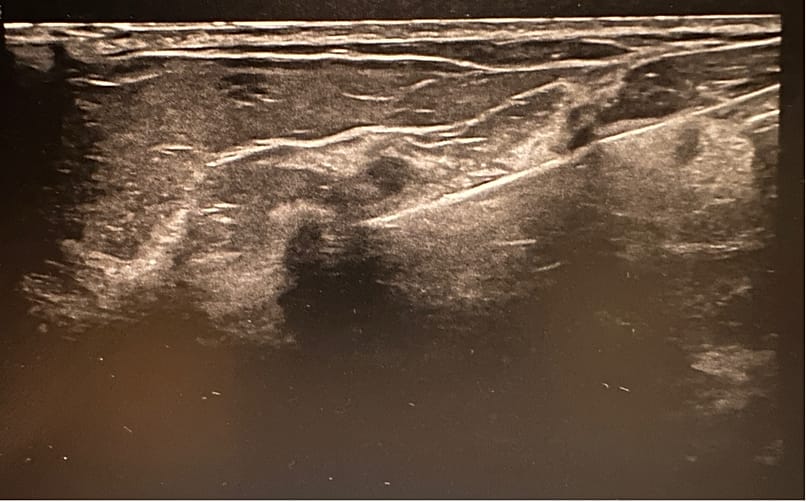
It's time for the echography. You start talking as the lubricating gel is smeared on one breast and then on the other. The scanner's moving probe sends sound waves bouncing off the tissues in your breast, revealing shadows, white and black stains, waves, darker patches.

There's a whole world in our breasts we totally ignore and that is just impossible for us to read. I'm explaining to the radiologist how much I hate all this, how almost every woman in my family has had breast cancer and how anxious this all makes me, when she starts focusing the probe on the one particular area and stops talking. She pushes the probe down, then moves it and presses down again. There is silence.
“I think you need a little biopsy." All my fears materialise in that one moment and a single sentence. “There is a darker patch there that doesn’t disappear as I move the probe. It’s best to check it.”
Two days later I returned, wanting the follow-up to happen fast and to quickly know the outcome. In other countries, beyond France, my adopted home, I could have had to wait days between a mammography and an echography and for weeks before the biopsy was done.
First a local anaesthetic, then a small cut which I don’t feel; the doctor smiles reassuringly, but I remain tense and at the same time already off somewhere else in my mind. A long cannula goes deeply into my flesh five times. Some bloody flecks of whitish flesh emerge and are placed in tiny glass containers.
That was the beginning of a week I will never forget.
I would wait seven days before finally learning if I had cancer. I entered a sort of parallel world, where everything came through a filter and seemed far away. My body and my life were on hold. Plans suspended. A work trip and meetings with friends were postponed. I had started the process of acceptance, with that taboo word – cancer – becoming a possible option. It was possible that I would enter that same room days later to be told that I had to be operated on and then would need chemo.
Everything every cancer patient goes through. Fear, waiting, uncertainty. A time when friends you wouldn’t have thought of show up and when some of those you would have expected to stick with you might disappear. Deep fears resurface and people around you react differently. I was definitely floating, preparing myself. Bracing. The same feeling you'd have about a flight you're due to take when a storm is hitting.
"I have it, I don’t have it. I don’t know. I must wait."
Spiralling thoughts take you into the depths of your mind and your fears, sometimes a long way down. You recall your mother’s experience, as she went through the same fears, was operated on, had radiotherapy and made it through. You recall your auntie who didn’t. Your cousin who is now a beautiful and bright survivor. You think of her sister, who had to have her stomach removed, but who is always smiling and serene despite the medical checks she will have to endure for the rest of her life.
While you recall the faces and the stories of those who made it and those who didn’t, you float, detached from the world. The student protests, the riots and looting in French cities that I would have run to cover as a journalist are just a faraway noise.
The morning of the results, it's like I'm in a different dimension.
I'm trying to prepare myself for the worst, like bracing for an emergency landing. My appointment is at midday and I start wandering the streets of Lyon at 9.00 am. I walk like a lost soul for kilometre after kilometre. The hilarious part is that all this is happening to me during Pink October, the annual breast cancer awareness month. Launched in the United States in 1985, it's become one of the world’s most recognisable public-health campaigns. So, during my “week off”, I would regularly be seeing pink ribbons and breast symbols all over the place.
Worldwide, millions of euros are raised every year, yet organised breast screening participation in France remains below 50%. And look at me: I’m a journalist. I know the statistics; I’ve seen serious illness in my family. And yet I delayed making an appointment. Pure fear. How could I, or anyone, be ready to be told you have cancer? Still, it happens. And early detection can save your life.
Early detection: not only a question of fear, but of access to care
When breast cancer is detected before it spreads, five-year survival approaches 100%, compared with 38% for women diagnosed at an advanced stage. Despite its importance and the European Commission pouring around €80 million to strengthen screening across the bloc under its ‘Europe’s Beating Cancer Plan’ access to screening remains uneven across Europe, meaning that the chances of an early diagnosis can still depend on where a woman lives, not only on her fears. That’s due to screening organisation, access to appointments, out-of-pocket costs and awareness of the benefits of screening, as well as social inequalities, reveal latest research by the EU and the OECD..
As Luis Seijo, Co-chair of the European Cancer Organisation’s Prevention, Early Detection and Screening Network, has said, “Inequalities in cancer screening are costing lives.”
But disparities in Europe exist not only regarding early screening but how long it takes from screening to getting the diagnosis, ranging from a median of eight days in Denmark to 32 days in Romania.
While in my case it took just over a week, for Maria Assunta who lives in the Italian region of Sardinia, it took seven times longer.
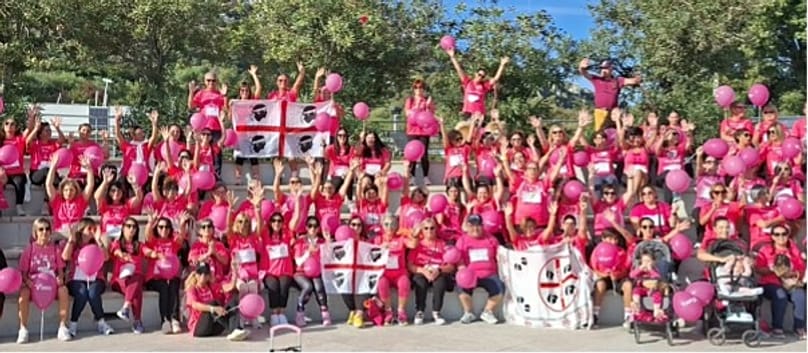
She has been having annual breast checks since the age of 40, around ten years before the age generally recommended for routine screening in the European Union. Four years ago, when she was 46, a routine ultrasound revealed a 4-centimeter lump in one breast. She underwent a biopsy one month later and received her breast cancer diagnosis three weeks after that.
Maria Assunta is now in the follow up phase, with checks every 6 months. She describes the care she received “excellent both from a human and medical point of view” and calls her doctors her “angels”. Since going through this experience, she has become a passionate advocate for prevention and early detection.

Timeline from diagnosis to start of the treatment also differs across countries. In Maria Assunta’s case, there was almost no interval between the diagnosis and the start of the treatment. The Organisation for Economic Co-operation and Development (OECD) identifies long waits for specialist consultations, imaging and diagnostic tests as a concern in several countries, including Ireland, Greece, Romania and Spain.
Stalled process of screening participation
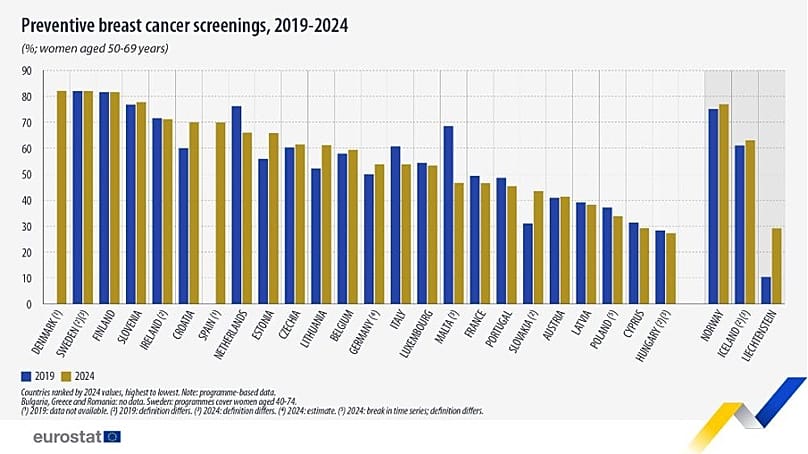
While early detection has improved over the long term and mortality has declined, according to the OECD and European Commission’s “Health at a Glance: Europe 2020”, progress has stalled in many countries and screening participation continues to vary sharply across Europe.
Compared with 2019, breast cancer screening rates rose in nine EU countries with available data, with the largest increases observed in Slovakia by over 12%, followed by Croatia and Estonia.
Breast cancer on the rise in the EU
As for my own story, the time finally came. I went in and waited for another half an hour till my name was called.
“I can reassure you, there is nothing, but it was best to check,” the doctor said with a smile. All my tension eased; I thanked her and shook her hand like a perfectly polite Italian. But even so, I remain disoriented by everything that has happened.
I was lucky, but every year around 360,000 women in the European Union receive a breast cancer diagnosis, 61,000 in France. Breast cancer is on the rise in Europe due to demographic changes, reproductive patterns — with later and fewer pregnancies — lifestyle habits and metabolic and hormonal factors, with research ongoing on environmental chemicals, pollution and diet impacts too. Statistics show that one in eleven women will develop breast cancer at some point in their life. It doesn’t mean they will die from it, but it doesn’t mean they will have an easy path through it either.
What happens for those who receive a breast cancer diagnosis?
I was lucky enough to walk out of that room with the same life I had before. But for many who receive a different diagnosis, the fear, uncertainty and sense of suspension I experienced for just seven days can become a lasting part of their lives.
So, is the mind cared for as much as the body, whether the journey leads to recovery or, ultimately, the end of life?
OECD’s 2026 European Cancer Inequalities Report found that only sixteen EU countries out of 27, plus Norway and Iceland, include psychological support in the cancer care pathway, and provision remains uneven.
In France, psychological care is part of the official package of supportive cancer care, alongside pain management, nutritional support and social assistance. In Italy access remains limited despite legal requirements and guidelines. A 2024 study of around 3,000 people with cancer found that only 20% reported receiving psychological support, while just 16% said a therapist had helped them throughout their cancer treatment. Much of this support still depends on private initiatives.
Eleonora is now 52 and lives in the Italian city of Genoa: She underwent a mastectomy at the age of 39, after a four-centimetre lump was discovered in her breast during the first ultrasound she had ever had.
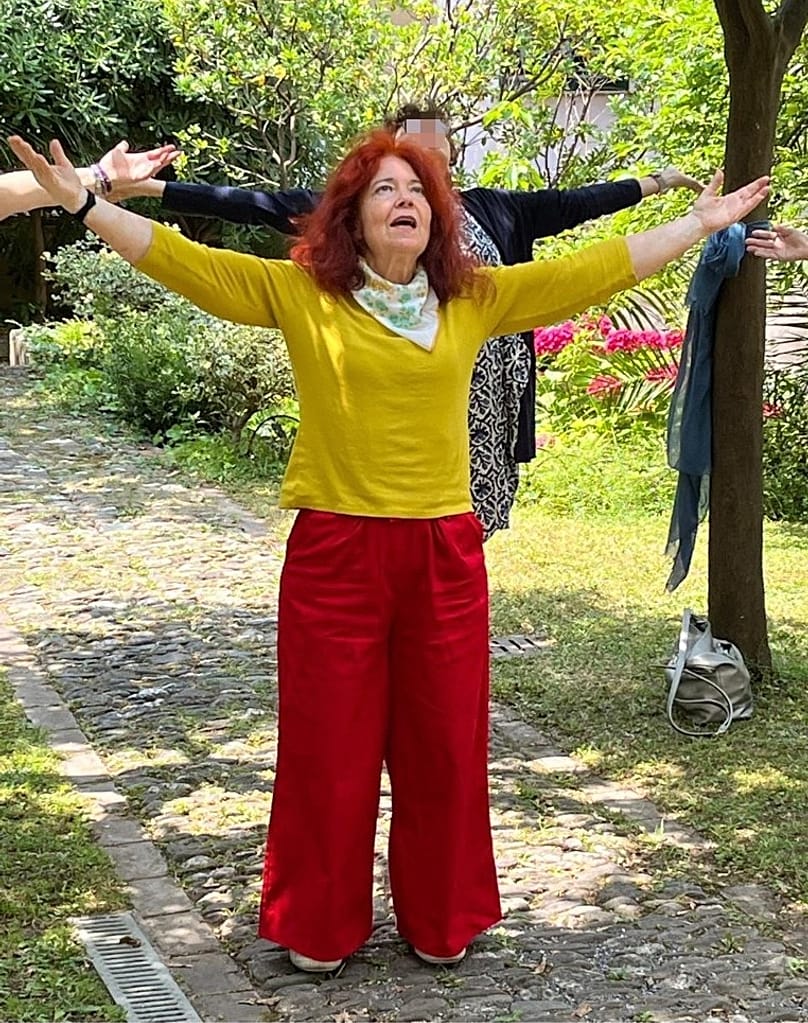
In the thirteen years since her diagnosis, she has become a volunteer with the non-profit association Braccialetti Bianchi and a Qigong instructor. Rooted in traditional Chinese medicine, Qigong is one of the complementary practices the association offers to hospitalised patients and those undergoing rehabilitation. Other activities include circle dancing, yoga, empathic support, biodanza* and shiatsu. Eleonora says these therapies “can make the entire cancer journey just more bearable”.
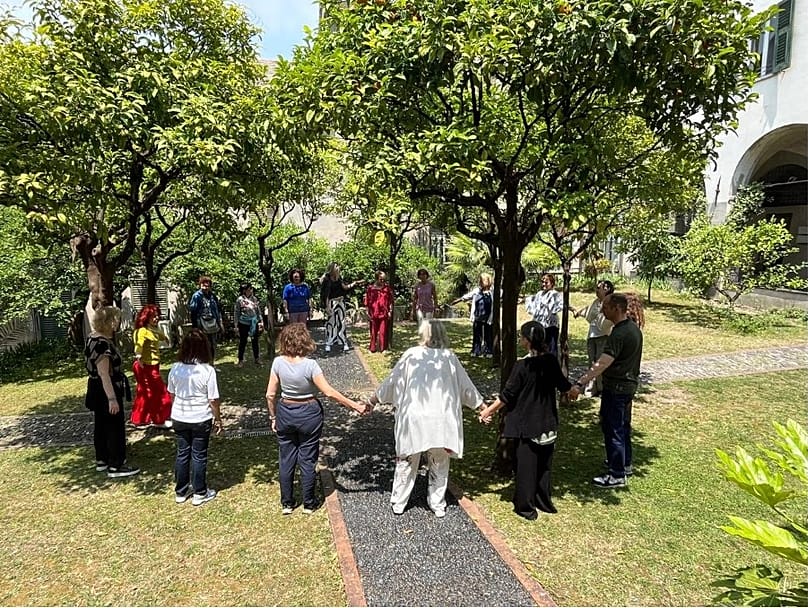
This free support programme was launched around thirty years ago by a group of doctors working at the San Martino Hospital of Genoa. Maria Giuseppina Vidili is one of the oncologists who helped establish the initiative. She specialises in cancer rehabilitation, and she explains doctors and associations do what they can facing limited national budgets and healthcare cuts. She said she has worked tirelessly for years to build friendly spaces for patients at any stage of their cancer pathway.
She retired four years ago and never stopped offering complementary activities, saying that doctors and associations are on the frontline to fill in the gaps of the national healthcare system, at least in terms of psychological support.
According to the Italian Federation of Voluntary Associations in Oncology (FAVO), only around 20% of hospitals provide specialised psycho-oncology support. Such support becomes even less available once cancer treatment has ended. Doctor Vidili says a standardised psycho-oncology service should be available throughout the country. Initiatives like the one she launched are still limited to a reduced number of people. Some Italian hospitals, she says, don’t even have rehabilitation units.
Pink October, every month
The day after I received my all-clear, and I’m supposed to go back to work, answer emails, make calls to set up interviews, plan my next reporting trip. To pick up where I left off, as if nothing had happened.
But something did happen and has left a mark.
I wrote most of this article that morning, between 5 am and 9 am. I just had to get it off my chest – literally – hoping that sharing my experience would help even one single woman face her fears and go for regular screenings. But writing this was also a way to delve into a subject that people still prefer to look away from, including myself. I struggled to research and discuss cancer as if it were any other journalistic topic. It comes with a burden.
Today, my thoughts are with those fighting to live and those working to find new cures. Awareness campaigns matter, but awareness alone is not enough. Women need access to screening, prompt diagnosis and appropriate care. They also need to be encouraged to put their health first, even when fear makes it tempting to look away.
Psychological support and complementary therapies should be accessible to everyone, everywhere, not just to the limited number of people who can currently benefit from them across the EU.
And one thing is for sure: my next screening appointment will be on time.