




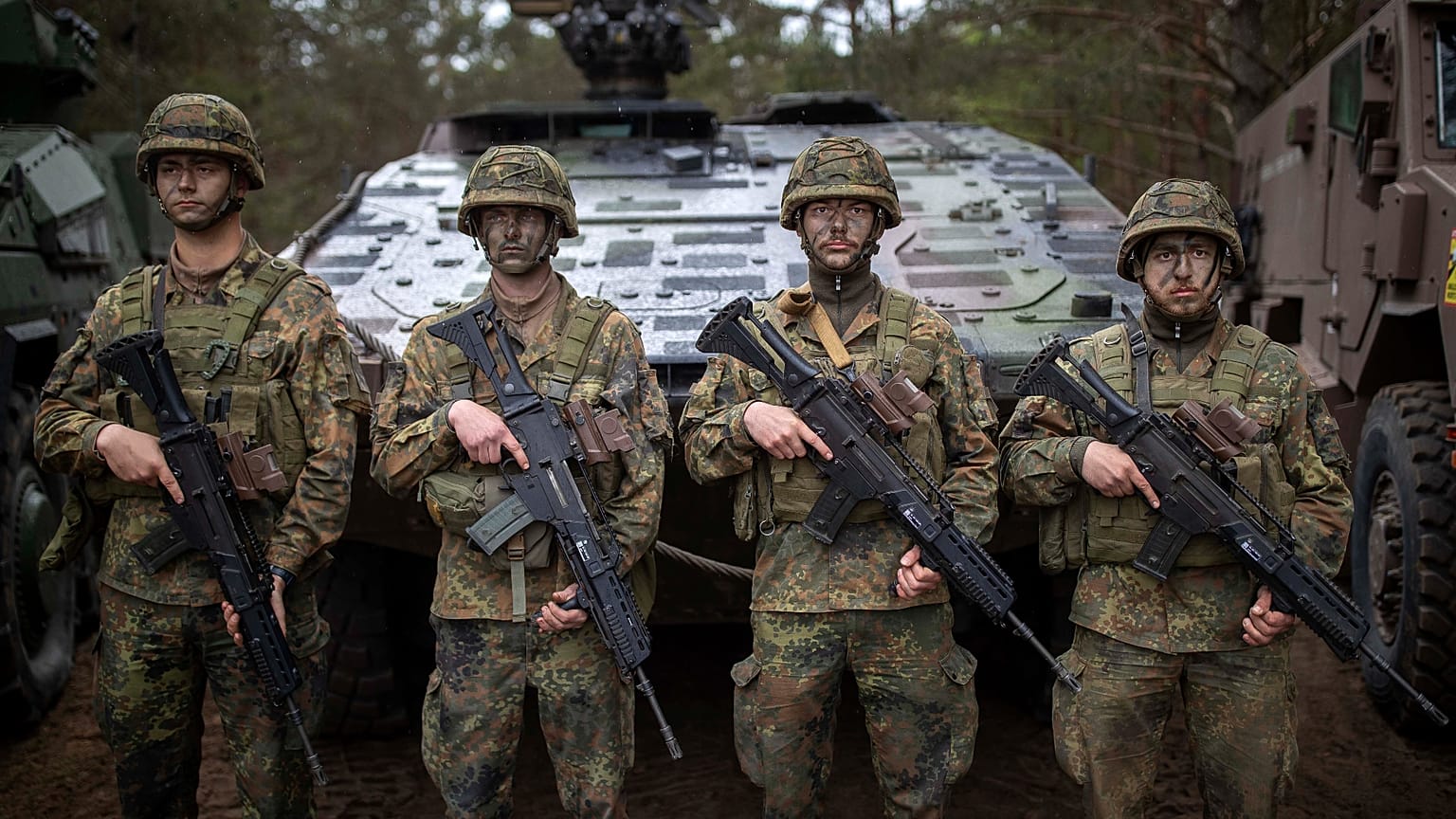













EU Defence Commissioner Andrius Kubilius has warned that Europe must be prepared to "surge" energy production to fuel its armies in conflict.
Europe must ensure it can rapidly ramp up production of jet fuel and diesel to sustain its armed forces in wartime, EU Defence Commissioner Andrius Kubilius warned on Wednesday.
 ADVERTISEMENT
Kubilius said current supplies were sufficient, with military fuel consumption in peacetime accounting for around 8% of total capacity, according to industry figures. But demand could surge dramatically in a conflict.
“If the crisis is coming, that could be much bigger,” he warned.
“During military crisis, according to NATO force model, during the first 10 days, NATO will need to move and to sustain 100,000 troops, and we can imagine what does it mean in terms of consumption of fuel and production of fuel.”
He could not state how long Europe would be able to fend off an aggressor with its current fuel load, as those figures are confidential.
The comments came after the Commission’s first dialogue on refining capacity in Europe.
Commission President Ursula von der Leyen called for the roundtable in light of the energy scarcity situation facing Europe and the impact this could have on Europe’s military capabilities.
The meeting was attended by NATO officials and industry representatives.
European refineries — which convert crude oil into refined products such as jet fuel and diesel — have been closing or reducing capacity for years as ageing plants became less profitable and demand patterns shifted.
Global conflicts, such as the war in Iran and the closure of the Strait of Hormuz, has increased the difficulty for Europe to secure reliable energy at an affordable price.
The EU has a legally binding target to cut carbon emissions by 90% by 2040.
EU Energy Commissioner Dan Jørgensen said that Europe maintains its continued path to wean itself off fossil fuels and stay on-track with this target, but what is needed “now” is ample supply of conventional energy sources.
“Diesel and jet fuels are essential for mobility, the broader economy, and our defence,” he said.
“We need to create an environment that supports sufficient domestic fuel production in Europe — as well as long-term viability of European refining — as the EU decarbonises.”
The most important fuel sources needed for Europe’s militaries are jet fuels to ensure the running of aviation forces, as well as diesel to offer back-up power generation at military bases.
A NATO spokesperson told Euronews that it is “vital” that Europe’s fuel production capacity can support both civil and military demands in times of crisis and conflict, and that allies have committed to the continued access of these supplies.
As part of this NATO members in July approved a €27 billion NATO Fuel Supply Chain Capability Programme Plan.
This aims to modernise NATO’s existing fuel storage and distribution infrastructure particularly pipelines in the alliance’s eastern and south-eastern neighbourhoods, among other capabilities.
This is to ensure “warfighting readiness,” the spokesperson said.