

From strolling around the UNESCO-listed Old Town to reading the constitution of the independent republic Užupis, Lithuania’s capital city is perfect to explore in just one day.
Back in 2018, Lithuania’s capital Vilnius marketed itself as the “G-spot of Europe”, claiming that “nobody knows where it is but when you find it, it’s amazing”.
 ADVERTISEMENT
While I can’t comment on improvements around sex education (except anecdotally), more and more people are finally discovering the joys of the Baltics with the rise of “coolcations”.
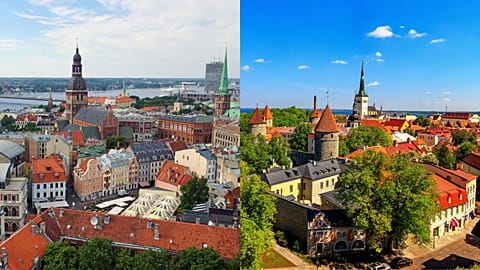
I visited both Latvia and Estonia in the summer last year, and this October, after a quick return to Riga and a detour to Sigulda, Latvia’s autumn capital, I made it down to Vilnius.
Amazing? With its UNESCO-listed baroque Old Town, its growing food scene, and fascinating museums, I’d say so.
If you only have 24 hours in Vilnius, here’s where to go and what to see.
Things to see and do in Vilnius
Climb up to Gediminas Tower
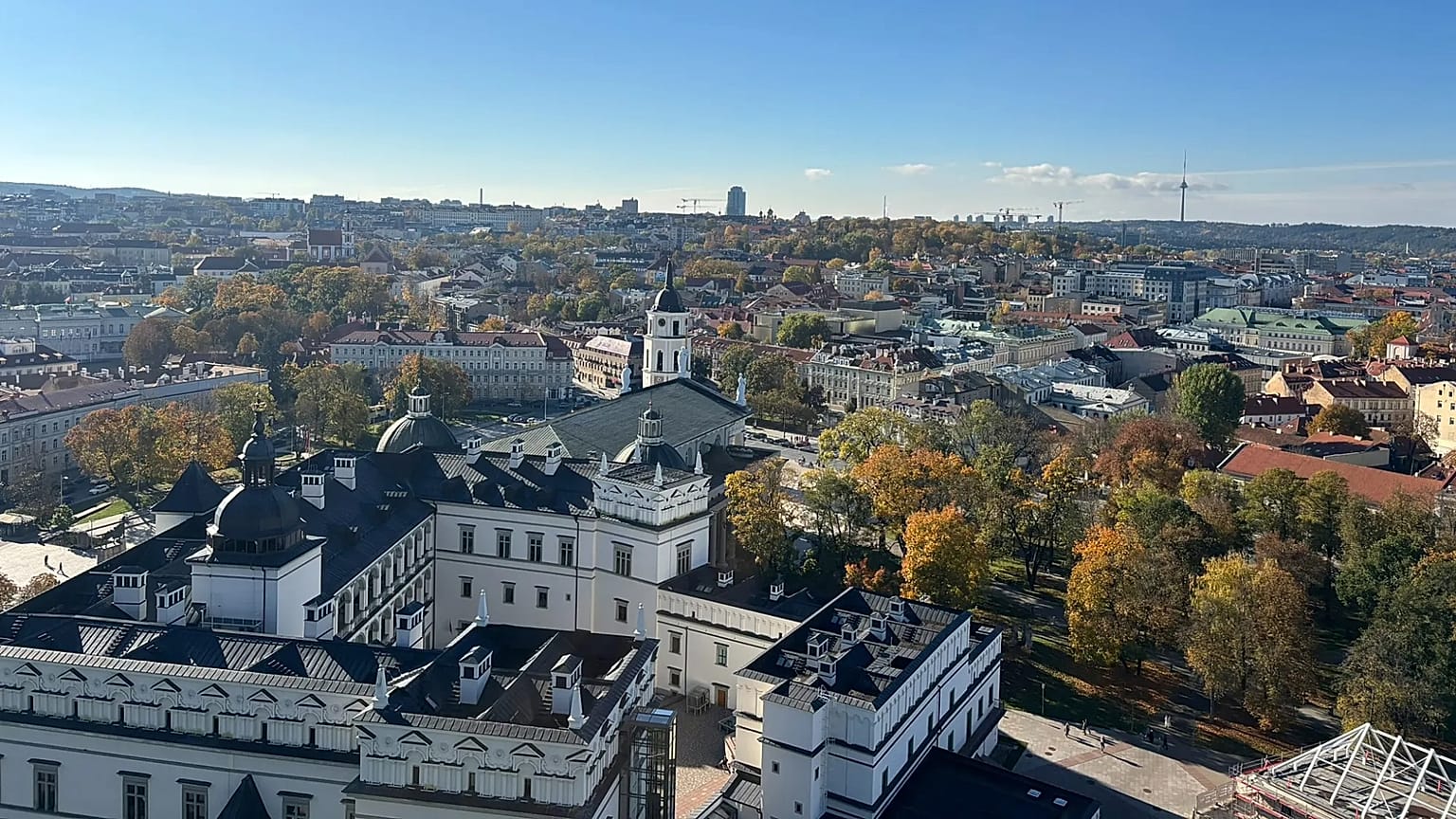
The best way to admire the city is from above, and there’s no better place for it than Gediminas Tower.
Located at the top of Gediminas Hill, the tower is what remains of the Upper Castle. Inside, you’ll find displays showing you what the castle looked like over its many iterations, starting from when it was first built by Gediminas, the Grand Duke of Lithuania who founded Vilnius.
The tower has long been a symbol of the city as the place where the tricolour flag was hoisted for the very first time in 1919 during Lithuania’s independence between the two World Wars, as well as the spot where it was rehoisted in 1988 during the independence movement during the Soviet era. This history is also explored through the Frequency of Freedom exhibition inside.
After exploring the exhibitions, you’re treated to an incredible view from the rooftop.
As an aside, if you do visit Vilnius during the warmer months, you can get an even better view by booking a hot air balloon ride over the city.
Visit the Vilnius Cathedral…
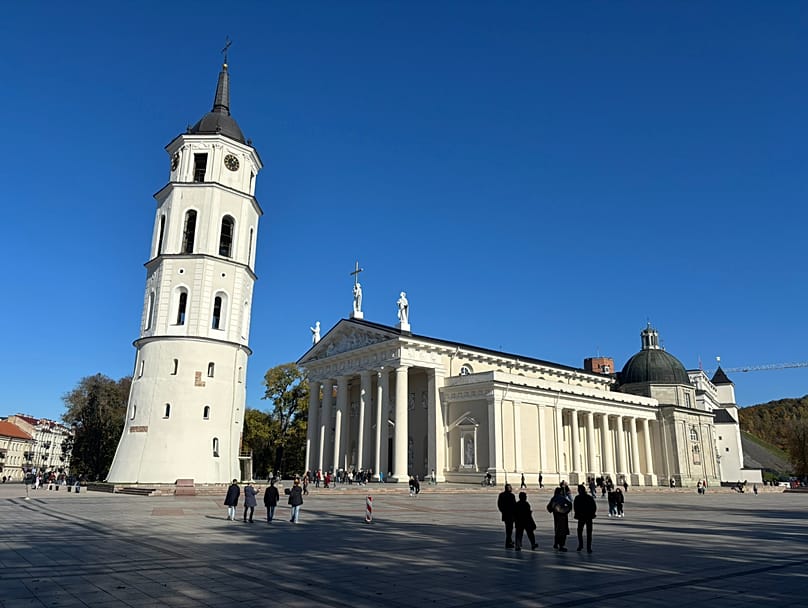
Just down the road from the castle complex you’ll find Vilnius Cathedral and its bell tower.
While its current form is neoclassical, the cathedral has been rebuilt several times following fires, with parts dating back to the 13th century in the catacombs.
Once used for the inaugurations of the Grand Dukes of Lithuania, the cathedral is also home to the Chapel of Saint Casimir, the Patron Saint of Luthania. Born into the royal family, he was known for its devotion to God and was recognised by the Pope in 1602.
…and the Church of St. Anne
One of the most beautiful churches in Lithuania, the Church of St. Anne was built in a Gothic style in the late 15th century.
Such is its beauty that Napoleon apparently said he wanted to carry the church back home with him to Paris “in the palm of his hand”. Emphasis on apparently – it’s a legend rather than provable fact, although it is very pretty I must admit.
Wander around Bernardine Gardens
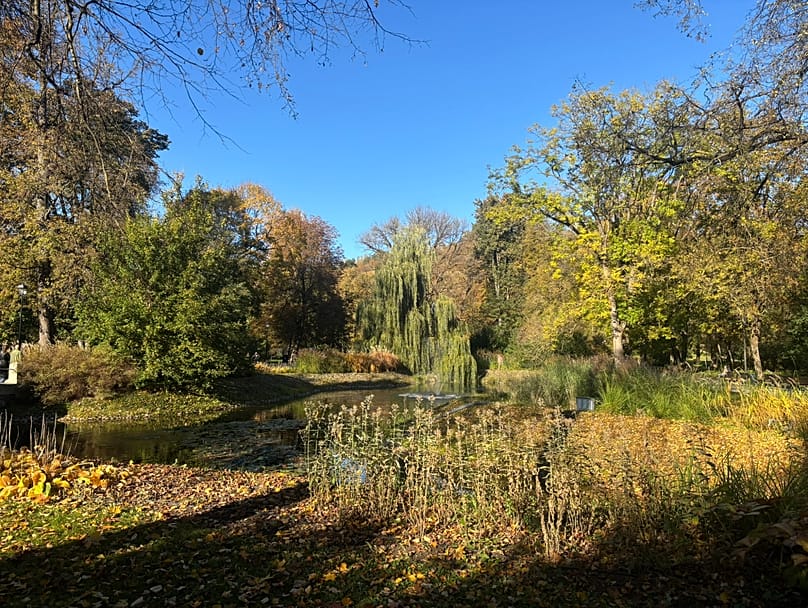
Behind the Church of St. Anne and the Bernardine Monastery are the Bernardine Gardens.
Cultivated by the Bernadine monks in the 15th century, this once swampy area was transformed into a collection of planted gardens with several ponds, and it even has a botanical garden.
Located right next to the river, it’s a peaceful spot for a stroll, particularly in the autumn sunshine.
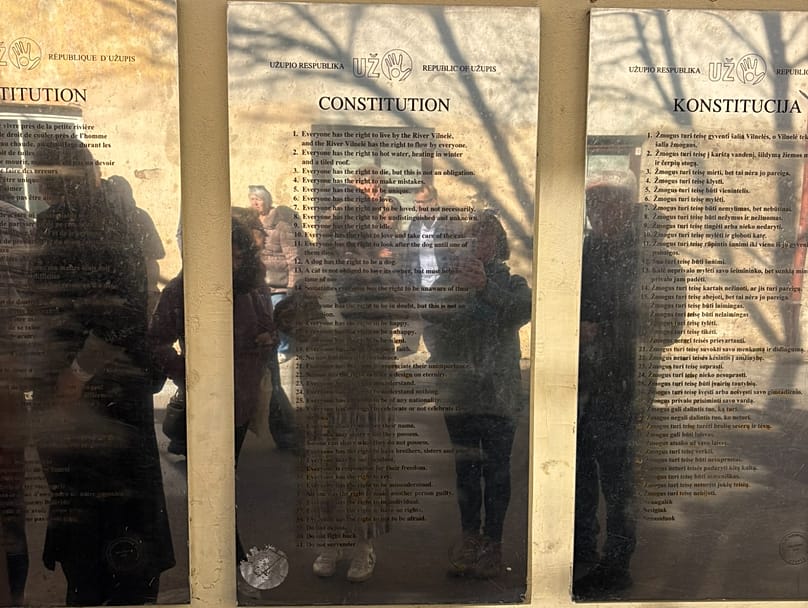
Read the constitution of Užupis
Located across the Vilnelė River, the neighbourhood of Užupis declared independence in 1997.
It has its own flag, a national day (which falls on April Fools’), and embassies “among Canadian cats”, “in cheese”, “in pencils” and “in rock music”, among others.
You can read the 41-point constitution, which states important things like “everyone has the right to love and take care of the cat” while “a cat is not obliged to love its owner, but must help in times of need”, in nearly two dozen different languages.
Unsurprisingly for a republic founded by artists, Užupis is known for its creative scene, which you can explore at the Užupis Art Incubator.
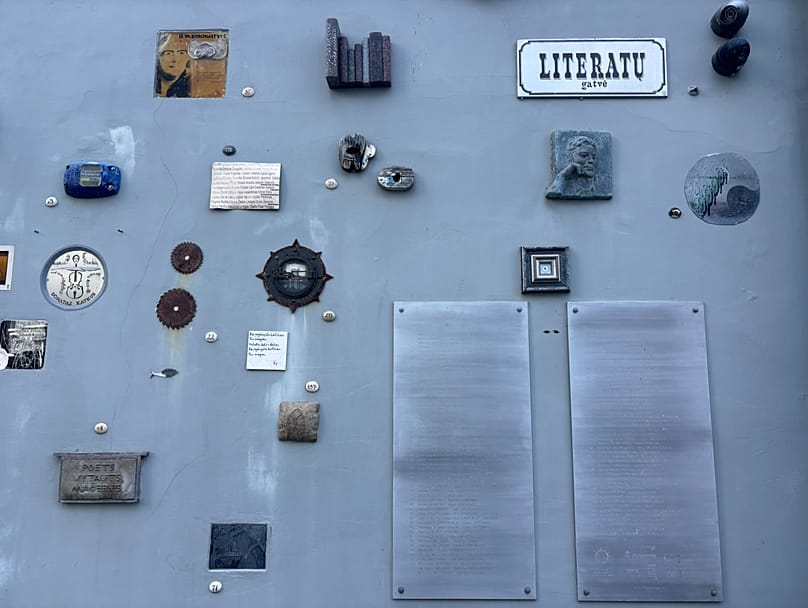
Take a stroll down Literatai Street
Once the home of poet Adomas Mickevičius, Literatai Street is lined with plaques paying tribute to more than 200 notable Lithuanian writers.
The project was commissioned by the Modern Art Centre in 2008 ahead of Vilnius’ stint as the European Capital of Culture, which you can also visit here.
Explore the city’s museums
There are plenty of museums dotted around Vilnius, from the Toys Museum and Railway Museum to the House of Signatories and the Energy and Technology Museum.
If we had to narrow it down to just two, our picks would be the Museum of Occupations and Freedom Fights, and Castellan’s House.
The former is located within the former KGB headquarters and covers the history of Soviet repression while also briefly touching on the country’s Nazi occupation, while the latter forms part of the National Museum of Lithuania and explores Lithuanian identity through themes like religion.
Where to eat and drink in Vilnius
The oldest market in Vilnius – Halės – is an obvious choice, with dozens of choices from pastries and soups to tacos and Korean plates.
Hardly traditional, but I was a big fan of Beigelistai, which serves up Vilnius-style bagels. I couldn’t tell you the difference between Vilnius and New York-style ones, but I can tell you the bagel of the month for October (with fig jam, camembert, walnuts and cream cheese) was fantastic.
For a more modern option, head to Paupys Market. Again, the market has many different restaurants to choose from, but the potato pancakes and bao buns are real winners.
Next time I’ll visit Vilnius for…
If I’d had more time in Vilnius, I would have taken the advice of a friend who visited in April and headed to Trakai Castle.
Located on an island, the castle is about a 35-minute train journey followed by a 10-minute bus or a 40-minute walk. Just be aware that the trains aren’t super regular, so you should plan this out in advance.
How to get there
Vilnius International Airport is just under six kilometres away from the city centre, which you can reach in around 15 or 20 minutes by bus. There’s also a train which takes under 10 minutes, but they run less frequently than the bus.
The biggest airlines operating from the airport are airBaltic, Ryanair and Wizz Air. There are direct flights from cities including Amsterdam, Barcelona, London, Rome and Paris.
Alternatively, Vilnius is around a four-hour bus ride from Riga.