


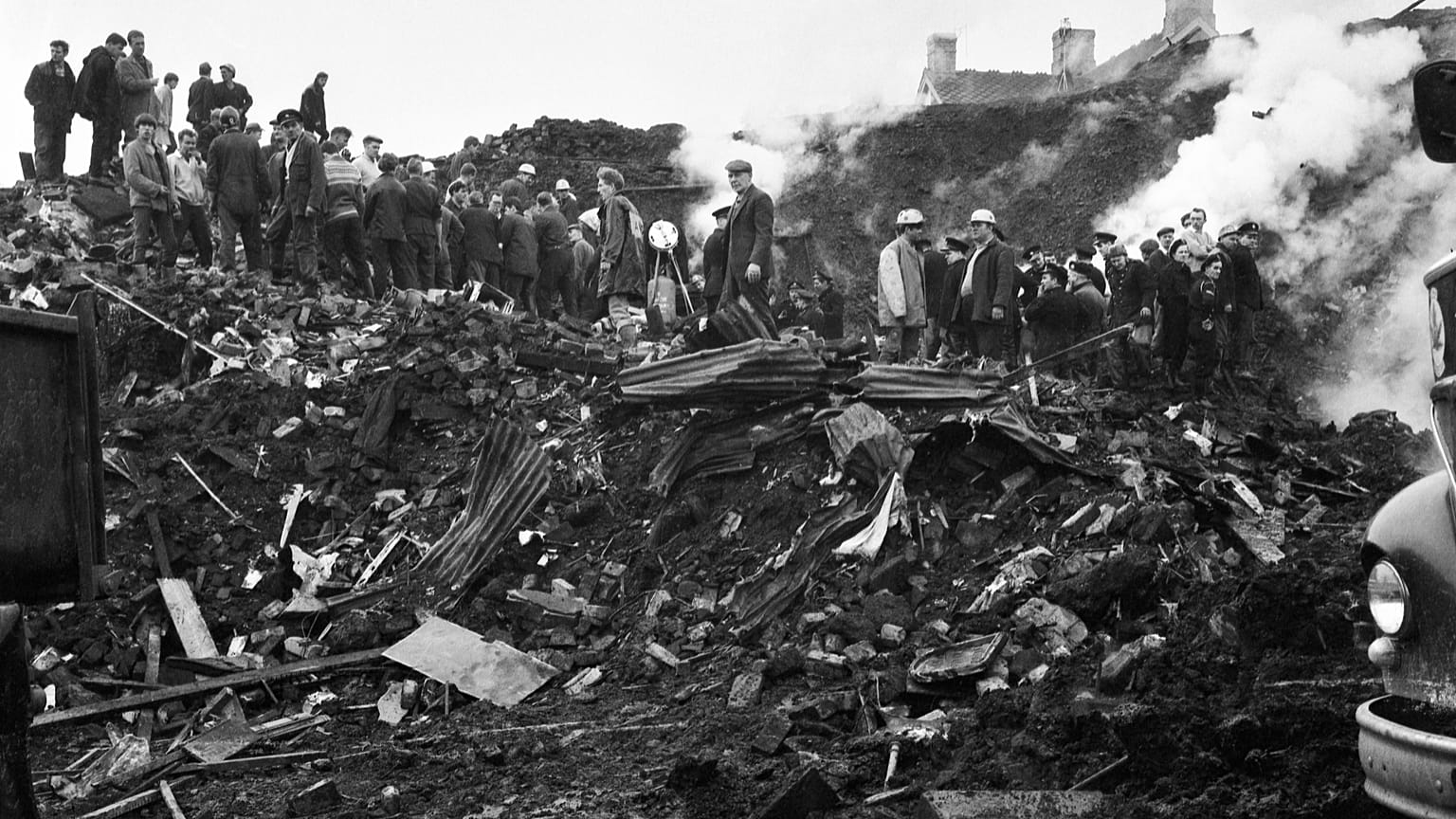


Survivors shared their memories with the royal party, six decades after an official verdict, a raid on donations and a fight over the tips that followed.
King Charles III has led tributes to the people of Aberfan on the 60th anniversary of the disaster, in which 116 children and 28 adults died when a colliery spoil tip collapsed onto Pantglas Junior School in Wales in 21 October 1966.
 ADVERTISEMENT
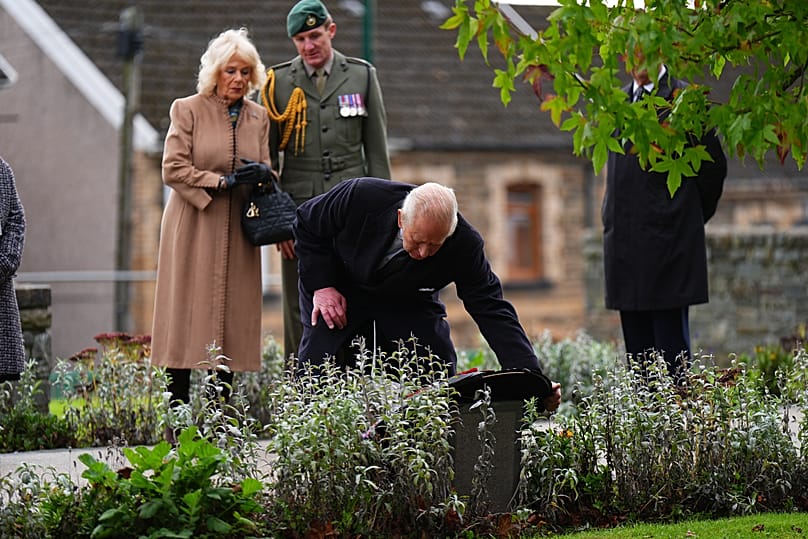
The King, Queen Camilla and the Prince of Wales met survivors in the Welsh village. The King and Prince William laid wreaths at the memorial garden, and the Queen placed a posy.
"We have heard stories of heartbreak, but also of heroism," the King said. "We have heard of the most agonising grief, but also of the most inspiring grace."
Coal bosses had been warned of the danger beforehand, yet no one was prosecuted or lost their job.
What happened at Aberfan?
Aberfan is a small coal-mining village in the valleys of south Wales, in the United Kingdom. For decades, waste from the local colliery had been dumped in huge heaps, known as tips, on the hillside above the houses.
These tips had moved before - the heap of coal waste had slid in 1944 and again in 1963, but the warning signs were not acted on.
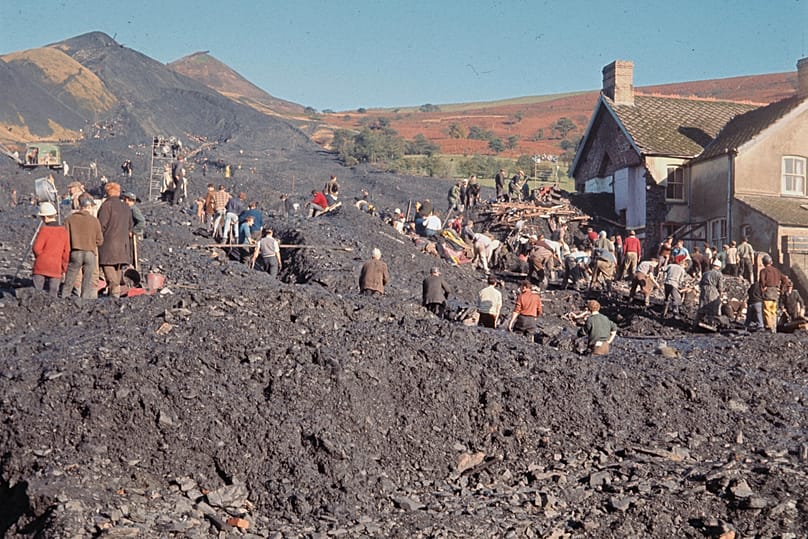
On the morning of Friday 21 October 1966, one of the tips gave way. Shortly after 9.15am, over 100,000 cubic metres of sodden waste poured down the mountain and onto the village school, just as lessons were starting.
The last child to be found alive was pulled out at 11:00 that morning.
The scale of the loss is still hard to grasp. The disaster claimed the lives of 144 people, 116 of them children, and an entire generation of the village was all but wiped out. Within days, the UK Parliament ordered an official inquiry.
What did the inquiry find?
On 26 October 1966, the UK government minister for Wales appointed a tribunal led by senior judge Lord Justice Edmund Davies. It heard evidence first in nearby Merthyr Tydfil and then in the Welsh capital, Cardiff.
Its verdict, published in August 1967, was unequivocal - "Blame for the disaster rests upon the National Coal Board," the state-owned body that ran Britain’s coal industry. As a result of the inquiry, information about every one of the board’s tips was gathered for the first time.
People across Britain and around the world sent money to help the grieving village, and the disaster fund grew to £1.75m (€2.08m).
What happened to the money donated?
In 1968, UK Prime Minister Harold Wilson’s government forced the disaster fund to give up £150,000 (€178,000) to pay for removing the remaining coal waste heaps above Aberfan, even though those tips belonged to the National Coal Board.
The village had to wait almost three decades for the money to be returned. Ron Davies, the UK government’s minister for Wales, repaid it in 1997, and the Welsh Government later gave Aberfan charities a further £2m.
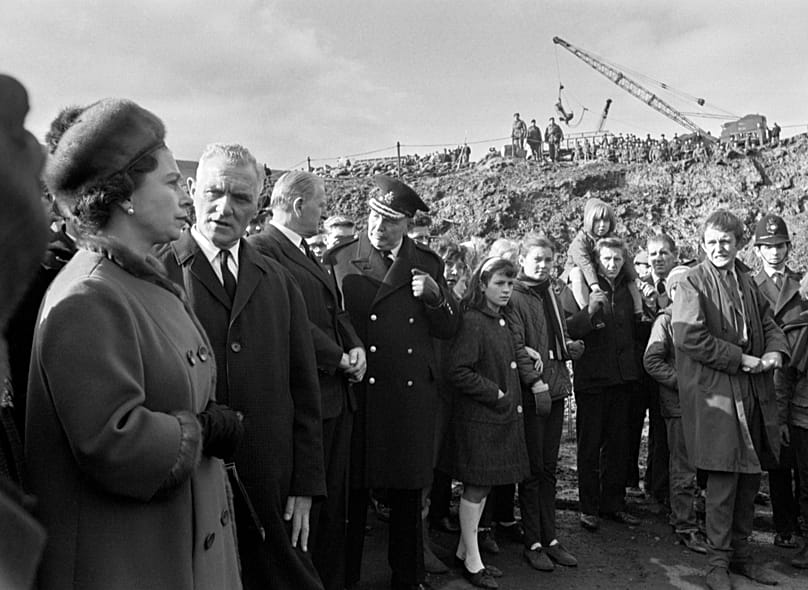
The fund made equal payments to every bereaved family. The UK's Charity Commission tried to block these payments as it wanted the trustees to be satisfied that each parent had been "close" to the child who died. The trustees defied the Commission and paid the families anyway.
The fund was attempting to support families because the National Coal Board was paying them very little. The board raised its compensation offer from £50 to £500 (€596) per bereaved family.
Sixty years later, organisations across Wales were invited to observe a minute’s silence at 9.15am on Wednesday, the moment the tip collapsed.