
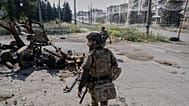





























The ICC was established to prosecute war crimes and crimes against humanity that might otherwise go unpunished.
The European Union on Friday described US sanctions against the International Criminal Court (ICC) as "deeply regrettable" and said it was "ready to take any necessary measures to enable the court to carry out its work".
 ADVERTISEMENT
ADVERTISEMENT
ADVERTISEMENT
"The EU will work closely with the ICC to ensure it continues to operate effectively," the European Commission said, adding it hoped that the six-month delay before the sanctions applied meant "there is room for dialogue"
One possible EU response would be to activate a legal instrument known as the "blocking mechanism", which prohibits European firms from obeying the US sanctions "actively or by deliberate omission", giving the European Union a potential means of cushioning some of the impact.
Dutch Foreign Minister Tom Berendsen described the mechanism as the "nuclear option", but said the Netherlands had nevertheless asked Brussels to prepare it.
US sanctions on the ICC: What happened?
The Trump administration has imposed sweeping new sanctions on the ICC, accusing the tribunal of political bias and unfairly targeting Americans and Israelis over alleged war crimes.
US Secretary of State Marco Rubio announced the measures on Friday, shortly after South African prosecutor Navi Pillay, a former ICC judge, was awarded the Nobel Peace Prize. However, the decision to impose sanctions had been made well before the Nobel announcement.
“We will ban transactions with this rogue court, cutting off their resources and crippling its ability to operate against us,” Rubio said in a video address posted to social media. “The United States and the American people are not subject to the jurisdiction of this fake ICC.”
The sanctions freeze any ICC assets held in the United States and give US companies and individuals six months to end their business dealings with the court.
Israeli Prime Minister Benjamin Netanyahu on Friday welcomed US sanctions against the ICC, which has issued an arrest warrant for him over alleged crimes committed in Gaza.
"The ICC is not a court. It is a political body that poses a mortal threat to law abiding democracies worldwide and to the very idea of national sovereignty," Netanyahu's office posted on X.
How has the ICC reacted to the US sanctions?
The ICC condemned the sanctions, describing them as an attack on the rule of law and the international legal order.
“It is an attempt to obstruct the course of justice and to prevent the court from doing what it was created to do," the court said in a statement. "It is an assault on the rule of law and on the very foundations of the international legal order which strikes at the simple principle that no one stands above the law.”
ICC President Tomoko Akane said the court would “continue to fully discharge its mandate, with independence and impartiality, acting only on the basis of the law and the evidence, for the sake of the countless victims of grave crimes.”