





























EU candidate countries fear safeguards designed to prevent democratic backsliding, like a planned 15-year probation period, could create second-class membership and be used to exert political pressure.
EU candidate countries have raised concerns that new safeguards designed to prevent democratic backsliding after accession could leave them with second-class membership – or give existing member states a powerful tool to exert political pressure.
 ADVERTISEMENT
ADVERTISEMENT
ADVERTISEMENT
The concerns follow proposed measures unveiled by the European Commission on Tuesday, including a 15-year probationary period during which new members could lose voting rights if they commit a serious breach of EU values and rules.
"We are counting on the European Union to ensure that the accession process remains ambitious, credible and predictable, and reflects the progress that Ukraine continues to make," Vsevolod Chentsov, Ukraine's deputy prime minister for European integration, told Euronews.
"Our starting point remains full integration into the single market, and any transitional arrangements must be justified, proportionate and time-limited," he added.
Two-tier membership
One of the biggest concerns among candidate countries is that the safeguards could create a second tier of EU membership.
Countries including the Netherlands and France called for tougher safeguards, citing the experience of Hungary under Viktor Orbán and the difficulty of tackling democratic backsliding once a country has joined.
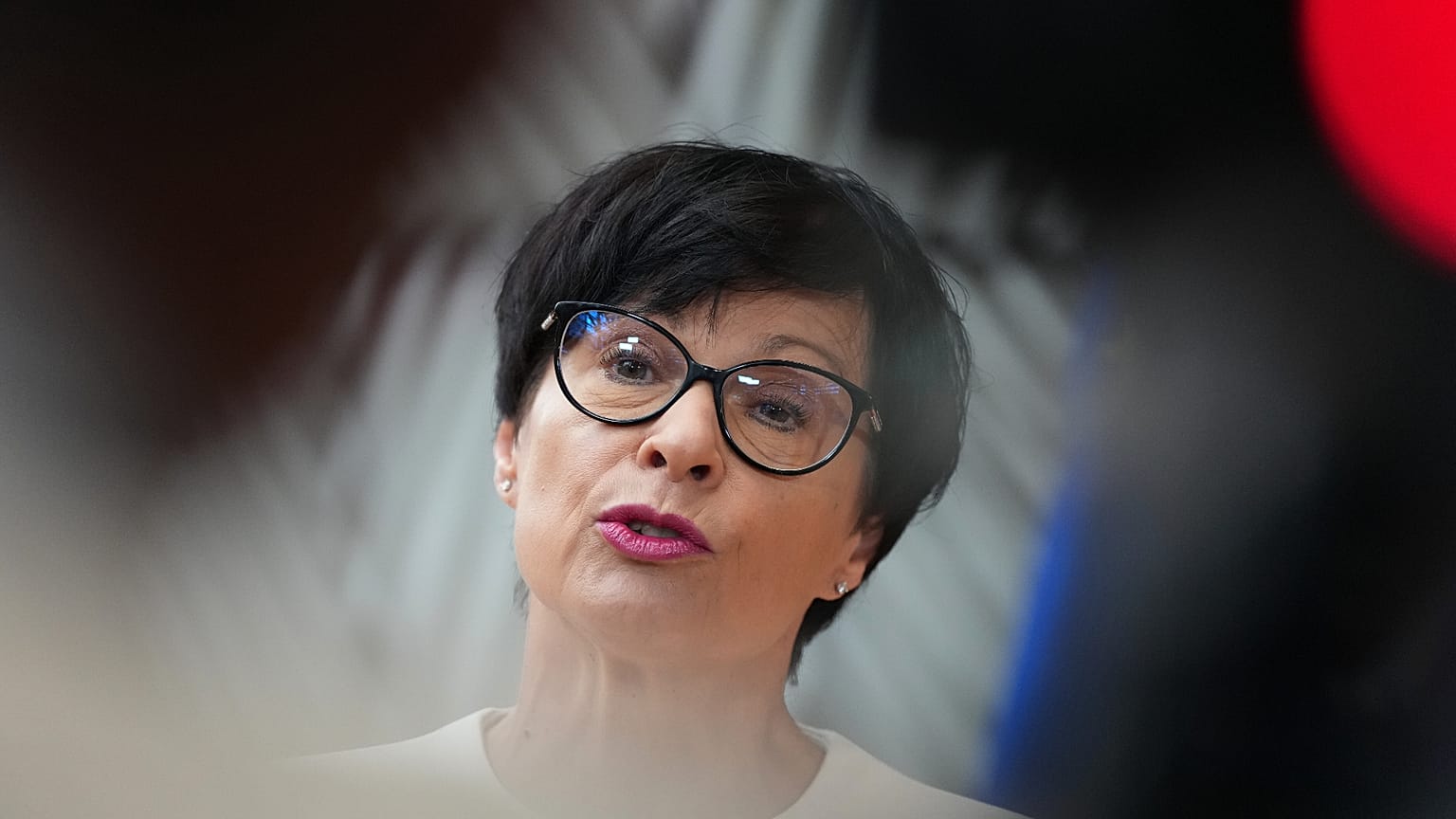
"We do not want a two-tier membership to join our union. Countries need to meet very high standards on the rule of law. We need to be sure that after joining, they never fall below those standards again. And this is what we have learned from experiences in the past," Enlargement Commissioner Marta Kos said as she presented the measure.
Publicly, candidates have been cautious in their response. Apart from Ukraine, the other three frontrunners – Montenegro, Albania and Moldova – are small countries deeply invested in joining the bloc.
Behind closed doors, however, candidates make no secret of their unease, especially over the 15-year probation period. During that time, newcomers could be stripped of voting rights for serious breaches of EU values and rules. Several had hoped the period would be shorter.
The Commission says this "institutional safeguard clause" is not discriminatory because it is temporary. But while the proposal includes no renewal mechanism, candidates fear member states might push to add one.
"The Commission stresses that this measure is temporary, but there is a significant risk that it might turn into a permanent status. What happens if the probation period gets repeatedly extended or its expiration blocked?" Obrad Kesić, head of Bosnia and Herzegovina's mission to the EU, told Euronews.
Risk of misuse
There is also concern among candidate countries that the safeguards could be used for political purposes, particularly in bilateral disputes with existing member states.
"It is important that the new safeguards should not be abused," said Zlatko Vujović, president of the NGO Centre for Monitoring and Research. "New members should not be blackmailed by old members," he said, pointing to the potential instrumentalisation of bilateral issues.
The threshold for suspending a country's voting rights will therefore be crucial. Candidates want clear safeguards against arbitrary action or attempts to pressure a newcomer into abandoning a strategic national interest.
When the debate over stronger safeguards began, Montenegro's ambassador to the EU, Petar Marković, said any assessment of democratic and rule of law backsliding should rest on objective criteria and systematic breaches.
"We will have very active monitoring precisely in the fields that are covered by the new institutional safeguards," a Commission official told Euronews when asked how such decisions would be made.
The official added that this monitoring would complement an expanded version of the rule of law reports and the information collected under Article 7 of the EU treaty, which allows suspending certain membership rights if a member state seriously and persistently breaches the EU's core values.
The idea is to make triggering easier than under Article 7. That provision allows measures against a member state that undermines the Union's functioning, but only with the unanimity of all the other member states. In Hungary's case, a sympathetic Polish government stood in the way.
Under the Commission's proposal, however, a decision would go through unless opposed by a qualified majority of member states. That prompts fears it would be far too easy to act against a newcomer that does not toe the line.
The procedure could be triggered by the Commission or by a "reasoned request" from member states. But its details, which are crucial for newcomers, will be negotiated only in the accession treaty.
Political bargaining
The Commission's proposals are non-binding and are likely to become a major point of contention in the final stages of accession negotiations.
"The transitional periods have to be negotiated between the member states and the country that wants to become a member of the EU. When it is negotiated, it will become a part of the accession treaty," Kos said.
That means the safeguards will be tailored to each newcomer's circumstances, but also to its bargaining position and its eventual relations with current member states, friends and sceptics alike.
"Our objective remains full accession to the EU, with equal rights and responsibilities," Cristina Gherasimov, Moldova's deputy prime minister for European integration, said on Facebook after the announcement.
The calculation in Brussels is that stronger safeguards could make it easier for enlargement-sceptical countries such as France and the Netherlands to accept new members when the time comes to ratify their accession treaties.
There is also an expectation that Montenegro, first in line to join, may set the blueprint for future accession treaties. But its determination to complete the process may leave it with little leverage to resist tougher conditions.
"Montenegro would accept anything. They are very keen to conclude the process, almost at any cost," a diplomat from a candidate country told Euronews, speaking on condition of anonymity.