

















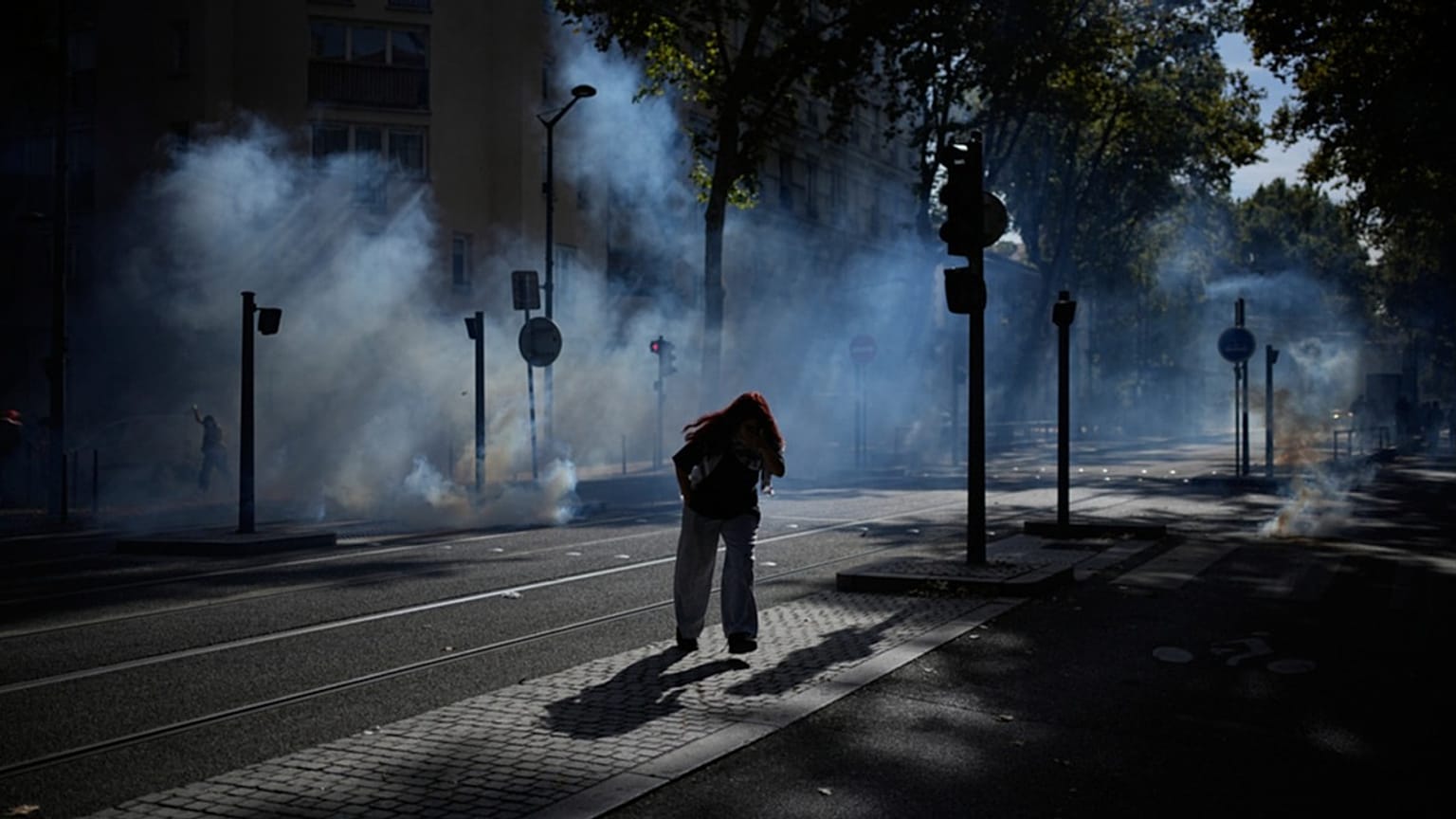













Students are demanding the government address issues they view as critical to their education, including upgrading classroom facilities, ensuring schools in less economically affluent areas are not disadvantaged, as well as reforms to the school system and the long hours pupils spend in schools.
After a weekend-long hiatus, high schoolers in France are expected back at the barricades this coming week in their protest movement that is rattling the government of President Emmanuel Macron.
 ADVERTISEMENT
ADVERTISEMENT
ADVERTISEMENT
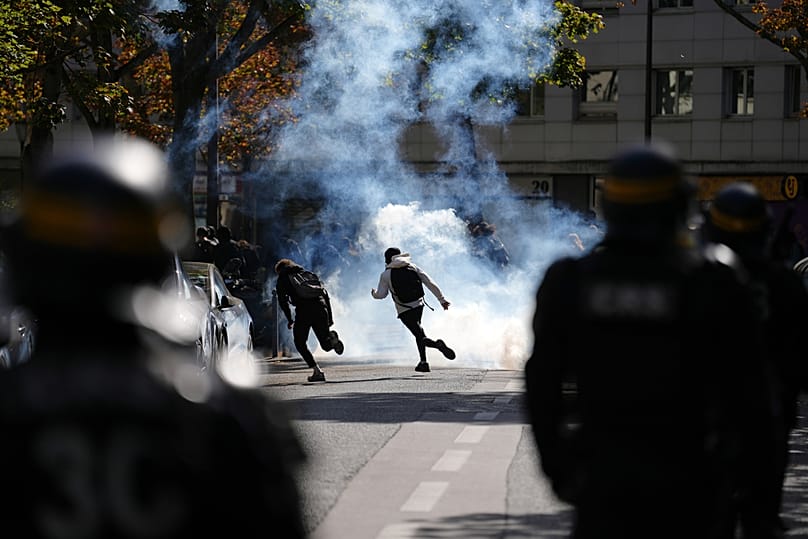
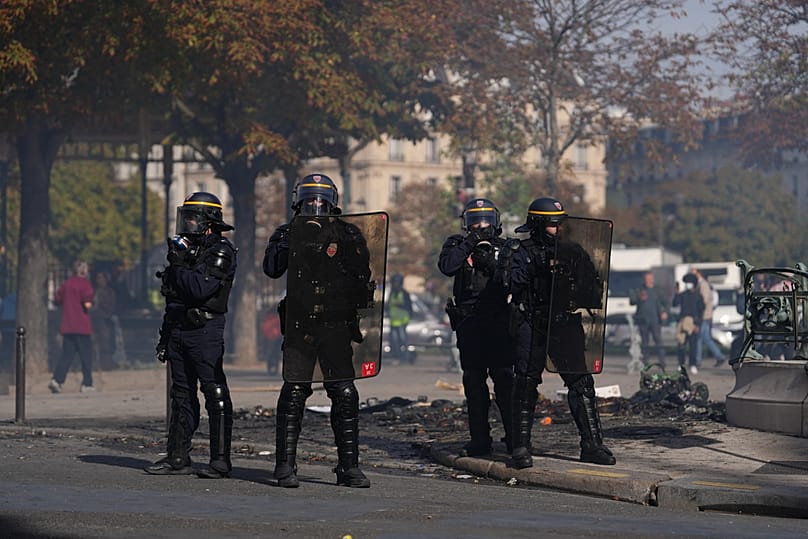
A key question is whether violence on the margins of the demonstrations will worsen, blurring the lines between protest and rioting, and whether Macron's government will ratchet up the already muscular response by police.
According to the interior minister, officers made more than 5,000 arrests last week, 85% of them minors, in scuffled between students and security forces that left hundreds of people injured.
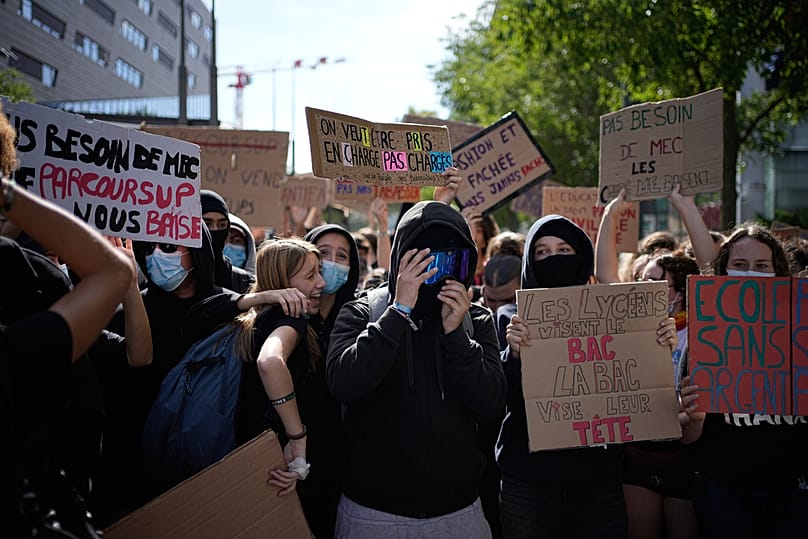
A test of the movement's endurance and appeal will come Tuesday, when the influential CGT labour union is urging workers to demonstrate, too.
Protests first erupted in the Paris capital region in mid-September.
Teachers and students mobilised against a lack of staff at a lycée, or high school, in Creteil, in the southeastern outskirts of the French capital. From there, class strikes, blockades and demonstrations spread to other Paris suburbs and then nationwide, with protests even in high schools of smaller towns.
Around 400 or 500 schools have had to close because of damage or attacks that targeted staff and are expected to remain closed early into this week, according to the education minister. More than 170 pupils and 78 staff members have suffered injuries, he says.
From the outset, students focused on perceived inequalities in the school system, saying that teaching, facilities and opportunities for advancement aren’t as good for students in disadvantaged neighbourhoods — despite the promise of France's national motto: “Liberty, Equality, Fraternity.”
Placards held up by the first protesters in Creteil read “Too many inequalities, we’re disgusted,” “Education is a right, not a privilege,” and “Sorry to bother, it’s for our future,” according to photos posted by Clémence Guetté, the district's lawmaker at the National Assembly.
"The public needs to know that conditions for studying are no longer what they were for us,” said Sophie Bordy, a 50-year-old literature teacher in Paris. "It has deteriorated significantly.”
Pupils elsewhere complained that during summer heat waves, they roast in classrooms without air-conditioning, and they freeze in winter. French media broadcast videos of scampering rats, collapsed ceilings, leaks, broken furniture and other issues filmed in dilapidated schools.
Spending on education is one of the costliest items in the state budget that Macron’s government is proposing for 2027. It earmarked €65.5 billion for schools, more than the €63.4 billion proposed for defence.
Pupils also complain of long hours. In high schools, classes often start at 8 am local time and can last to the early evening. French high schoolers’ compulsory school hours are among the highest in Europe, according to European Union figures.
“I see the teachers more than my family,” read one young girl's placard photographed by French media outlets.
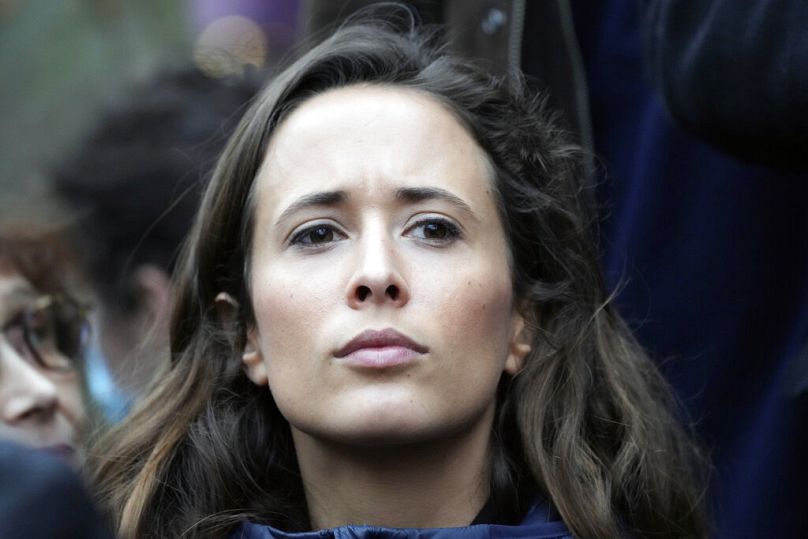
Guetté, the lawmaker who posted photos of herself meeting with the first protesters in Creteil, bullhorn in hand, is a rising star of the far-left France Unbowed party. Other France Unbowed lawmakers and elected officials also quickly identified with the protests, meeting with pupils and backing their demands.
France Unbowed leader Jean-Luc Mélenchon urged party members and supporters to protect pupils from the police, by putting themselves in between the two sides.
Mélenchon has denounced what he called the “savagery” of police officers who have liberally used tear gas and their batons to break up crowds.
Police riot-control projectiles are suspected in some facial injuries that young protesters suffered. Hundreds of police officers have also been injured, according to the interior minister’s office.
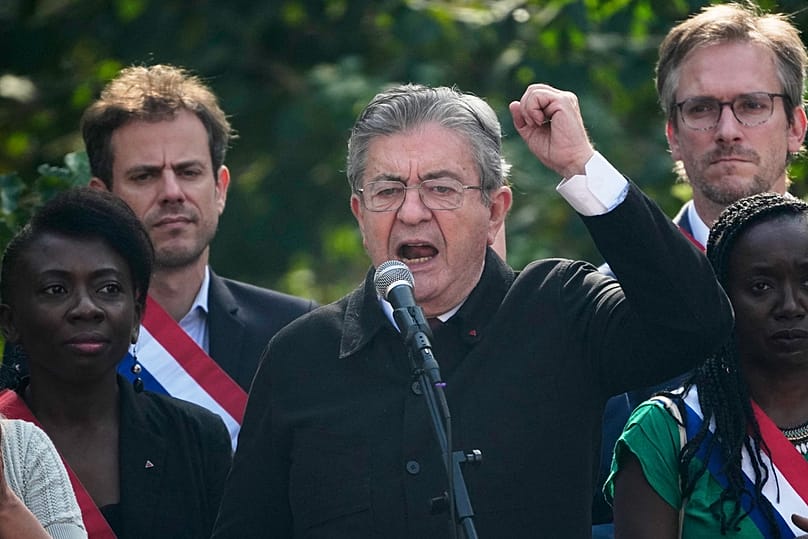
Critics of Mélenchon accuse France Unbowed of stoking and manipulating the students for political gain. Mélenchon, a fiery anti-capitalist, says his party supports the movement but isn’t organising it and wants it to be non-violent.
Mélenchon, 75, is making his fourth run for the French presidency in 2027 and is wooing young voters.
They tended to vote less than other age groups in the last presidential election in 2022 but could potentially help Mélenchon qualify for the decisive second-round runoff in May — a success that has always escaped him — if he can mobilise them to turn out.
“What we want is for this country’s young people to emerge from this episode with their heads held high, having won something and learned something, and to remember it when they cast their ballots,” Mélenchon said on Thursday.