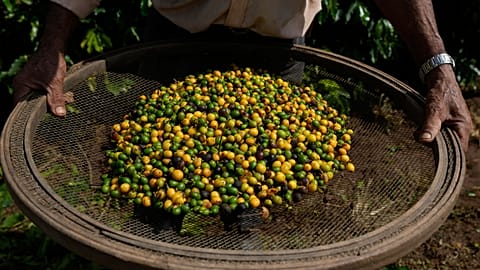
















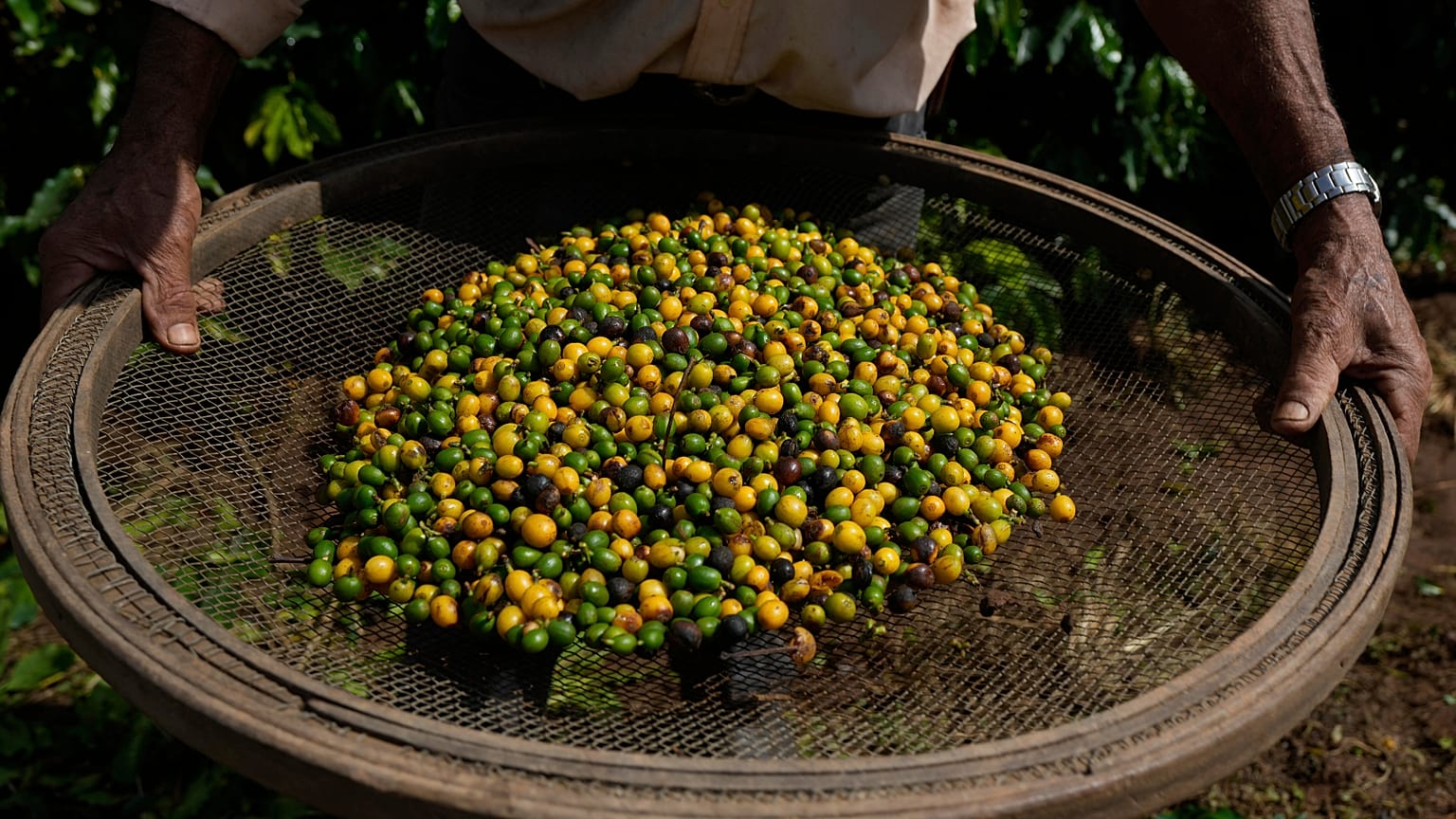













Rising temperatures now allow coffee to be grown in Italy. In Sicily, the Morettino family has completed its first harvest, showing how climate change is reshaping crops worldwide.
A plantation on the outskirts of Palermo has for the first time produced Arabica coffee beans grown and harvested entirely in Italy. The result, achieved on the Morettino family estate, has been made possible by climate change, which has effectively brought tropical temperatures to southern Italy.
 ADVERTISEMENT
ADVERTISEMENT
ADVERTISEMENT
While global warming had already enabled southern England to produce champagne-style sparkling wine, pushing the traditional growing areas of France and northern Italy further north, the jump made by coffee from equatorial zones to the Mediterranean is clearly even greater.
As the daily newspaper La Stampa reported on Thursday (source in Italian), the Sicilian plantation in the San Lorenzo ai Colli area, a few hundred metres above sea level, is currently producing around 100 kilograms of drupes (the fruit of the coffee plant, also known as cherries), which yield just over 15 kilograms of roasted beans.
The project, which involves the University and the Botanical Garden of Palermo (source in Italian) in studying how tropical crops adapt to the new Mediterranean climate, is still far from large-scale commercial production in terms of volume, but it already has considerable scientific and symbolic value.
Where coffee is grown: the world’s main producing countries
Traditionally, coffee is grown in the planet’s tropical and equatorial regions, where high temperatures, humidity and steady rainfall favour its growth.
For this reason, the world’s main producers and exporters are largely concentrated in Latin America, Africa and Asia, with the Arabica variety, which delivers higher quality, grown at higher altitudes than Robusta.
The leading producer countries include Brazil, Colombia, Peru and Costa Rica in Latin America; Ethiopia, Uganda, Kenya and Tanzania in Africa; and Vietnam and Indonesia in Asia.
According to the promoters of the initiative, the coffee produced in Palermo develops distinctive aromatic notes reminiscent of raisins, a feature that sets it apart from beans grown in traditional coffee-growing regions.
Before the Morettino family’s venture, a local farm had already grown coffee entirely in greenhouses (source in Italian) in Terrasini, also in the Palermo area.
Similar experiments have been attempted in various forms elsewhere in southern Europe.
In Spain, particularly in the province of Granada, experimental projects have been launched to test the resilience of the plants, with results quite different from those in Gran Canaria where, thanks to its more southerly latitude, coffee has been grown since the 19th century, taking advantage of the fertility and humidity of volcanic soils.
On the Azores islands in Portugal, where numerous private plantations have been reported that benefit from the mild climate, the archipelago marks one of the northernmost points where coffee is grown.

How coffee consumption in Italy has changed
The growing interest in niche products such as the Sicilian coffee comes in a context in which Italy is the EU’s leading producer of roasted coffee, with over 400 tonnes produced in 2025.
The national coffee industry, although it relies on importing raw material from other producer countries (that is, unroasted beans, or "green coffee"), includes around a thousand roasters and generates an annual turnover of 5.9 billion euros.
The prospect of local cultivation, made possible by global warming, which is unfortunately also bringing more natural disasters, is in step with Italian consumption patterns, which remain robust and are growing, according to several studies published on 1 October to mark International Coffee Day.
According to a survey by AstraRicerche in partnership with the Segafredo brand, 82.6% of Italians consider the quality of the raw material decisive, while 71.8% pay attention to aromatic characteristics and 51.5% want to know the product’s origin and its journey along the supply chain.
Another survey, carried out by the Italian Coffee Committee of Unione Italiana Food and by Altroconsumo on more than 1,200 consumers, shows that three out of four Italians drink coffee regularly and almost one in two see it as one of the symbols of the country’s culture and lifestyle, on a par with pasta.
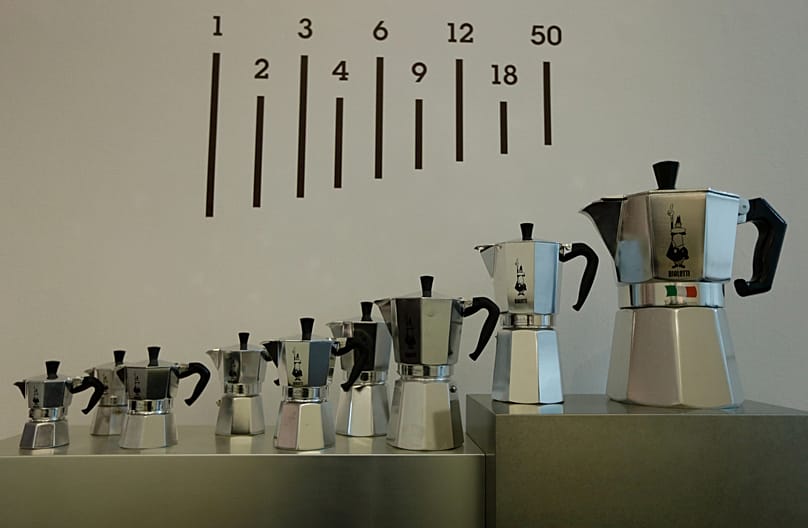
Among those who drink espresso, 83% have it every day, at home and at the bar, either with a moka pot or with modern capsule machines, which are now neck and neck in people’s habits.
Any commercial prospects must of course be weighed against environmental sustainability when growing coffee outside its traditional areas of origin.
Processing the beans after harvest can require between 50 and 200 litres of water for every kilogram of green coffee and produces wastewater which, if not properly treated, can affect local ecosystems.
And if, instead of the tropical rains that have always sustained coffee plantations, growing moves to areas where seasonal drought is becoming endemic, it becomes essential to match the agricultural challenge of coffee with a technological one, cutting the amount of water needed to grow and process the crop.