






























Europe’s patients could face longer waits for some new medicines as US efforts to drive down drug prices risk encouraging pharmaceutical companies to delay launches in lower-price markets, according to a new modelling study.
Last May, US President Donald Trump pushed to align drug pricing with the lowest levels among other developed nations — so-called most-favoured-nation (MFN) pricing. However, the pricing policy might have negative consequences.
 ADVERTISEMENT
ADVERTISEMENT
ADVERTISEMENT
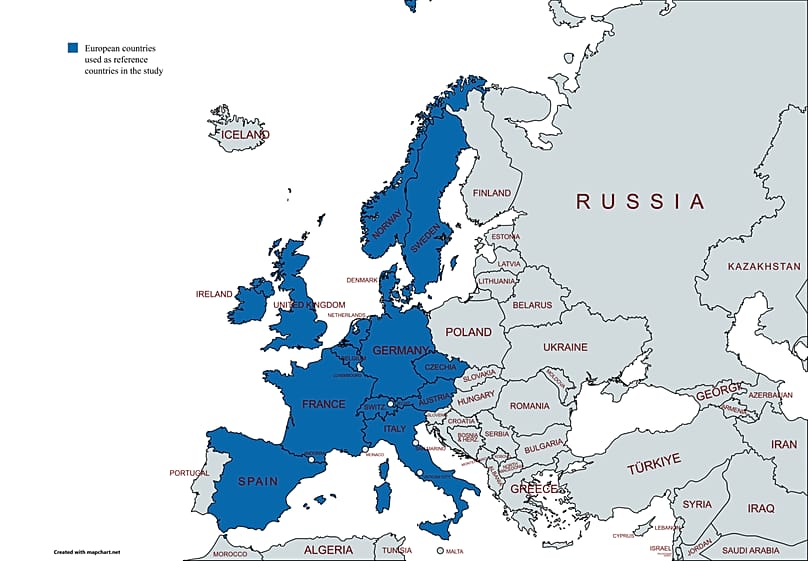
European patients might have to wait longer for some novel medicines as the US forces drugmakers to offer prices that match other high‑income countries, such as Germany or France, according to a new modelling study published in The Lancet.
Researchers looked at 195 patented medicines that together account for $87.9 billion of US’ annual spending. They found that for three in four medicines studied, the money companies would lose by lowering prices in the US would be greater than their total yearly sales in the countries used to set US prices.
To minimise losses in the US — the world’s largest pharmaceutical market, companies “could be incentivised to delay market launch in the lowest-priced countries in the reference market," researchers said, as by delaying launches drugmakers could avoid having to match those lower prices in the US.
“Policies in the US may impact access to medicines globally,” study author Kerstin Vokinger of ETH Zurich and the University of Zurich said in a press release.
The ones who would feel the impact ultimately are patients.
“The risk is very concrete: if pharmaceutical companies delay launching medicines in Europe because European prices may be used to determine prices in the United States, patients here could wait longer for treatments that are already available elsewhere,” European Patients Forum told Euronews Health in a written comment. “For someone living with a serious or progressive condition, an additional wait can have a real impact on their health and quality of life.”
The US policy already has an impact in Europe.
Implications in Europe
Europe has seen a fall in drug launches in recent months. 10 months after Trump's executive order, drug launches in EU markets fell by some 35% compared with the previous 10 months, Reuters reported in March.
While it is not clear whether the fall is directly linked to the policies in the US, it was announced in February that a drug for treating particularly severe cases of high cholesterol withdrawal from the market could be due to the US President Donald Trump's drug pricing policy.
“It's true that even in bigger countries like Germany, we see companies reconsidering whether they launch or when they launch,” Alexander Natz, chief of biotech entrepreneurs' lobby Eucope, told Euronews, explaining that the current situation forces drugmakers to think twice before a launch.
”We shouldn't expect that we're not getting access to any medicine, but we should expect that decisions are made in a much more careful way by companies,” he added.
Natz believes that to ensure Europe has new medicines without a delay, governments need to be willing to spend more.
“We must have a debate, an internal political debate in Germany and in other countries, how much are we willing to spend for healthcare?” he said.
The countries are already feeling that pressure on their tight budgets.
“Referenced countries, from Germany to Japan to Australia, are facing substantial pressure from the US administration and industry to raise prices and spending on medicines,” said Thomas Hwang of Brigham and Women’s Hospital and lead author of the study.
“But this is colliding with the reality that other countries have limited budget room to give.”
To minimise the negative outcomes, authors of the study note that manufacturers and countries might turn to list prices — that is, the manufacturer’s sticker price before discounts — rather than net prices, which reflect confidential rebates.
In the meantime, under recently updated European Union pharmaceutical rules, a company has to launch a new medicine if requested by a country within three years — or lose two years of monopoly rights.
This conditionality serves as a “counterweight” to the aftermath of Trump’s drug pricing policy; however, it is “unlikely to meaningfully alter the magnitude of savings by themselves,” authors wrote. Natz was also sceptical whether this could be enough for erasing posible negative consequences of US pricing policy.
How much is the US saving?
While the US drug pricing policy is risking delays in Europe, it could allow the US to cut expenditure by $5.2 billion for medicines used in hospitals and $6.4 billion for medicines bought in pharmacies, according to the Lancet study. Those savings could rise to $21 billion and $25.5 billion, respectively, under a broader application of the policy.
But as 17 companies have struck confidential deals with the administration, excluding them from these rules, the potential savings would be cut by 71%.
While the most-favoured-nation pricing has the potential “to deliver real savings to the US federal government and taxpayers … if manufacturers can evade participation in these models by striking side deals, most of those savings might not be realised,” said Hwang.
European Patients Forum said that if US drug pricing policy’s “implementation leads to delayed launches in other countries without delivering the expected savings for Medicare [US health insurance program], this risks becoming a lose-lose situation for both health systems and patients.”
The European Commission is looking at the issue too, as health ministers in mid-June tasked the European Health Commissioner to assess the impact of the US’ most-favoured-nation policy on the bloc: whether MFN is resulting in delayed launches, significantly higher prices — and, ultimately, reduced access to innovative medicines.
In the study, which is yet to be published but seen by Euronews Health, the Commission says that it is currently nearly impossible to indicate whether the delays or price pressures can be linked directly to US pricing policies or are rather a result of current uncertainties around it, pointing to the following years for greater clarity.
“I understand the commission study that it basically says it's too early to really benchmark individual prices. So far, so good. Maybe that's true. But the implications are much wider,” Natz said, adding that “it's not only about that price; it's [also] about is that product will ever be launched in Europe? Will that reach patients in Germany? That is a real question here.”