
















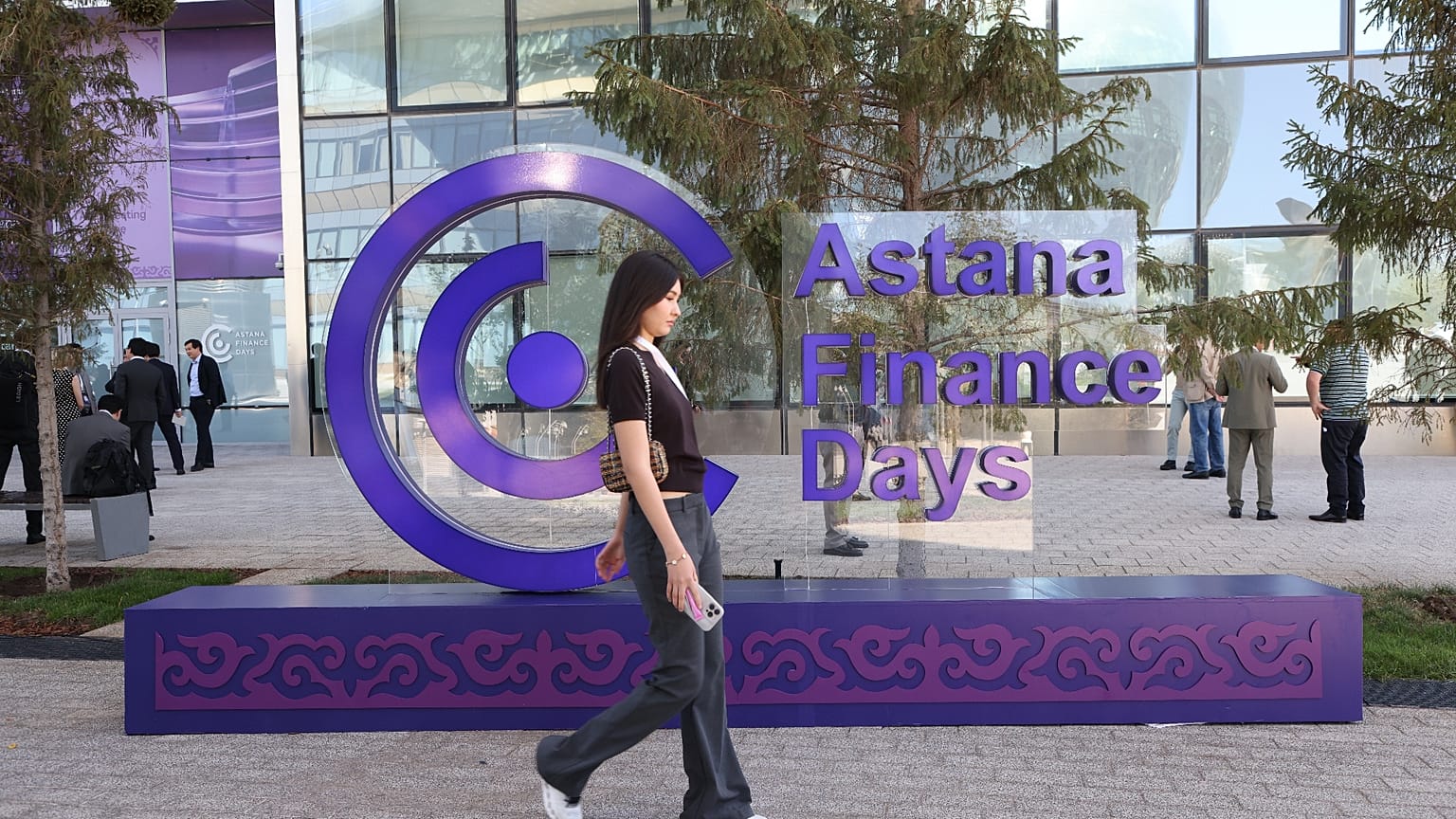













Around 8,000 participants from 90 countries, including representatives of major global financial institutions and asset managers with more than €22 trillion under their control wrap up their sessions in Astana Finance Days with discussion about further development of Central Asian financial markets.
The Astana Finance Days is the traditional gathering of financial institutions, experts, corporate representatives and regulators who discuss financial arrangements, environment and business possibilities in the region of Central Asia. It is organised by the Astana International Financial Centre.
 ADVERTISEMENT
ADVERTISEMENT
ADVERTISEMENT
The Forum has been growing each year. Last year it had 5,500 participants from 82 countries. This year, 8,000 participants from 90 countries, including representatives of major global financial institutions and asset managers with more than €22 trillion under their control.
The forum's program put emphasis on capital markets and investment products, regulation and the legal environment, regional and cross-border cooperation.
"Today, competition for capital requires not only attractive conditions but also the ability to transform opportunities into real projects and investments. This is the essence of Astana Finance Days 2026—Delivering Impact. Capital in Action. We bring together investors, regulators, and businesses to transform ideas into practical solutions, investment projects, and long-term partnerships," noted Renat Bekturov, Governor of the AIFC.
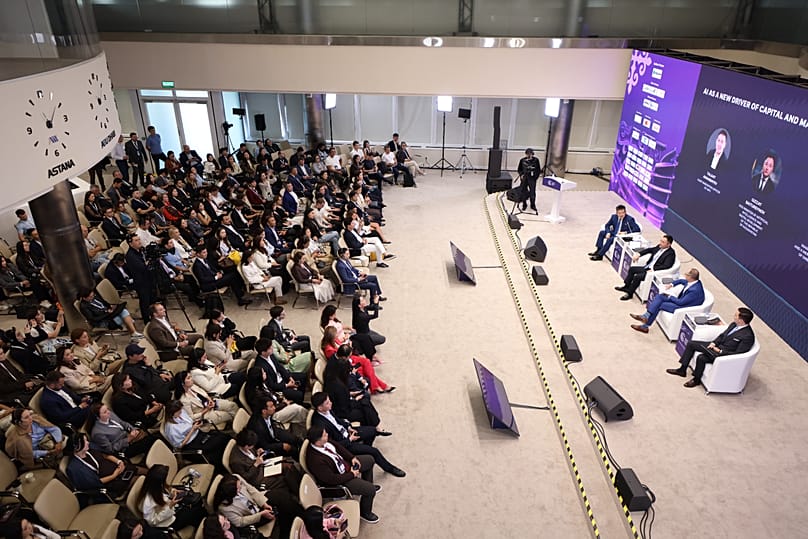
The first day of the forum brought discussion about sovereign and institutional capital, financial infrastructure, tokenisation and the transformation of global finance.
One of the practical achievements was the establishment of the Junior Mining Platform program. It helps attract investment to newly established and developing mining companies. The working group has selected 23 projects to be presented to investors from Oman, the United Kingdom, China and other countries.
The second day brought some of the concrete agreements and solutions. The Astana stock exchange (Astana International Exchange - AIX) launched trading in voluntary carbon credits verified under the international Verified Carbon Standard (VCS). By doing so, it became the first exchange in Central Asia to provide its own infrastructure for trading voluntary carbon credits. London-based Valor Carbon became the first supplier.
A number of memoranda of understanding were signed related to regional regulatory cooperation and new digital instruments.
The Astana Financial Services Authority (AFSA) signed a memorandum of understanding with the National Bank of Georgia on mutual access and recognition in financial services and the stock exchanges of Kazakhstan and Kyrgyzstan agreed to strengthen cooperation and cross engagement in their respective capital markets.
On the margins of the summit journalists heard interesting opinions of decision-makers that hint the direction of the Kazakhstan’s and regional capital market development.
Timur Suleimenov, the Governor of the National Bank of Kazakhstan said he believed the country should move away from strictly bank-centric financial system, in which banks account for at least 80% of the financial sector. He said brokers, dealers, insurance companies and the stock market as a whole should roughly double their share of the financial system, from the current 20% to 40% over time.
“In other words, if banks are active, then the economy exists, and funding for the economy exists. If banks have problems, then we have no other source,” he told reporters when asked about his earlier remarks that he wanted to reduce Kazakhstan’s reliance on banks.
In his opinion, the present system is “neither good nor bad” and replicates the ones existing in other countries, especially those with civil-law systems and transition economies. However, he would prefer Kazakhstan gradually changed that structure.
”We now want to gradually and intelligently move away from the situation where we have 80% — let it be 60%, and the rest will be the securities market. Will it be KASE, AIX or perhaps Alatau City? Will it be standard stocks and bonds, or tokenized assets, or assets from new finance? Time will tell, but it’s crucial that we attract all available funding sources for the development of the real sector and not be bank-centric,» Suleimenov said.
The Astana Finance Days also hosted talks about sustainable aviation fuels and cooperation deals. One of those is that an airline company from Kazakhstan secured a leasing agreement with an American lessor. AFD provided a spacious B2B platform and, as a special treat, a performance of the renowned Kazakh singer Dimash Qudaibergen.