

















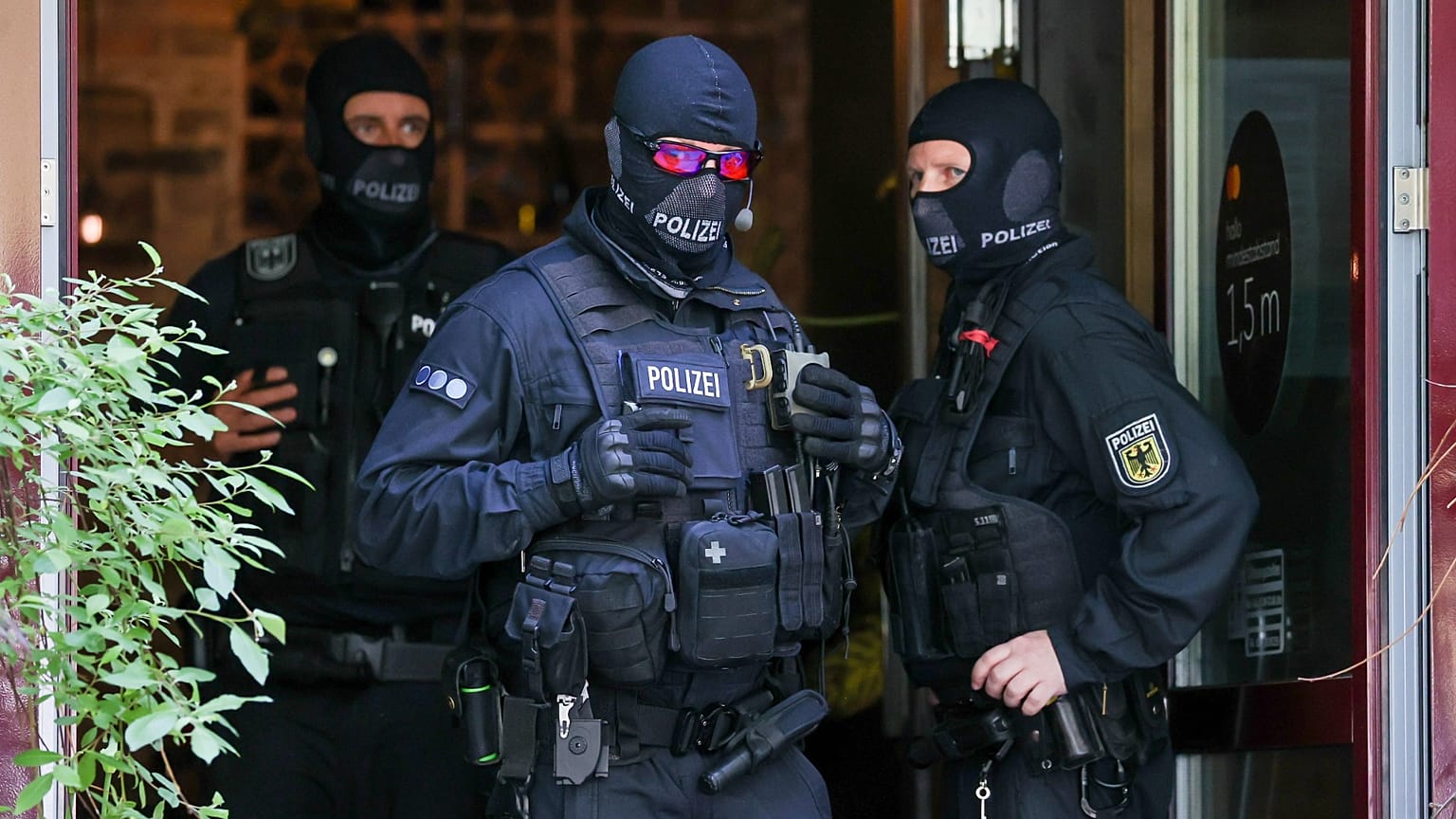













Criminally organised groups pose a consistently high threat, a federal report has found. Some states, including Saxony, have a "Taskforce Clan" as one group there has recently attracted particular attention.
Four Syrian families have been at the centre of the work of "Taskforce Clan" in Germany's eastern state of Saxony, according to the head of the unit. While cases of so-called clan crime currently remain at a consistently high level, the threat has increased particularly in the Leipzig area, according to the Chief Detective Superintendent.
 ADVERTISEMENT
ADVERTISEMENT
ADVERTISEMENT
The State Office of Criminal Investigation (LKA) in Saxony warns of increasing activity by criminal family clans, mostly of Syrian origin. According to the authority, between 700-1,000 people in Saxony currently belong to Syrian clans, a spokesperson for the LKA told the news magazine Focus.
In total, 130 people are known to the police for criminal offences, according to the report.
"These include violent offences, drug trafficking, money laundering, tax offences, crimes related to people smuggling, document and traffic offences, illegal financial transactions as well as various forms of fraud," Raiko Märtins of the LKA told Focus.
Märtins heads the Organised Crime Division at the LKA and the "Taskforce Clan" based there.
According to the report, firearms have been seized and in other cases, offences included fraud within the social security system, for example in relation to basic income support.
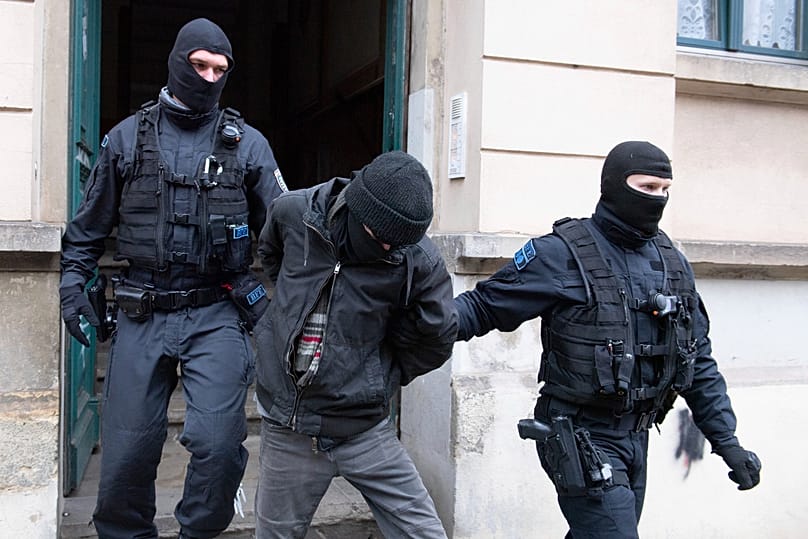
As the BILD daily reports, authorities are also investigating alleged people-smuggling activities. During a raid in April 2026, 50 flats and businesses in Leipzig and the surrounding area were searched.
Around 50 Syrians are believed to have sent their identity documents to Syria so that people with a similar appearance could use them to enter Germany under a false identity.
Networks that are hard to penetrate
Märtins told Focus that the clans fund their entire lives through illegal business dealings. In his view, they do not accept the German justice system, instead preferring to settle everything internally.
"Basically, they despise our state and our entire system. The isolation within these family alliances is enormous."
According to him, members of these clans set up businesses that can be used in the background to carry out criminal acts, "sometimes also using front men."
In the Leipzig area, it is said to be mainly about four large Syrian families, some with more than 60 members.
Family members are linked to or dependent on one another and, for example, support each other by giving inadequate witness statements or registering vehicles and bank accounts for others.
According to Märtins, one man is married to at least three women. "With these women he has at least 32 children, some of whom are already adults themselves. In addition, we know of at least 25 grandchildren in Saxony," Märtins told Focus.
He did not name the family in the interview, as some members are law-abiding citizens leading peaceful lives like the majority of Syrians who have come to Germany.
Rivalry between established and new clans
With the emergence of new criminal structures, experts believe that conflicts are also arising with clans that have been established in Germany for longer.
Political scientist Mahmoud Jaraba says he has observed a "growing trend of criminal activities in the so-called new clans, particularly in Syrian communities." He stated this in a written submission for a hearing in the state parliament of North Rhine-Westphalia.
How such tensions can escalate became apparent in Essen in June 2023. There, dozens of people from the environment of a large family of Lebanese origin attacked a Syrian restaurant on Salzmarkt square. Violent clashes broke out, with tables and chairs thrown through the air and windows smashed.
Jaraba explicitly warns against generalising such incidents. The vast majority of Syrians living in Germany have nothing to do with criminal structures. Nor should the crimes of individual members of a large family automatically be attributed to the entire family.
Such blanket suspicion can reinforce social exclusion and make integration more difficult.
The causes of these conflicts are also complex. According to Jaraba, tensions between longer established Turkish-Arab extended families and newer groups of Syrian origin are not solely due to criminal rivalry. In some cases, political and ethnic conflicts from Syria and Lebanon play a role and are being carried over into Germany.
"Taskforce Clan" meant to provide relief
The "Taskforce Clan" has existed in Saxony since October 2023. In addition to staff from the Saxony LKA, it includes employees of the Federal Police, the Dresden Main Customs Office, the tax investigation department of the tax office, the Saxony riot police and the Dresden Customs Investigation Office.
There are similar task forces in other federal states that are intended to take action against clan crime.
In Saxony, there are said to have already been around 40 major operations against clan crime. Several suspects were arrested, some charged and sentenced to prison terms.
People with Syrian citizenship make up the largest group of foreign nationals who are conspicuous in this context. They are followed by migrants from Afghanistan and Iraq, with significantly lower numbers.
Raiko Märtins, head of the Taskforce Clan in Saxony, does not describe his federal state as a stronghold of clan activity. However, developments in Leipzig are worrying.
Clan crime: Between 0.16-0.59% of all offences
Taskforces against clan crime exist not only in Saxony but also in North Rhine-Westphalia, Berlin and Lower Saxony. The authorities do not classify clan crime as organised crime, which is recorded, for example, in the Federal Situation Report. Instead, it involves criminal offences and administrative offences committed by people belonging to specific population groups.
Berlin and North Rhine-Westphalia focus on certain large families of Arab and Turkish-Arab origin. These include in particular families with Mhallami-Kurdish, Lebanese or Palestinian roots. In Saxony, Syrian groups have recently come under increased scrutiny.
Overall, according to Mediendienst Integration, offences grouped under the heading of clan crime account for between 0.16-0.59% of all recorded crimes in the federal states of Berlin, North Rhine-Westphalia and Lower Saxony. Only isolated proceedings in the area of clan crime are also counted within the statistics on organised crime (OC).
According to Mediendienst Integration, in 2024 Berlin recorded seven OC proceedings in the field of clan crime, compared with 952 offences in general crime and 127 administrative offences. In North Rhine-Westphalia there were six OC proceedings, 6,707 offences in general crime and 1,742 administrative offences.
The Federal Situation Report on Organised Crime 2024, published in February 2026, concludes that this form of crime poses a "consistently high threat potential." However, the figures also include cybercrime and "crime as a service," meaning organised groups that offer criminal acts. There is no separate assessment of clan crime, nor a completely congruent data set with that from the federal states.
Which groups organise themselves in clans?
While the number of investigations against groups involved in organised crime remains high (647 proceedings in 2024), the number of suspects has fallen slightly compared with the previous year, both among Germans and suspects with foreign citizenship.
A breakdown of the nationality of suspects in organised crime shows that most have German citizenship, followed by Turkish, Syrian, Albanian and Polish nationals. The share of Germans is almost four times higher.
According to the 2024 Federal Situation Report, suspects with German and Turkish citizenship still account for the majority of alleged offenders.
For the first time, Syrian suspects made up the third-largest group, at 4.7%. In 2023 their share was 3.8% and the BKA has observed an upward trend in recent years.
Financial losses of €15.6 million
The ratio of German to non-German suspects in clan crime also mirrors the overall picture in organised crime. In 2024, clan crime is estimated to have caused financial losses of €15.6 million. By comparison, cybercrime groups were responsible for almost half of all financial damage.
According to the Federal Criminal Police Office, the term clan is used when an "informal social organisation" is characterised "by a shared understanding of lineage among its members". Within this organisation there is a hierarchical structure, a strong sense of belonging and a shared set of norms and values.
The norms and values of clans partially take precedence over the legal order in force in Germany, which can lead to conflicts and ultimately to criminal offences and crime. Clan crime is therefore the criminal behaviour of clan members.
There is no nationwide uniform statistic for clan crime as a separate category. Publicly comparable situation reports are produced in particular by North Rhine-Westphalia, Lower Saxony and Berlin. In 2024 the authorities there registered around 6,700, 3,145 and 851 offences respectively in connection with clan crime.
'Clans must not be allowed a moment's peace'
The federal states' taskforces are one of the measures in place. The Interior Minister of North Rhine-Westphalia, Herbert Reul, spoke about a "policy of a thousand pinpricks."
His aim, he says, is systematic disruption. Reul cites as examples more than 1,600 inspection operations in shisha bars and betting shops, searches of around 4,000 properties and more than 2,000 criminal complaints. In 11,000 cases, fines were imposed.
"The clans must not be allowed a single moment's peace any more," he declared.
At the same time, Reul wants to offer prospects and invest in prevention. Twenty-six young clan members in North Rhine-Westphalia are therefore enrolled in programmes. The focus on young people is intended to encourage entire families to turn their backs on crime.

In Berlin, the number of cases of clan crime fell by 20% to 851 offences in 2024 compared with the previous year.
However, due to other deployments, for example at demonstrations, the police also carried out significantly fewer checks. Instead of 126 deployments, only 74 operations were carried out by the police in 2024.
These operations often concerned bodily harm and robbery (violent offences: 20%) as well as insult, criminal damage or money laundering (20%).
There were also traffic offences (15%) and property and forgery offences (13%). A total of 616 people are counted as belonging to clan crime families in Berlin.