

















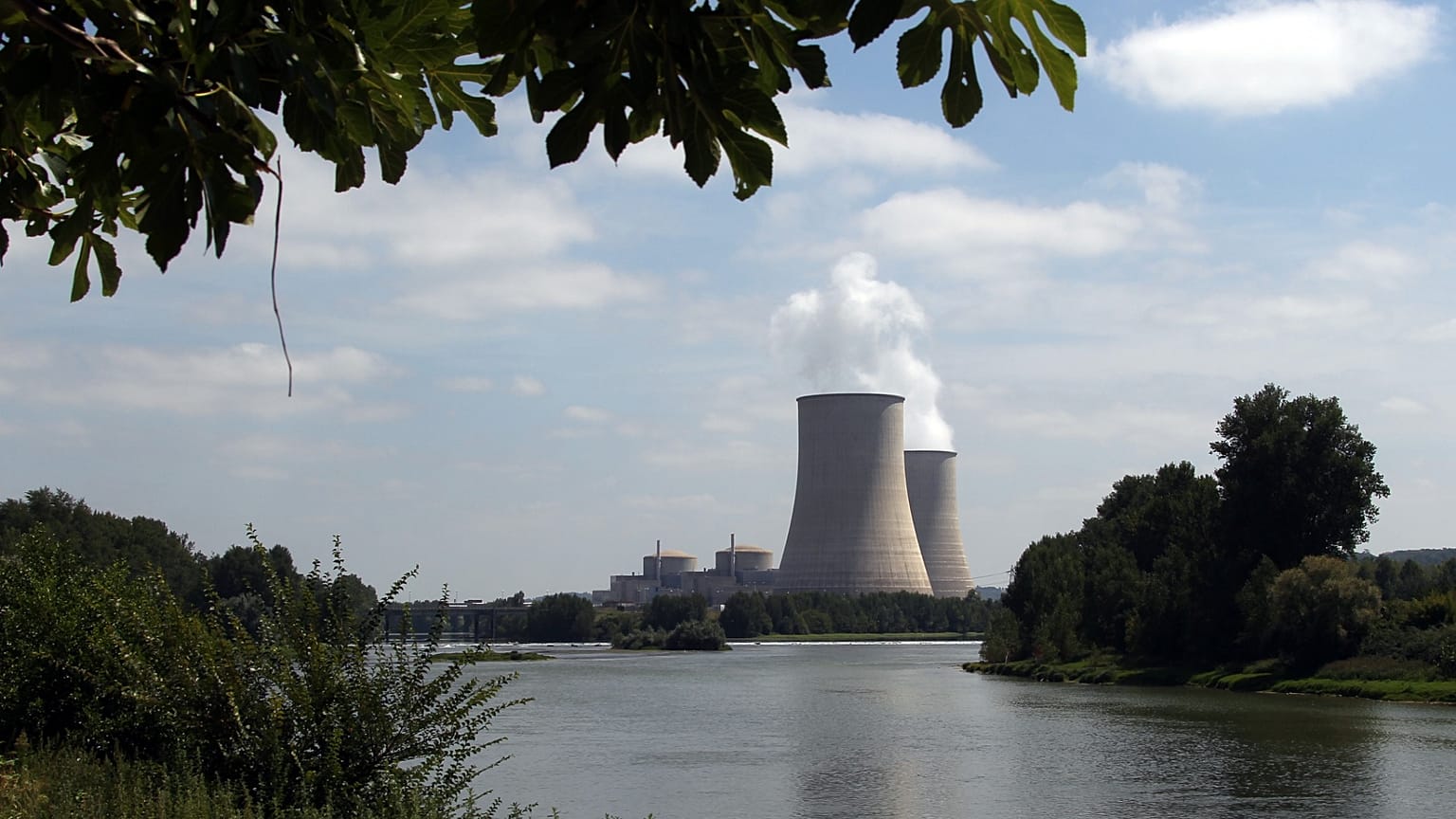













France uses nuclear power to generate around 70% of its electricity. The country has seen nuclear power production disrupted by multiple heatwaves and droughts this year.
France recorded a more than 20% shortfall in nuclear power production capacity on Wednesday, a record deficit caused by environmental-related outages linked to drought, extreme heat and a jellyfish invasion.
 ADVERTISEMENT
ADVERTISEMENT
ADVERTISEMENT
France uses nuclear power to generate around 70% of its electricity. The country has seen nuclear power production disrupted by multiple heatwaves and droughts this year.
According to AFP calculations based on data published by energy group EDF since 2015, 20.4% of generating capacity was unavailable.
Between 9:45 am and 10:00 am, EDF's nuclear fleet recorded a new peak in outages due to "environmental constraints" or "external environmental causes," both in terms of the number of reactors shut down or operating at reduced output and in terms of lost generating capacity.
In total, 13 of the 57 reactors in EDF's nuclear fleet were affected. Eight reactors were completely shut down while five were operating at reduced power.
Much of the lost nuclear generating capacity was due to full or partial shutdowns at five of the six reactors at the Gravelines nuclear power plant after a swarm of jellyfish clogged pumps used to cool the units.
Experts say overfishing, plastic pollution and warming seas due to climate change have created conditions allowing jellyfish to thrive and reproduce.
Outside the Gravelines plant, the largest in Western Europe, the shutdowns or production reductions affecting other reactors are linked to extreme heat and droughts, depriving the plants of the water they need for cooling.
During droughts or heatwaves, lower river flow and higher water temperatures can force EDF to cut, or even halt, production in order to protect the environment and biodiversity.
The operator is then unable to discharge chemical or radioactive effluents or further warm rivers with its cooling water, which is returned to the river at a higher temperature.
"But there is enough leeway that this does not pose any supply problems in the short term," says Nicolas Goldberg, an energy expert at consultancy Colombus Consulting quoted by CNews.