































The US Court of Appeals for the DC Circuit, which had allowed construction to continue while it considered the case, agreed with a lower court that such a massive White House overhaul required the explicit consent of Congress.
A federal appeals court has ordered the Trump administration to halt all construction of its $400 million White House ballroom until it receives congressional approval.
 ADVERTISEMENT
ADVERTISEMENT
ADVERTISEMENT
The US Court of Appeals for the DC Circuit had initially allowed construction to continue while it considered the case, but then agreed with a lower court that such a massive White House overhaul required the explicit consent of Congress.
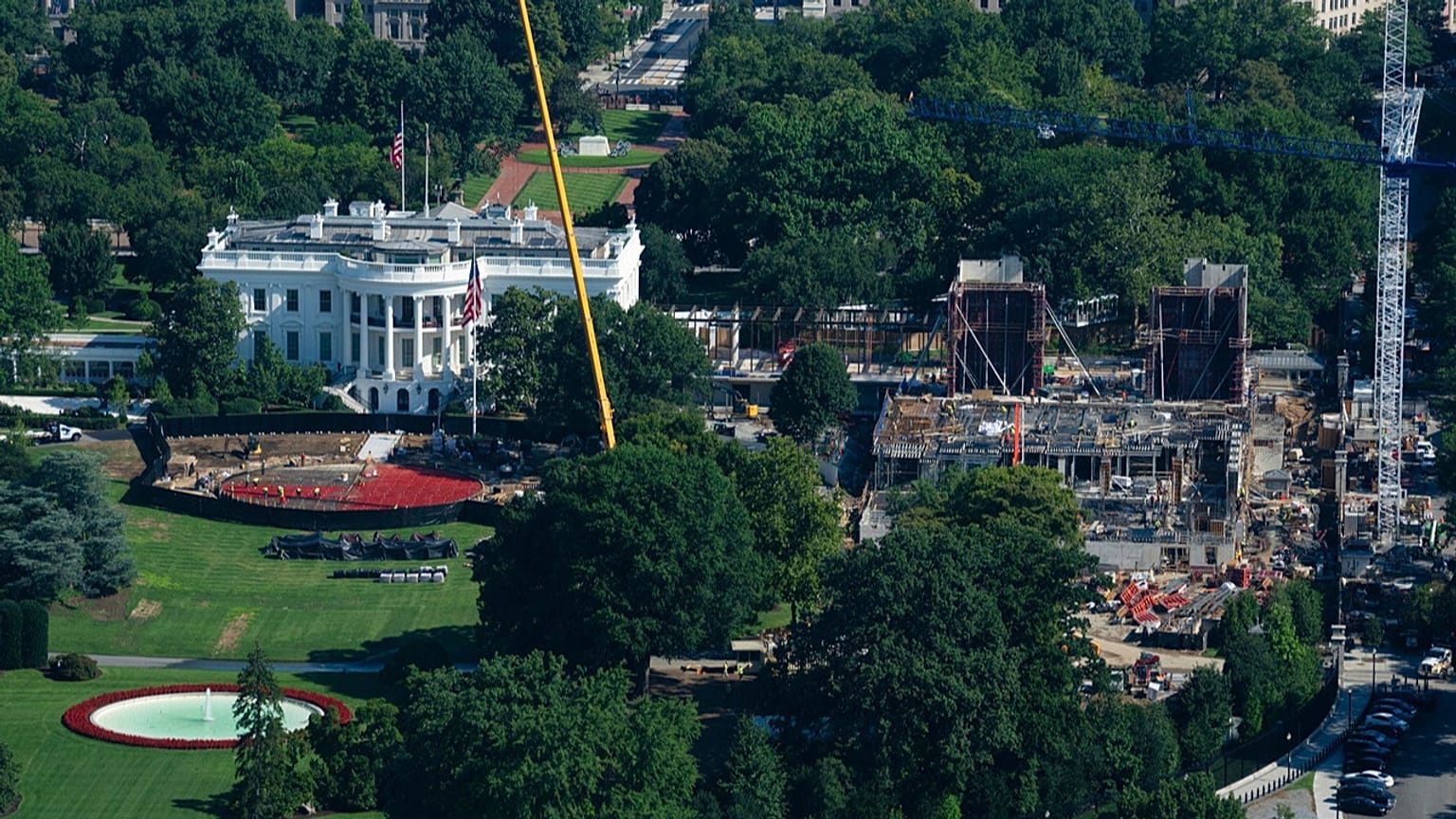
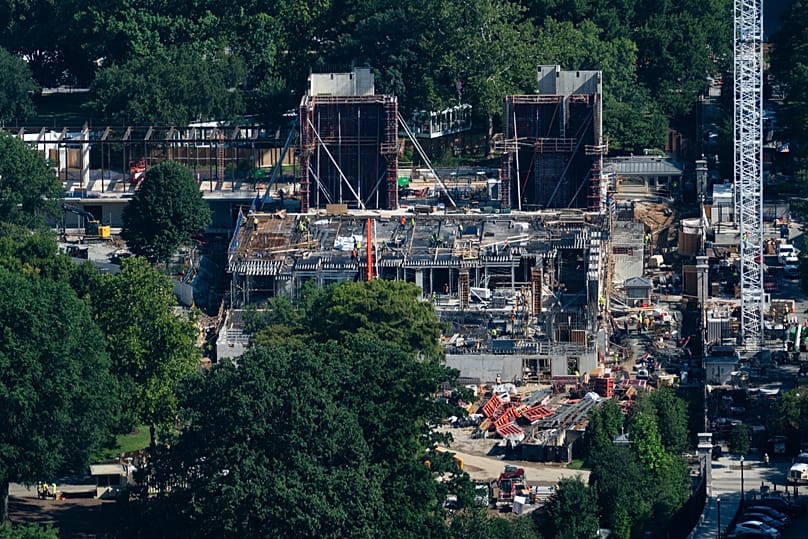
In a 2-1 decision on the ballroom, the appeals court sided with historic preservationists who sued to stop construction of the massive structure, which has begun to rise aboveground on the east side of the White House, according to the most recent aerial photos of the site.
The 8,400-square-metre ballroom is being constructed where the White House’s historic East Wing stood before Trump ordered its demolition last fall.
“Whether or not a massive ballroom should be constructed is for Congress to decide and is not a matter for Executive self-help,” the court wrote.
“This holding has nothing at all to do with whether the proposed ballroom is desirable, or not, as a matter of policy. This ruling does not even necessarily mean that the Defendants may not ultimately construct the ballroom.
“What it does mean,” the court continued, “is that the Defendants may not do so during the district court’s expeditious litigation without securing Congress’s authorisation, as the Constitution and laws require.”
The court said it would stay its ruling for two weeks to give the administration time to appeal to the US Supreme Court.
US President Donald Trump lashed out after the ruling, calling it "horrendous, politically motivated, and unlawful", and vowed to appeal the decision.
The two judges in the majority were appointed by Democratic presidents, while the dissenter was nominated by Trump himself.
Trump, who has repeatedly complained that the White House lacks sufficient space for grand galas such as state dinners, unilaterally ordered construction of the massive ballroom.
Trump has insisted that the ballroom will be privately financed, but media reports in June showed that significant taxpayer funds were going to the project
Democrats warned that $350 million in funds from a tax cuts law appeared to have been redirected for the ballroom.
Several of Trump's construction projects, including a proposed 76-metre-tall triumphal arch, have similarly faced legal challenges, but the ballroom project would be the first to reach the Supreme Court.