

















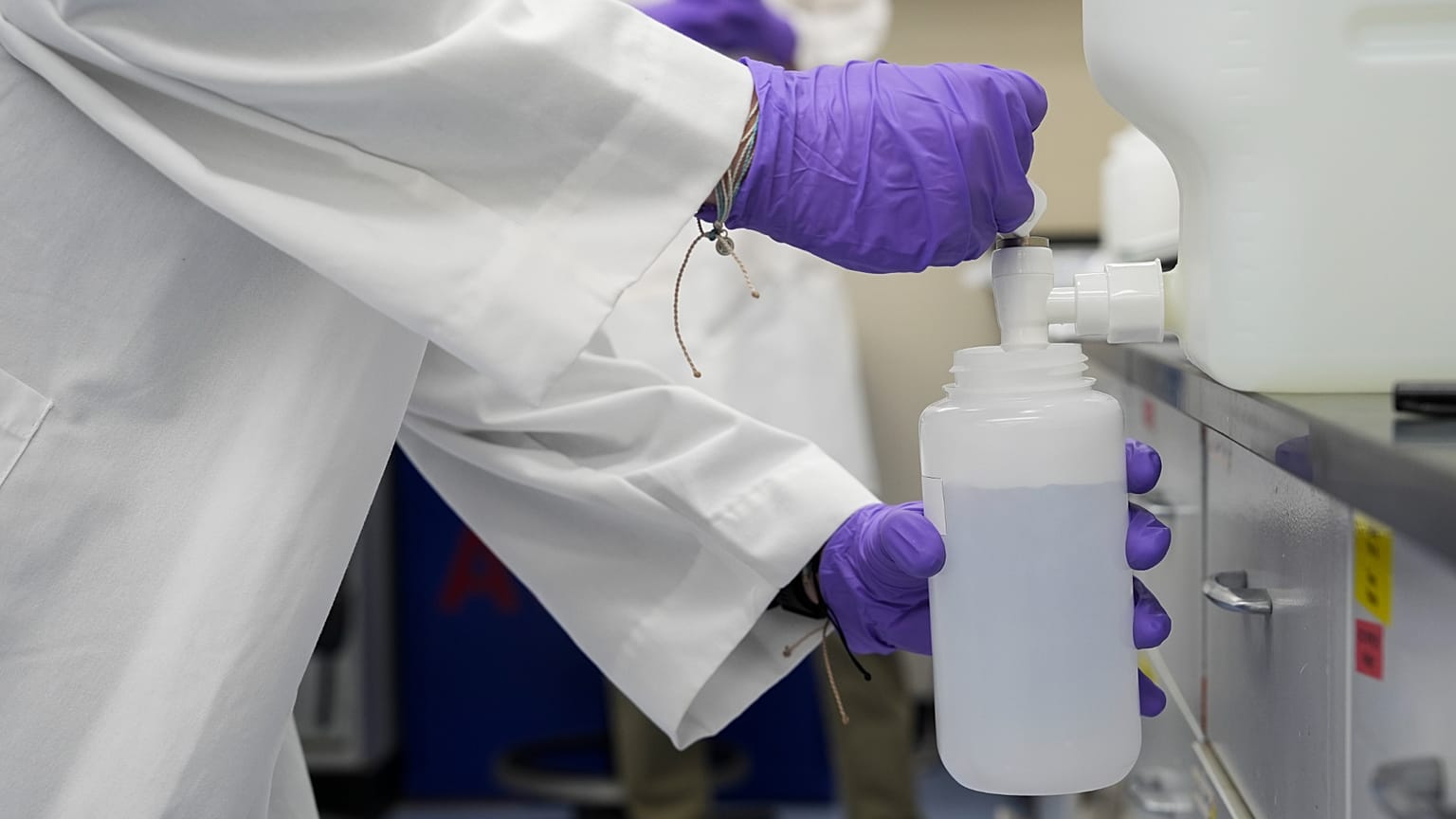














TFAS are a type of perfluoroalkyl and polyfluoroalkyl substance (PFAS), often known as "forever chemicals" as they are long-lasting in the environment.
The European Union's food safety agency has reduced the safe daily intake level of trifluoroacetic acid (TFA), the so-called "forever chemical" that is found widely in drinking water.
 ADVERTISEMENT
ADVERTISEMENT
ADVERTISEMENT
The European Food Safety Authority (EFSA) announced on Wednesday that the acceptable daily intake level would be lowered from 0.05 milligrams per kilogram of bodyweight per day to 0.014 milligrams.
It said the updated values were based on new evidence that showed TFA "changes levels of thyroxine – a hormone produced by the thyroid gland that plays an important role in regulating the body," among other effects.
TFAS are a type of perfluoroalkyl and polyfluoroalkyl substance (PFAS), often known as "forever chemicals" as they are long-lasting in the environment.
They are used in a variety of products from kitchenware and medical devices to defence and clean energy equipment. But their usage may carry risks to people and the environment, including wildlife.
According to the EFSA, TFA can form when PFAS substances break down, "including from certain active substances in pesticides." TFA can then end up in groundwater, soil, and food crops, it says.
EU members are required to monitor PFAS levels in drinking water, while other monitoring programmes track PFAS levels in food.
The EFSA said that along with the European Chemicals Agency it was continuing to examine how PFAS break down into TFA, as well as its fate and behaviour in soil and water, and that it expected to complete its findings by next summer.