












Despite not hosting a single match, Portugal could see nearly €1 billion in economic benefits from a World Cup increasingly driven by digital engagement and consumer spending, according to a new study.
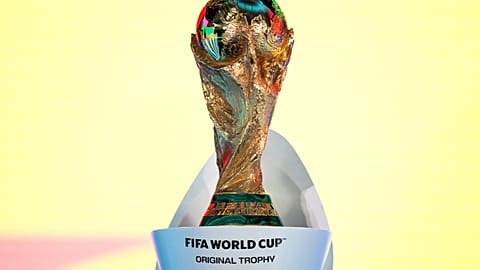
Although it is not a host nation, Portugal could generate up to €945 million from the 2026 FIFA World Cup, according to a study by IPAM, the Portuguese Institute of Marketing Administration, which analysed the tournament’s potential impact on the Portuguese economy.
 ADVERTISEMENT
ADVERTISEMENT
ADVERTISEMENT
The study points to a structural shift in football’s economic model, arguing that its impact no longer depends on geography but on the ability of fans, brands and media to amplify the event before, during and after matches.
The analysis, conducted by IPAM’s Sports Marketing Research Unit, estimates an economic impact of between €378 million and €945 million, depending directly on the Portuguese national team’s performance.
The lowest estimate, corresponding to Portugal being eliminated in the group stage, is €378 million. In an intermediate scenario, with the team reaching the last 16, the impact could rise to €561 million. If Portugal were to win the tournament, it could reach €945 million.
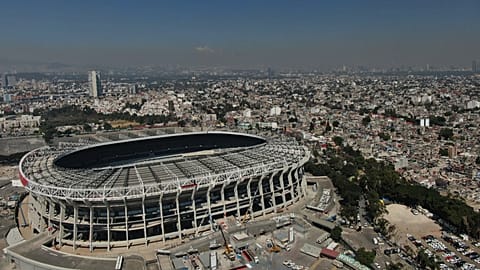
According to the study, the projected growth is driven by four main factors: higher purchasing power; the tournament being hosted in economically strong markets – the United States, Canada and Mexico; the expansion of the World Cup to 48 teams and 104 matches; and the consolidation of the digital economy as a new source of value.
IPAM’s Sports Marketing Research Unit says the tournament could generate “the largest impact ever in Portugal” associated with a sporting competition held outside the country.
“Portugal does not need to host the World Cup to generate significant economic impact. What this study shows is that football’s value is no longer concentrated in the stadium or in the host country. Today, the impact is created through consumption, attention, digital interaction and the ability of fans to amplify the event,” IPAM executive director Daniel Sá said in a statement.
For comparison, Euro 2016 – which Portugal won – generated an economic impact of €609 million. The study’s maximum projection for the 2026 World Cup exceeds that figure by more than €300 million.
World Cup spending could range from €40 to €3,500 per fan
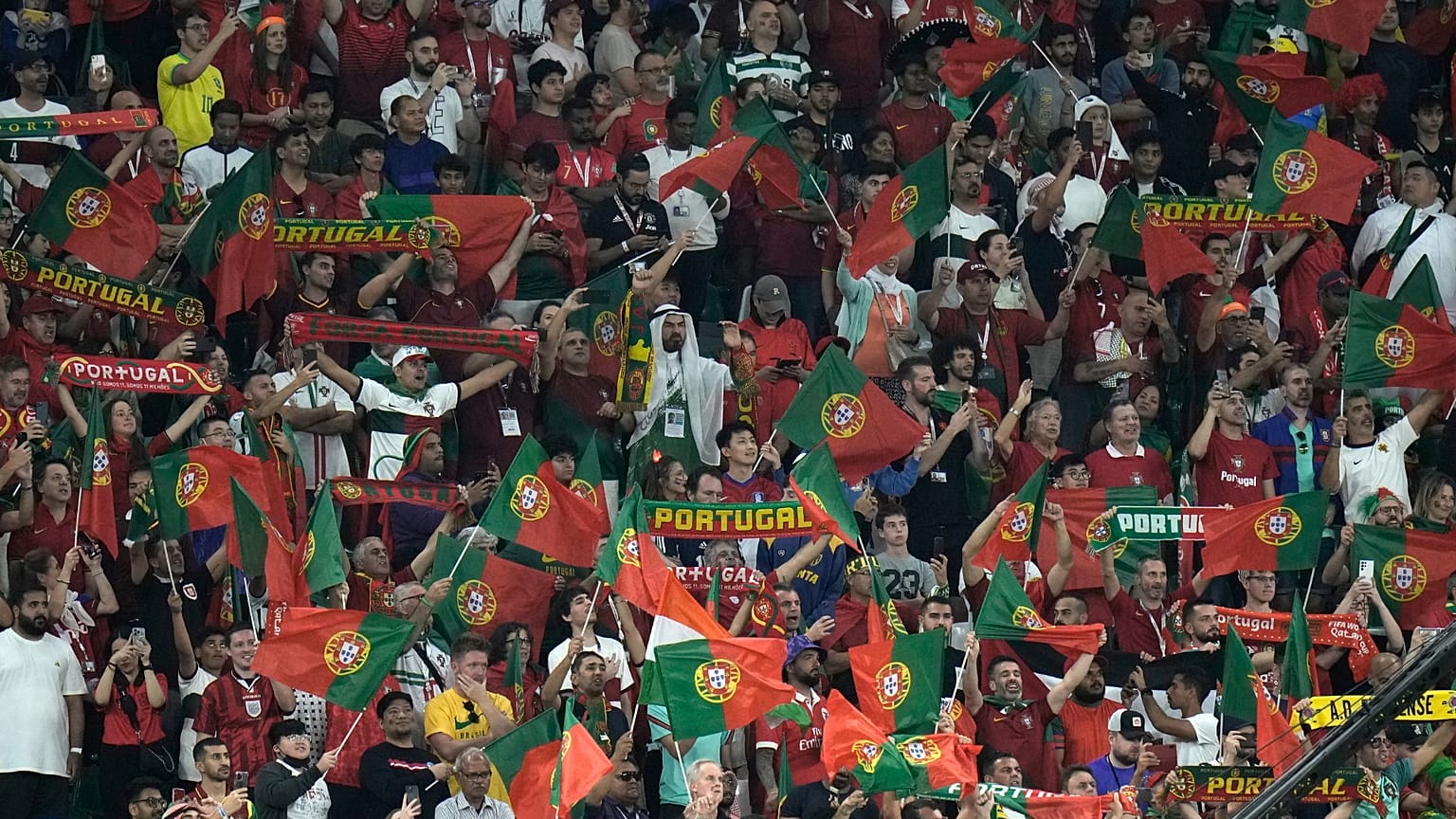
The research also highlights “the role of the fan as a new economic asset”. A casual supporter, described as “a consumer of moments”, could generate between €40 and €70 during the tournament.
By contrast, highly engaged, digital-first fans could generate spending of up to €3,500 through a combination of recurring consumption, multi-platform activity, social interaction and influence over other consumers.
While traditional consumption still accounts for the majority of the impact – around 77% – the digital component already represents 23% of the estimated value, driven by streaming platforms, social media engagement and user-generated content.
Household consumption is identified as the largest category, accounting for 26% of the total impact, followed by restaurants and catering at 15%, and advertising and media at 14%.
Within the digital segment, streaming and OTT platforms account for 10%, social media engagement for 7%, and the so-called “content economy” for 6%.
According to the researchers, trading cards and stickers (5%) and merchandising (4%) demonstrate how the World Cup “activates emotional and collectable economies”, generating strong demand in specific segments and encouraging impulse purchases. Betting (6%) is also identified as a significant component, although one increasingly integrated into broader entertainment and convenience consumption patterns.
By contrast, travel accounts for just 4% of the total impact, reflecting both the tournament’s location outside Europe and the study’s central conclusion that economic benefits no longer depend on physical attendance.
“Football continues to generate consumption, but growth increasingly lies in how that consumption is shared, commented on, turned into content and amplified. Almost one in every four euros generated by the World Cup now comes from digital,” Sá said.
For IPAM, the 2026 World Cup also highlights strategic challenges for brands, media organisations and public authorities – lessons that will be relevant when Portugal co-hosts the 2030 World Cup.
“Brands will have to move away from rigid planning models and invest in real-time activations. The media will have to combine television, streaming and digital content. The wider economy could benefit not only through hospitality, retail and tourism, but also through new revenue streams linked to platforms, content creators and the attention economy,” the institute said.
The study also offers a broader lesson for the 2030 tournament: hosting an event of this scale does not, in itself, guarantee economic impact. The real value will depend on how effectively it is activated before, during and after the competition.
“Those who know how to interpret the 2026 World Cup will gain more than those who simply broadcast it. This is perhaps the study’s main conclusion: the World Cup’s value no longer lies only in the event itself, but in the way it is activated,” Sá concluded.