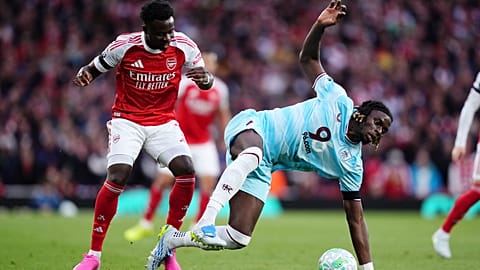













Canadian investment research firm BCA Research has applied the same statistical rigour it uses to analyse global markets to predict the outcome of the 2026 FIFA World Cup, which kicks off on Thursday in Mexico City.
Market analysts are usually judged on their ability to call rate decisions or predict price movements, but with the world's biggest football tournament, the 2026 FIFA World Cup, getting underway this Thursday, one prominent investment research firm has turned its models on a rather different kind of asset: the beautiful game.
 ADVERTISEMENT
ADVERTISEMENT
ADVERTISEMENT
BCA Research, a Montreal-based investment research firm, has published its third edition of what it calls "The Most Important of All Unimportant Forecasts", using a proprietary two-step statistical model to predict the outcome of the tournament.
The verdict? France lifts the trophy after defeating Portugal in the final. England and Spain, the model says, go home in the semi-finals.
A model with a track record
Unlike the armchair punditry that tends to dominate the pre-tournament conversation, BCA's approach is rooted in the same discipline the firm applies to sovereign debt and equity markets.
The exercise has been running since 2018, and it correctly predicted that France would win the 2018 final. Four years later, it called Argentina to win the 2022 title in a penalty shootout, no small feat given the chaos of that tournament.
For 2026, the model runs in two stages. The first draws on data from five previous World Cups and incorporates variables including average player ratings, forward line speed, and a "home advantage dummy" that adds a 24% boost to each host nation's winning probability per match.
The second applies a separate model calibrated on knockout-stage games from 2006 onwards, where club-level synergy and forward experience measured by matches played, rather than age, carry the most weight.
The firm also applies a "Winner's curse dummy", imposing a 20% penalty on Argentina's winning probability per match, reflecting the historical tendency of reigning champions to underperform.
According to BCA's analysis, Spain in 2014 and Germany in 2018 fell victim to precisely this dynamic.
BCA also notes that the model performs better in the knockout stage than in the group stage, particularly due to the unpredictability of teams that win their first two games, effectively qualifying, and then end up resting players for their final group-stage match.
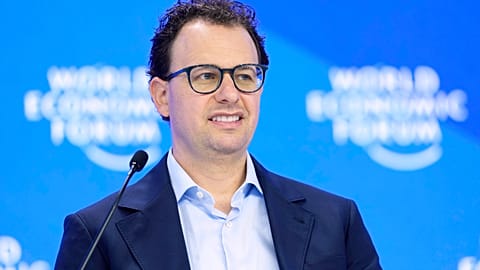
Speaking to Euronews, Jérémie Peloso, chief strategist at BCA, pointed to Tunisia's win over France in the final group match of the 2022 World Cup.
"France had already qualified, and the manager decided to leave some of the key players on the bench," he said.
Peloso said such decisions can make group-stage matches harder to predict because factors beyond team strength come into play.
France to edge a tight final
The model places France as the tournament's outright favourite, and the raw numbers offer independent backing for that view.
According to Transfermarkt, France fields the most valuable squad at this year's tournament, with a combined player market value of €1.476 billion, more than three times the average across all 48 nations participating.
Kylian Mbappé alone is valued at €200 million, accounting for over 13% of that total.

According to BCA Research, Didier Deschamps' side, which the firm notes has arguably enough depth to run two competitive starting line-ups, is expected to beat Spain in a razor-thin semi-final, with France assigned a 52.5% probability of advancing, suggesting a genuinely open contest.
Peloso explained to Euronews that "the odds may appear close to a coin toss, but this also reflects the fact that the two teams are both favourites and are currently ranked as the two best nations in the FIFA Rankings."
"The differentiating factor is the quality of the French forwards relative to Spain. In the knockout stage, we have found that the experience and quality of forwards tend to be the deciding factor," Peloso concluded.
Meanwhile, Portugal would see off England in the other semi-final, with a 55.2% probability of progressing, a result the model suggests was shifted in Portugal's favour specifically by England manager Thomas Tuchel's decision to omit Cole Palmer, Phil Foden and Harry Maguire from his squad.
The final that BCA projects would carry significant stakes for both nations.
For France, victory would make Deschamps only the second coach in history to win the World Cup twice, after Italy's Vittorio Pozzo.
For Portugal and Cristiano Ronaldo, now 41 and widely expected to be making his final tournament appearance, a win would close the final chapter left unwritten in one of football's most storied careers.
Prediction markets partly disagree
BCA Research also compared its championship probabilities against prediction market Polymarket, noting that its model broadly aligns with market consensus but diverges on some aspects.
Notably, BCA assigns Portugal a 16.4% chance of winning the tournament versus Polymarket's 10%, which places the nation only as the fourth most likely to win.
On Polymarket, France and Spain are tied in first place with a 16% chance each, and England was third on Tuesday with 11%.
BCA also gives slightly higher probabilities to the three host nations, the US, Mexico and Canada, than current Polymarket odds imply.
On Kalshi, another prediction market, Spain is actually leading the probabilities at the time of writing with a 16.5% chance. France is second with 16.3%, and Portugal comes in third with 10.3%.
For the rest of us, the tournament kicks off in Mexico City on Thursday. The numbers, at least, have been run.
Disclaimer: This information does not constitute financial advice; always do your own research on top to ensure it's right for your specific circumstances.