






























The Bertelsmann Stiftung's new transformation index says that the world is becoming increasingly autocratic and existing autocracies are becoming more entrenched. One of the few counter-examples: Germany's neighbour Poland. What is being done differently here.
Democracies under pressure: More and more countries are slipping into authoritarian systems of government, democracies are on the defensive, according to the Bertelsmann Stiftung's (BTI) new Transformation Index. Today, 56 per cent of the 137 countries surveyed are ruled autocratically.
 ADVERTISEMENT
ADVERTISEMENT
ADVERTISEMENT
77 countries in the study are ruled autocratically, almost two thirds of which are considered hard autocracies. This means that fundamental rights are completely disregarded, as the authors of the Bertelsmann study conclude. A record high since the survey began in 2006.
"The BTI shows once again how much pressure democratic institutions are coming under worldwide - at the same time, we are seeing remarkably lively resistance to their erosion in many places," says Daniela Schwarzer, Executive Director of the Bertelsmann Stiftung. "This ability to mobilise, which comes primarily from an active civil society, is a key potential for democratic renewal."
However, autocratic tendencies are also gaining ground in many democracies, the report warns. "Many elected governments have undermined core democratic institutions with the aim of holding on to power. This abuse of power paves the way for autocracy," says democracy expert and study author Sabine Donner.
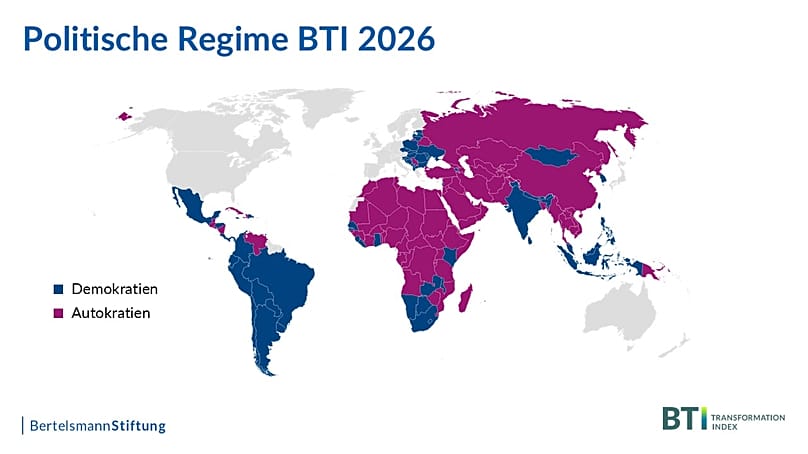
However, the picture also shows some positive developments. In Brazil and Poland, for example, a democratic turnaround has been achieved, even if its long-term success in polarised societies is far from guaranteed. These examples demonstrate a growing democratic ability to learn to protect institutions and utilise windows of opportunity for reform.
Poland: a pioneer in democratic resilience
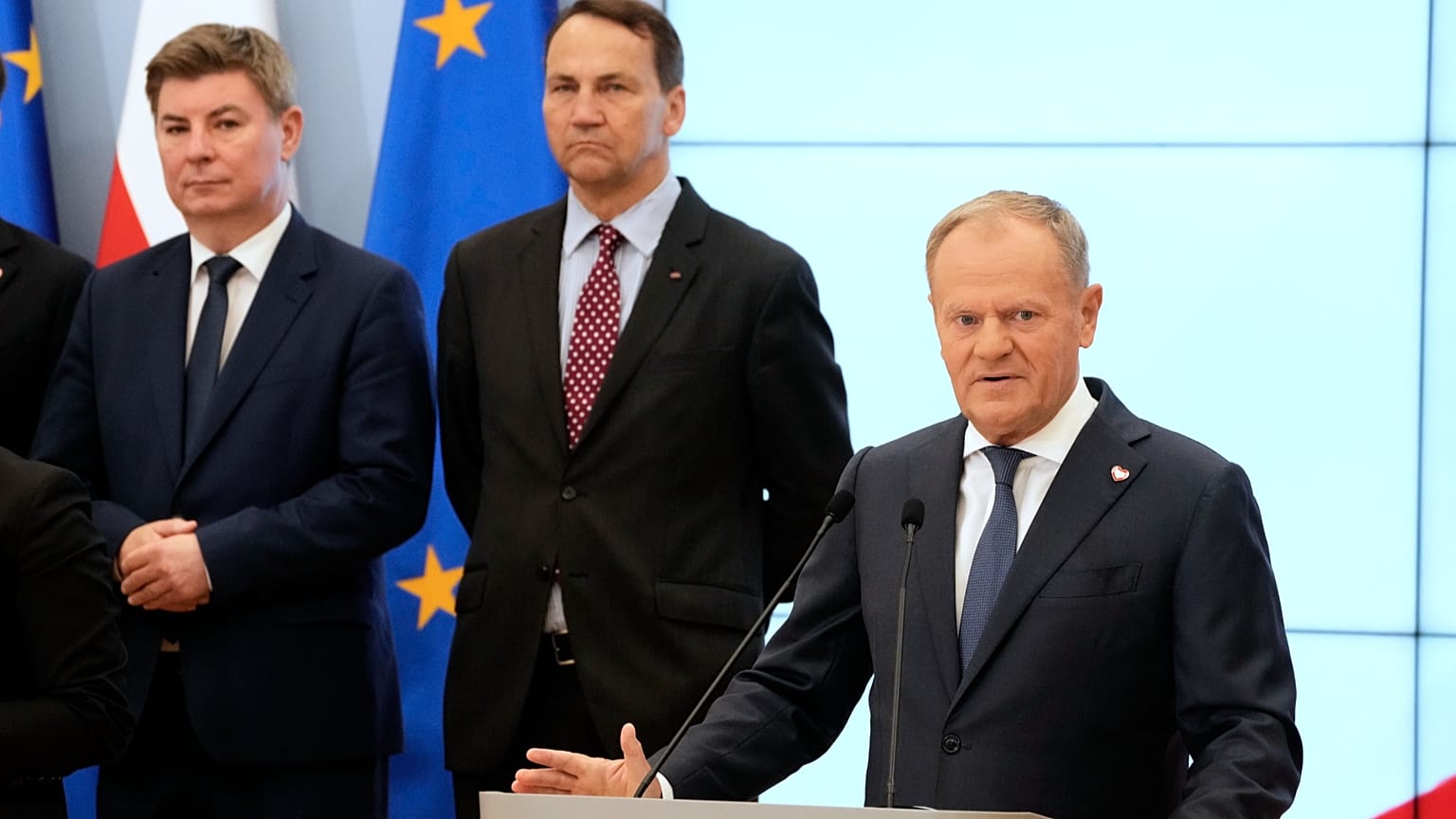
After years of democratic setbacks, the current government under Donald Tusk has initiated a trend reversal: Reforms to strengthen the rule of law, depoliticise state institutions and combat corruption have been initiated. This makes Poland an example of what the report describes as a rare countermovement: democratic resilience.
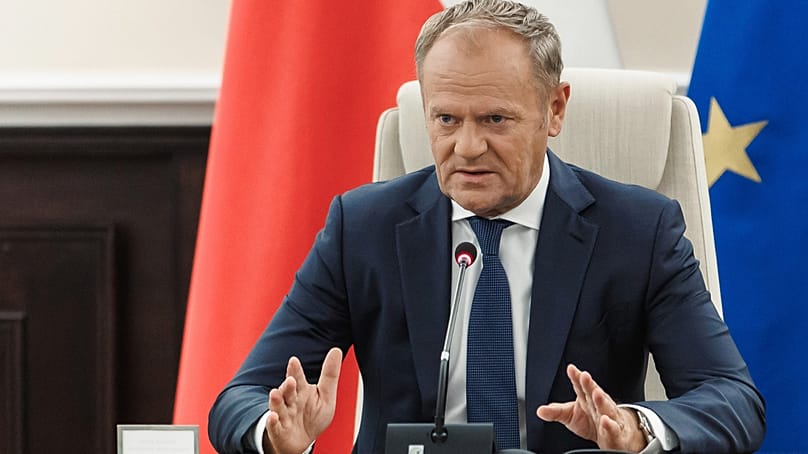
While many governments deliberately weaken institutions, Warsaw has at least partially succeeded in strengthening precisely these structures again. According to the BTI, this is not a matter of course, as the dismantling of democratic systems often comes from elected governments themselves.
"With the primary goal of holding on to power, elected political elites have continued the gradual erosion of core democratic institutions," says the report "Repression Meets Resistance" by Sabine Donner, Hauke Hartmann and Sebastian Plate.
However, the report warns that once institutions have been weakened, they can only be rebuilt slowly. Reforms are often slowed down by networks left over from previous governments, political polarisation and institutional blockades.
This can also be seen in the example of Poland: Despite progress, trust in state institutions remains low and the political landscape is highly polarised. The return to stable democratic standards is a lengthy process.
Like 22 other OECD countries that are categorised as stable democracies, Germany itself is not part of the BTI study. However, the trends described cannot be limited to other regions of the world. Increasing polarisation, declining trust in institutions and pressure on democratic processes are developments that also challenge established democracies. The example of Poland shows that democratic deconstruction does not necessarily have to be permanent - but also how fragile such processes remain.