
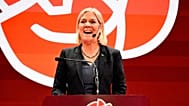




























Incumbent Premier Mette Frederiksen's Social Democrats won 21.8% of the vote, their lowest share in 120 years. The left bloc won 84 seats, short of a majority. Lars Løkke Rasmussen’s moderates are now kingmakers with 14 seats as coalition talks begin.
Denmark’s election on Tuesday has ended in an inconclusive result, leaving the prime minister’s future unclear, after a campaign that focused on bread-and-butter issues rather than on her handling of the crisis over US President Donald Trump’s ambitions toward Greenland.
 ADVERTISEMENT
ADVERTISEMENT
ADVERTISEMENT
Official results showed that Prime Minister Mette Frederiksen’s centre-left Social Democrats lost ground compared with the last election in 2022, as did her two partners in the outgoing government.
Neither the left-leaning nor the right-leaning bloc won a majority in parliament, leaving experienced Foreign Minister Lars Løkke Rasmussen, a former prime minister, as the kingmaker.
His centrist Moderate party, with 14 lawmakers in the 179-seat parliament, is in a position to determine whether Frederiksen can serve a third term.
Frederiksen said she is ready to remain prime minister. “The world is unsettled. There are strong winds around us,” she stressed.
Kingmaker calls on rivals to ‘come and play’
Løkke Rasmussen called on rivals on the left and right to climb down from some of the positions they staked out in the campaign, and “come and play with us.”
Denmark “is a small country of 6 million people, which is in upheaval, and there is war in Iran, and there is war in Ukraine,” he said. He argued that “We are one tribe. We must come together. We must not be divided.”
But Defence Minister Troels Lund Poulsen, the best-placed centre-right challenger to Frederiksen, made clear that he and his Liberal party don't intend to go into government with her Social Democrats again.
The Social Democrats remained the biggest single party by some distance, but with 21.9% of the vote, well below the 27.5% they took in the 2022 election.
The 48-year-old Frederiksen is known for strong support for Ukraine in its defence against Russia’s full-scale invasion and for a restrictive approach to migration.
Frederiksen called the election early
Frederiksen called for a snap election in February, several months before she had to, in the hope that her standoff over Trump’s push for control of Greenland, which rallied European allies behind Denmark, would help her with voters.
Her support had previously waned as the cost of living rose, something that, along with pensions and a potential wealth tax, has been a prominent campaign issue.
No single party had been expected to come anywhere near winning a majority. Denmark’s system of proportional representation typically produces coalition governments, traditionally made up of several parties from either the “red bloc” on the left or the “blue bloc” on the right, after weeks of negotiations.
Frederiksen’s outgoing administration was the first in decades to straddle the left-right divide.
Frederiksen herself said she had hoped for a better result, but it was normal for a party seeking a third term to lose ground.
“I have been in charge of this wonderful country for nearly seven years,” she said. “We have weathered the pandemic; we have had to deal with war. We have been threatened by the US president, and in those nearly seven years, we have seen a 4% decline.”
Greenland not a big campaign issue
Greenland, which took up much of the government’s energy in recent months, wasn’t a significant issue in the campaign because there is broad agreement on its place in the Kingdom of Denmark.
Frederiksen warned in January that a US takeover of Greenland would amount to the end of NATO, but the crisis has since simmered down.
After Trump backed down from threats to impose tariffs on Denmark and other European countries that opposed the US taking control of the vast island in the north Atlantic, the US, Denmark, and Greenland began technical talks on an Arctic security deal.
Denmark’s single-chamber parliament, the Folketing, is elected for a four-year term. Lawmakers from Denmark hold 175 of its seats, while two each go to representatives from Greenland and the kingdom’s other semiautonomous territory, the Faroe Islands.
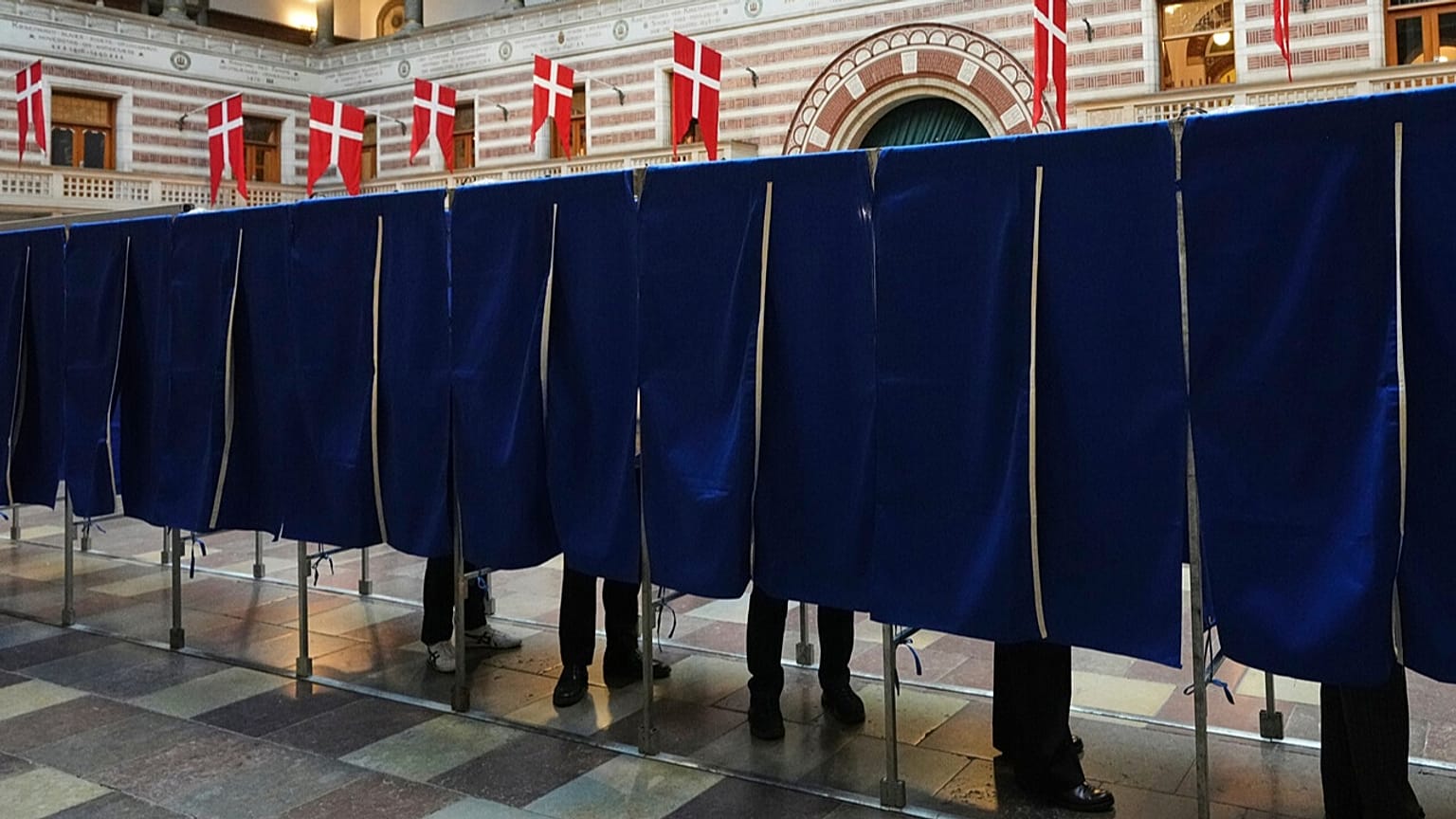
More than 4.3 million people were eligible to vote.