




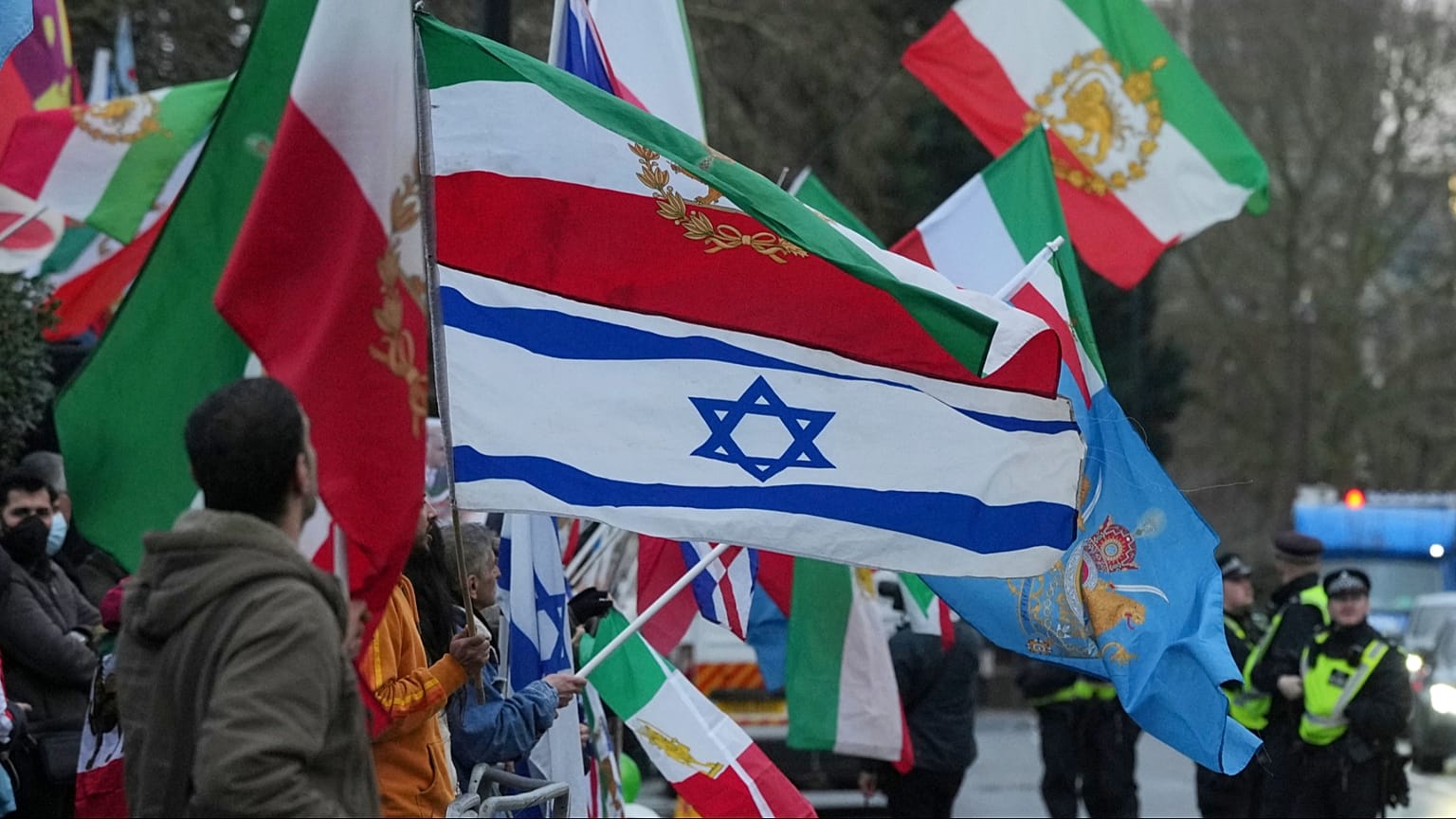













If the US and Israel refrain from striking, it cannot be ruled out that Iran's Revolutionary Guard itself may initiate hostilities. Iranian officials now claim they are prepared for both negotiations and war.
The gravest exestential threat to Iran and the Islamic Republic has never been external, it has always come from within. At the heart of this threat lies a long-standing policy of dividing citizens into "insiders" and "outsiders," a strategy the Iranian state has pursued with considerable success.
 ADVERTISEMENT
ADVERTISEMENT
ADVERTISEMENT
The first group consists of those loyal to the system: individuals and networks who depend economically on the state, present themselves as guardians of Islam and religious values, and have imposed an anti-imperialist and anti-democratic ideology on society.
They envision a country governed by what they call "pure Islamic values." While this group no longer represents the majority, particularly among Iran's Generation Z, it continues to monopolise power.
The second group is made up of marginalised citizens. They are not necessarily anti-religion or anti-Islam, but they seek a dignified, ordinary and free life, one in which their individuality and humanity are not under constant state surveillance, where they can interact with the outside world, and where their personal freedoms are not systematically curtailed.
Within the Islamic Republic, such aspirations are often dismissed as "luxuries" or branded as Western and therefore illegitimate.
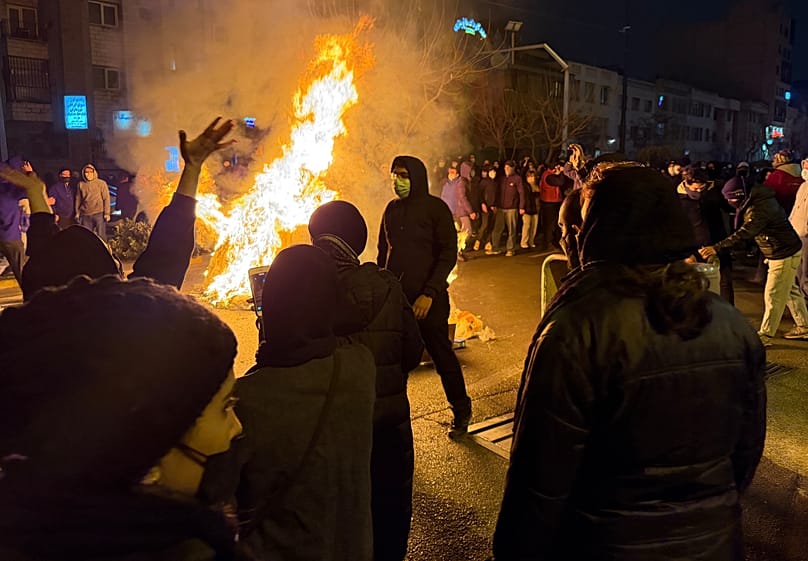
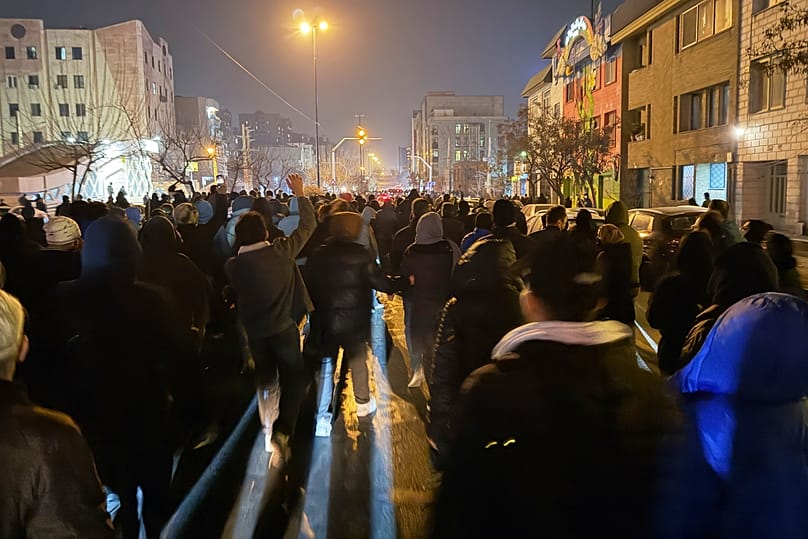
Those now rising up across Iran belong overwhelmingly to this second group. They are citizens who have long been repressed and who today often lack even basic economic security. They know that the post-Islamic Republic future may be uncertain but after nearly half a century of having their voices silenced, that uncertainty no longer deters them.
Many among this group had, in the past, tacitly aligned themselves with the state when Iran faced Israeli or American attacks, viewing such moments as a defense of national sovereignty. That alignment has largely evaporated.
Empty stomachs and crushed aspirations have replaced patriotic reflexes, while widespread corruption, involving senior officials or tolerated by those unable or unwilling to confront it, has become a defining feature of what critics describe as Iran's "Venezuelanised" economy. Western sanctions have undoubtedly crippled Iran's economy, but they have also served as a convenient justification for chronic mismanagement and systemic failure.
At the height of Israeli and US attacks, the Iranian leadership briefly seized an opportunity to fuse Persian nationalism with Islamic identity in an effort to sustain its legitimacy. Yet once tensions subsided, the state quickly reverted to its default posture: repression, intimidation and coercion.
There is little doubt that intelligence agencies such as Israel's Mossad and the US Central Intelligence Agency (CIA) are now actively operating inside Iran, seeking to exploit unrest and achieve from within what years of external pressure failed to accomplish: paralysing the country and ultimately toppling the system.
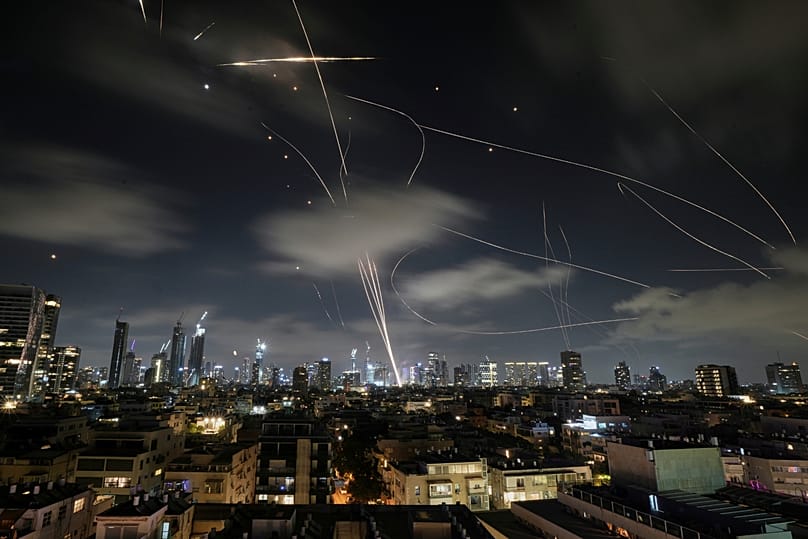
Paradoxically, in the short term, the one development that could temporarily rescue the Islamic Republic from its current predicament might be a limited US or Israeli attack on Iran. Such an attack would likely allow the state to intensify repression under the banner of combating "traitors" and "terrorists," potentially rallying parts of the undecided or politically grey segments of society, at least temporarily.
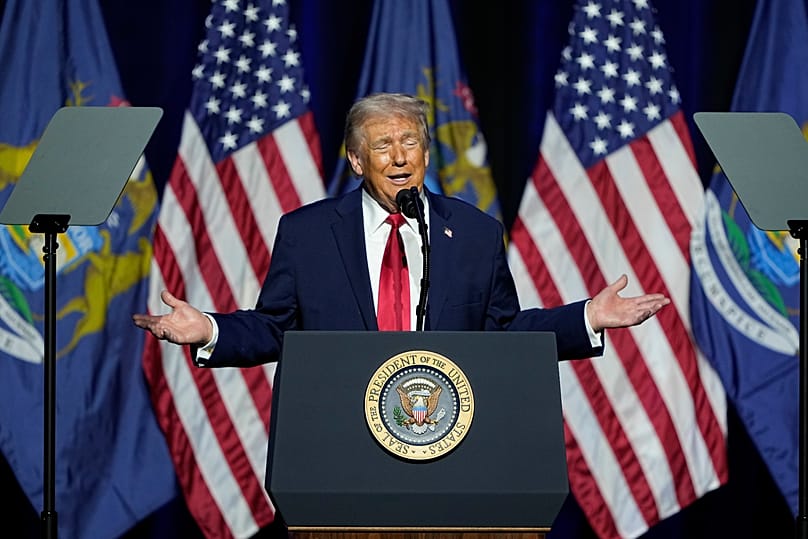
US President Donald Trump, however, has publicly warned that if Iranian authorities fire on protesters, the United States will respond in kind adding earlier on Tuesday that "help is on the way." Any action along those lines would be eagerly anticipated by Iran's Islamic Revolutionary Guard Corps (IRGC). If Washington and Tel Aviv refrain from striking, it cannot be ruled out that Tehran itself may initiate hostilities. Iranian officials now claim they are prepared for both negotiations and war, and, for the first time, openly speak of pre-emptive strikes should they conclude that an attack on Iran is imminent.
Contrary to widespread assumptions, the assassination of Supreme Leader Ali Khamenei, driven by the hope in Washington or Tel Aviv that it would trigger regime collapse, would be unlikely to produce such an outcome. Instead, it would almost certainly serve as a pretext for mass retaliation and bloodshed, potentially pushing Iran toward a Syria-style implosion. From the perspective of US and Israeli intelligence services, Khamenei's removal is seen either as a long-shot gamble for regime collapse or as a means to weaken the system, install a different figure, impose demands on Tehran, and dismantle what they describe as the final pillar of the "Axis of Resistance."
History offers a cautionary lesson: Ruhollah Khomeini died and Ali Khamenei replaced him. The system could again replace Khamenei with another individual, a collective leadership council, a new institutional arrangement, or even through constitutional change.
In an extreme scenario, the role of Supreme Leader could be sidelined altogether, transferring formal authority to the current government under President Masoud Pezeshkian, a figure widely seen as lacking real power and subordinated to security institutions. None of these scenarios is inconceivable should conditions deteriorate further.
Equally unlikely is Iran's full capitulation or a smooth conclusion to negotiations with Washington. Deprived of meaningful support from its largely passive allies Russia and China, the Islamic Republic's primary leverage lies in its nuclear and missile capabilities. If attacked, Tehran may escalate beyond conventional missile strikes and, for the first time, threaten or bluff with a so-called "dirty bomb" as a deterrent.
A ground invasion of Iran remains highly improbable, except perhaps in the context of a covert operation aimed at assassinating Khamenei. In the event of aerial strikes, however, the closure of the Strait of Hormuz and Iranian missile attacks on US naval assets and bases across the Persian Gulf would be a highly plausible scenario, this time.
This reality underpins Washington's central dilemma. Iran, situated at the heart of the Middle East, has lost much of its regional leverage. Hezbollah in Lebanon has been severely weakened and Bashar al-Assad has fallen in Syria. Yet Iran remains a potential epicenter of instability. A prolonged internal conflict could ignite widespread chaos, with neighboring states, particularly Arab Gulf countries, inevitably affected. This risk constitutes one of the greatest deterrents to US military action.
Neither the United States nor Europe seeks a Middle East even more volatile than it already is. This may help explain why Trump has so far refrained from endorsing or meeting Reza Pahlavi, whose name protesters have increasingly invoked, much as Trump once hesitated before backing Juan Guaidó in Venezuela. For now, Washington appears to be waiting to see how the internal balance of power in Iran evolves.
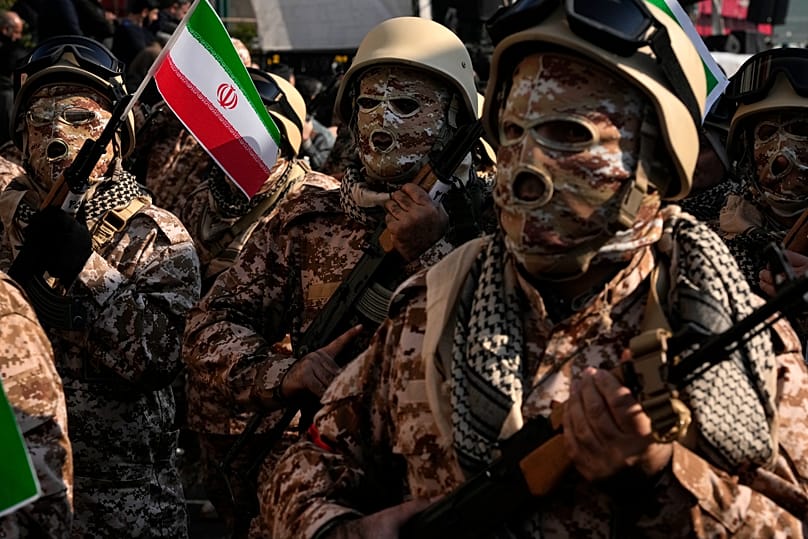
At present, the Basij militia and the IRGC are actively suppressing protests, but frontline enforcement has largely been carried out by regular soldiers and police officers, many of whom belong sociologically to the same marginalised group as the protesters, yet remain bound by orders.
The IRGC has not yet deployed its full force; tanks have not rolled into the streets, nor has martial law or a nationwide curfew been declared.
These protests may ultimately prove to be the deadliest in the history of the Islamic Republic. A decisive shift would occur if the national army refused to intervene, or if police and security forces broke ranks with the state.
For now, there are no clear signs of such a rupture.
Political science cautions against definitive predictions amid rapidly shifting variables. It is impossible to say whether this uprising will evolve into a revolution akin to that of 1979 and bring down the current system.
What can be said is that Trump appears increasingly inclined toward a more forceful, possibly military course of action. His personal style favors dramatic outcomes, and he may well prefer to see Khamenei either captured, like Venezuela's Nicolás Maduro, or eliminated altogether. In either scenario, military action against Iran or the removal of Khamenei, would provide the IRGC with a powerful justification to crush dissent and silence Iran's freedom-seeking voices.
The anger of Iranians, fuelled by corruption, inequality, repression and what many see as the hollow anti-imperialist rhetoric of an unaccountable ruling elite, is not cyclical as before.
Even if the system manages to suppress the current protests at the cost of thousands of lives, without fundamental reforms and concessions to the demands of marginalised citizens and nationalists, Iran's crises will remain unresolved. The embers beneath the ashes will continue to smolder and Iranian society will become ever more polarised.