
















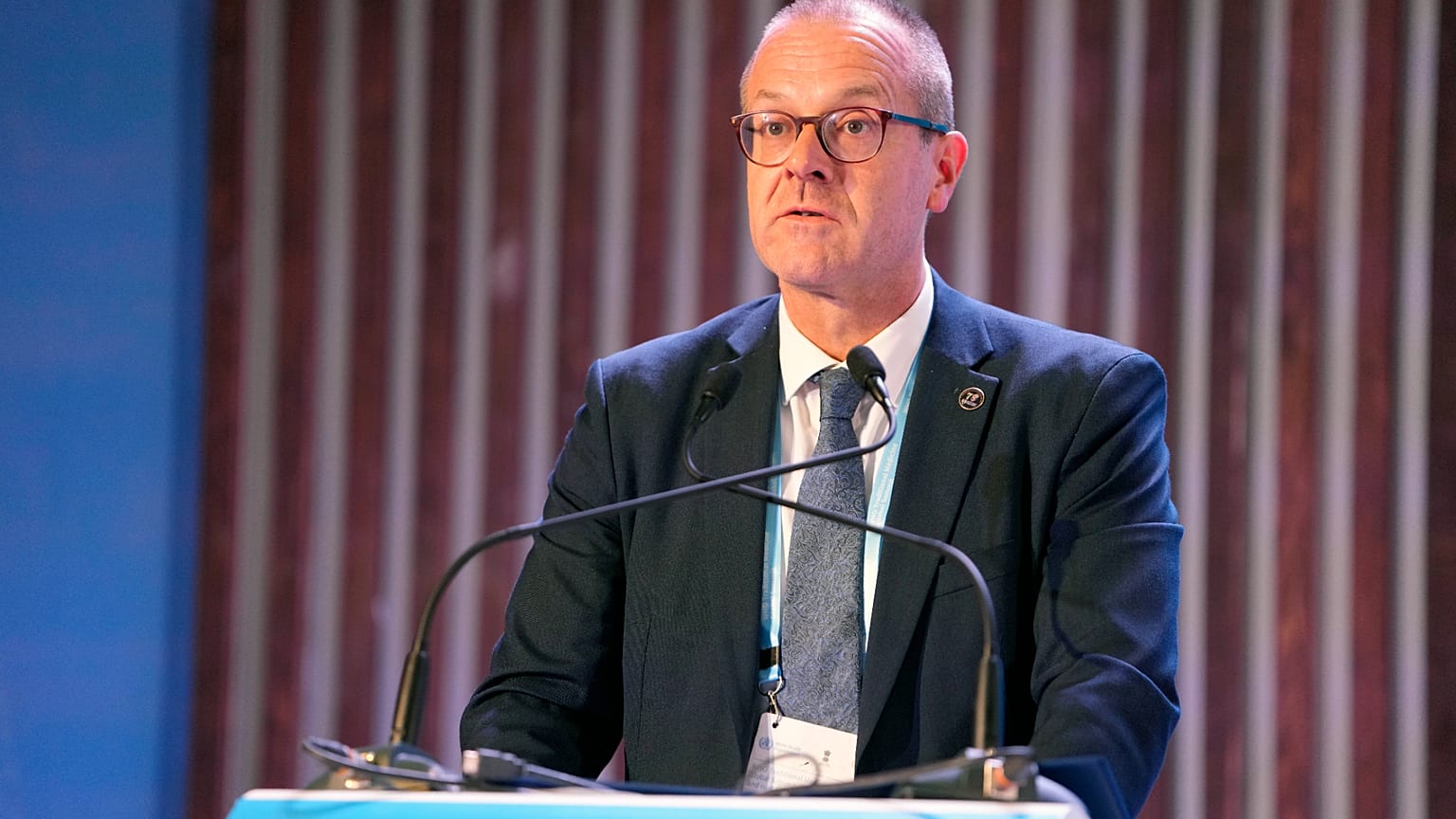













AI solutions are being deployed across European hospitals; however, only a few countries govern them, putting patients at risk, the WHO Europe chief said.
Artificial intelligence tools are revolutionising health care, giving hope to an overstretched health workforce. From diagnostic tools to better workflows — AI is helping healthcare systems across Europe. However, while the tools are in place, the regulations are nowhere to be found in most of the countries, World Health Organization (WHO) Europe chief Hans Henri P. Kluge warned.
 ADVERTISEMENT
ADVERTISEMENT
ADVERTISEMENT
That gap — between deployment and governance — is the defining challenge of AI in health right now,” Kluge said in a press conference in Lisbon on 15 July.
The longer that gap persists — the higher the human cost, he warned.
“A biased algorithm can produce a wrong diagnosis, for a real patient, with real consequences,” Kluge said.
Two-thirds of the 53 WHO Europe countries are already deploying AI diagnostics and half of the countries have AI-powered patient chatbots, but only a few — one in 12 — have strategies for how to govern AI.
Only 8% of countries in the WHO European Region have a health-specific AI strategy and almost 40% of countries have no ethical guidance on AI use in healthcare settings. As for education, only 1 in 5 countries provides AI education for healthcare students and only 1 in 4 offers training once they are in the workforce.
That’s a “concerning” picture, Kluge said, stressing that this can take a toll on human health. “All of this erodes public trust in health systems more broadly,” he warned.
In 2028, WHO aims to launch a Roadmap on AI and Health.