




























The war in Ukraine, enlargement, migration, climate and trade are all expected to feature in Brussels’ most eagerly awaited speech of the year — with the possibility of a surprise announcement always lurking around the corner.
The easiest part to predict is how it will end.
 ADVERTISEMENT
ADVERTISEMENT
ADVERTISEMENT
“Long live Europe” is the line Ursula von der Leyen has used to close all her State of the Union speeches and major addresses to the European Parliament — with one notable exception: the Italian “Viva l’Europa” she chose for her 2021 speech, delivered in the midst of the Covid-19 pandemic.
The real question is what she will say before reaching that familiar sign-off. The State of the Union speech is one of Brussels’ best-kept secrets, and its final version can be tweaked right up until the very last moment.
“Only two persons have it in their pockets: von der Leyen and [her head of cabinet] Bjoern Seibert,” as an EU official put it.
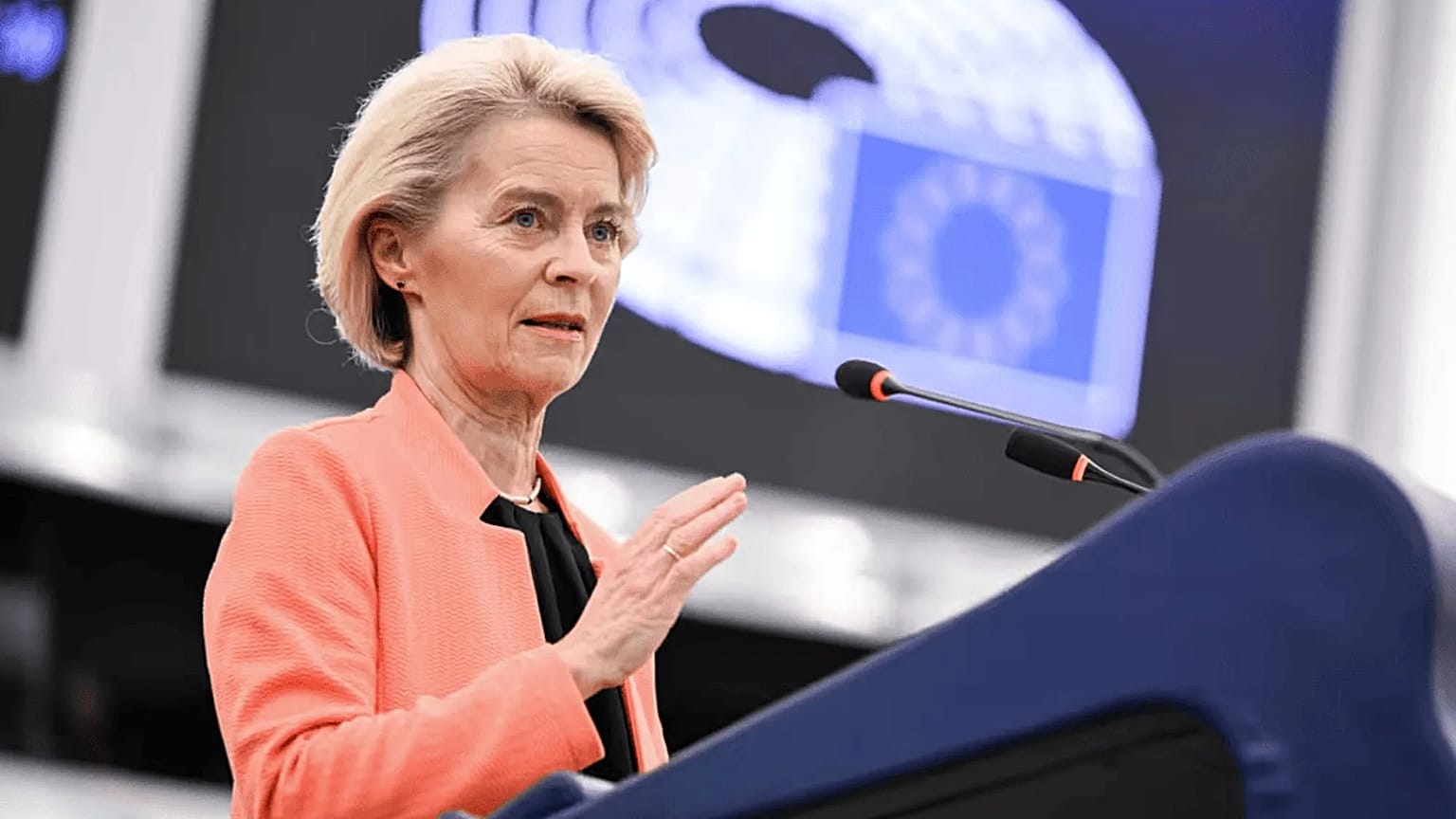
Drawing on conversations with civil servants, diplomats and MEPs, Euronews has outlined the key issues expected to feature in the Commission president’s address to the European Parliament on Wednesday.
Social media ban — an open secret?
Last year, von der Leyen’s headline announcements to build a “drone wall” and sanction Israeli extremist ministers failed to materialise within the year, watered down or delayed by EU member states.
This year’s headline announcement could prove just as controversial.
The Commission president is expected to announce a proposal for an EU-wide social media ban for minors that has been long in the making and is due to largely follow the recommendations of a group of experts released in July.
The Commission said it will present on Thursday a proposal called the "EU Kids Act," which is likely to include the ban.
It remains to be seen how far von der Leyen will go in seeking to harmonise the minimum age across Europe — and what age she will propose.
The issue is particularly sensitive, as it touches on an area of fiercely guarded national competence and could open a Pandora’s box over harmful online services, with countries such as the Netherlands and Spain already calling for the same approach to video games and AI companions.
Ukraine — frozen assets and fresh sanctions?
Ukraine is likely to be high on the agenda, as Kyiv grapples with a massive budget shortfall and the debate over using Russia’s frozen assets comes back to the fore.
The Commission has been asked to find creative solutions that would shield Belgium, which hosts the most affected asset manager, Euroclear, from potential litigation. If any such solutions are ready, the State of the Union is a good time to pull them out.
As in previous speeches, von der Leyen is set to double down on EU support for Ukraine and bring someone Ukrainian onto the stage, putting a human face on the commitments to the war-torn country.
This year, it will likely be young Ukrainian athlete Oleksandra Paskal, a 10-year-old rhythmic gymnast who lost her left leg in a Russian missile strike in 2022, during an airstrike on the village of Zatoka, on the Black Sea. After receiving a prosthesis and undergoing rehabilitation, she has returned to competitive gymnastics and now competes alongside able-bodied gymnasts with excellent results.
On the other side of the fence, von der Leyen might also announce the next package of sanctions against Russia, even as member states find it increasingly difficult to agree on new industrial sectors to target.
The recent attempted drone attack at Leipzig airport, involving one of the suspects who entered Schengen with a tourist visa issued by Italy, has also reignited the debate over restricting visas for Russian tourists and banning former combatants from entering the EU.
The Commission chief might try to use the “Leipzig momentum” to move forward with the ban, which currently faces opposition from France and Italy.
Migration - an (even) stricter line
New measures to tackle irregular migration are highly likely to feature in von der Leyen’s speech, after a massive influx of migrants into Ceuta last July raised alarm among EU governments and even put the Schengen area of free movement under strain.
Three main options are on the table, and they are not mutually exclusive.
The most disruptive would be a temporary suspension of asylum rules in cases of sudden, large-scale arrivals. Some member states, such as Poland and Greece, have adopted similar measures in recent years, while other EU countries such as Italy, Denmark and Sweden favour restricting asylum rights.
A boost to Frontex is also expected, with a wide-ranging reform of the EU border agency’s mandate due by the end of the year. Von der Leyen, who pledged two years ago to triple Frontex’s staff, could announce a greater role for the agency in deporting irregular migrants, alongside expanded powers to monitor migration routes beyond Europe’s borders.
Less expected would be a pledge to use EU funds to finance the controversial “return hubs” — deportation centres in non-EU countries where rejected asylum seekers could be sent.
Currently, national governments are expected to fully finance the hubs and may also provide additional funding, commercial partnerships or other incentives to partner countries. But a European solution to partially cover the costs cannot be ruled out, as the majority of EU countries support the scheme.
Enlargement — or reform first?
Enlargement — or “reunification,” as von der Leyen called it in the last State of the Union address — is at a crossroads.
The accession process seems to be gaining momentum in the Western Balkans and Eastern Europe, while Iceland’s recent referendum confirmed that the EU is struggling to attract its wealthier neighbours amid security concerns.
Montenegro, Albania, Moldova and Ukraine are all making progress on their accession paths, but also raising questions about how an expanded Union would work, and whether there are better ways to keep candidates engaged by giving them early benefits.
All these questions will be addressed in the upcoming pre-enlargement policy review, a proposal the Commission will present at the end of the month.
Von der Leyen might, however, have kept some bombshell announcements under wraps, such as reducing the number of areas where unanimity is required to make decisions or abandoning the principle of one Commissioner per member state.
These proposals could ease the path for candidate countries, helping to reduce resistance to enlargement, but would also prove highly controversial for current member states.
Climate — the era of delivery begins
Von der Leyen will probably use this year's speech to argue that Europe's climate agenda is entering a new phase: from setting targets to delivering them while keeping energy costs and industrial competitiveness under control.
The EU has already locked in a binding target to cut emissions by 90% by 2040 and Brussels should now show how to make the pathway economically and politically workable.
The political message will likely be that decarbonisation is now inseparable from Europe's energy security. After last year's repeated energy shocks, von der Leyen may argue that reducing dependence on imported fossil fuels is both a climate policy and a strategic necessity.
That means greater emphasis on electrification, grids, renewable power, nuclear energy and lower energy costs rather than climate regulation alone.
Climate adaptation is also set to receive a much more prominent place than in previous speeches.
After a dramatic summer marked by raging wildfires, flooding and drought, von der Leyen will attempt to shift the message from preventing climate change to protecting Europeans from its consequences.
That could mean stronger EU action on heat resilience, water management, wildfire prevention and climate-proof infrastructure. However, the main sticking point remains: where will the money come from?
China — and a new alliance with Canada?
China is also likely to feature in the State of the Union, although it remains unclear what tone von der Leyen will strike — and what language she will use towards Beijing.
According to EU officials and diplomats, negotiations to rebalance the trade relationship — the EU is facing a record-high €1bn deficit a day — are not going well.
Last June, EU member states called on the Commission to deliver concrete measures to protect European industry and strengthen the bloc’s trade defence tools, to be deployed in the event of an aggressive Chinese trade strategy.
With just two weeks to go before EU Trade Commissioner Maroš Šefčovič’s landmark mission to Beijing in early October, von der Leyen faces a choice.
Will she take a tough stance on China, as she did in 2023 when launching an anti-subsidy investigation into Chinese electric vehicles, or will she opt for a more conciliatory approach?
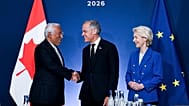
Last but not least, Canadian Prime Minister Mark Carney will be the special guest at the State of the Union, taking a front-row seat in the European Parliament to hear von der Leyen’s speech.
Carney has said he wants a “unique alliance with the European Union” — a status that does not currently exist. At least, not yet.