
































In a new survey of 16,000 workers, more than half would consider switching job for a dog-friendly company.
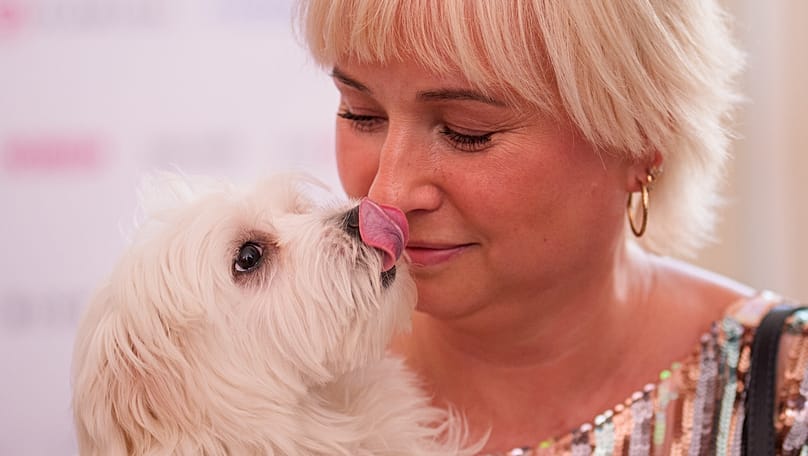
To each their own. Some parents need to bring their children to work, while others...their dogs.
 ADVERTISEMENT
ADVERTISEMENT
ADVERTISEMENT
Whether that's going down well with the management largely depends on the country.
For example, the UK really seems to have a soft spot for pets.
An analysis of online job openings by career platform Flexa revealed that around two-thirds of vacancies (64%) on the British market claim that dogs are allowed.
And that seems to have quite a few benefits. Bringing dogs to the office might reduce stress and anxiety, encourage better social interaction and even improve cognitive powers, according to the study “Dogs in the Workplace: A Review of the Benefits and Potential Challenges.
Germany has the second-highest number of dog-friendly workplaces, with nearly half of job listings saying pets are welcome (45%). The US ranks third (42%), followed by Australia (32%), then France (28%), the Netherlands (28%) and Spain (27%). Ireland is last, with only 17%.
Could having strict pet policies make a company less competitive? It might. Mars' 2026 Workplace report surveyed 16,000 workers and found that more than half would consider switching jobs if pets were allowed at their new workplace.
The most eager to switch jobs if their furry friends are allowed are the Romanians (65%), followed by Greeks (64%), Swiss (64%) and Hungarians (63%).
Meanwhile, the French (49%), Belgians (49%) and Spaniards (49%) are among the least concerned, with fewer than half saying that pets would influence their decision to switch jobs.
How to make a workplace pet-friendly?
That's certainly an important factor for employers, who also have to consider the disadvantages.
Some workers may be scared of dogs or allergic to pet hair, for example.
Additionally, pets can cause damage to personal property, so businesses might have to obtain specific insurance or pay additional fees to allow animals on the premises.
However, for those businesses planning to make their space more pet-friendly, the study suggests creating designated "pet-free" and "pet-friendly" zones, and providing "essential amenities like outdoor relief areas, hydration stations and outdoor green spaces", as well as conducting a thorough safety walkthrough to remove any hazards – from loose cables to toxic office plants.

The most peculiar tip is perhaps "canine CVs” introducing the participating pets and their personalities (i.e. “loves a good ear scratch” or “hates the doorbell”).
When it comes to actual pet-friendly policies, the most welcome ones by the employees are flexible work schedules (62%), pet insurance as part of employee benefits (59%), financial support for pet-care when travelling for work (58%), on-site pet-care (56%) and paid leave for a new or sick animal (55%).