


















Exports to the US dropped by nearly a third in the first three months of 2026, as the EU prepares to implement its side of a trade deal with Washington.
The impact of Trump's tariffs on the EU market is already becoming tangible, with a negative trade trend second only to that with Iran.
 ADVERTISEMENT
ADVERTISEMENT
ADVERTISEMENT
In the first three months of 2026, the EU lost 30% of the value (€) in goods exchanged with the US compared with the same period last year, according to Eurostat.
In August 2025, the US pushed the EU into a trade deal, setting a 15% tariff on several goods.
The Trump administration justified it by citing a more than €300bn deficit with the EU.
Washington's shortfall in goods with the EU is real, though it stands at around €200bn.
But it's offset by the value of American services exports to the EU, which ultimately sets the EU's overall trade surplus to just €21bn.
Where else has trade also been declining?
The tariffs have hit key European sectors such as cars, pharmaceuticals, semiconductors, wine, and cheese.
As the EU prepares to implement its side of the deal, the US remains, nonetheless, its largest export market, with about €120 billion, roughly 19% of the bloc's total export value in goods.
But the trade decline with Washington contributed to a 9% decline in value in overall EU exports to the rest of the world compared to the first quarter of 2025.
Exports also dipped — though less sharply — with other main partners, China (8%) and Turkey (8%). The steepest drop, however, was with Iran, -44%, mainly driven by sanctions related to its nuclear programme, support for Russia and human rights violations.
On the good news front, exports to Indonesia surged by 23% in Q1 2026.
It follows the finalisation of a new trade agreement called CEPA, or the Comprehensive Economic Partnership Agreement, which aims to cut or remove tariffs on most EU exports — as well as streamline customs procedures.
The agreement is expected to come into force later this year or in 2027.
Exports also grew, albeit less significantly, to India (1.8%) and the UK (2.3%). After the US, the EU's second largest export market is the UK (14%), followed by Switzerland (9%), China (7%) and Turkey (4%)
New tariffs on the horizon?
But the trade war saga between Europe and Washington may not be over just yet.
Last month, Donald Trump threatened further tariffs of 10% or more on imports from the EU and other trade partners.
The US president accused the bloc of failing to tackle trade in goods made with forced labour, thus allegedly damaging American trade interests. The EU dismissed the accusation as "unjustified".
Trump also complained that Brussels had yet to implement its commitments under the trade deal struck in July 2025.
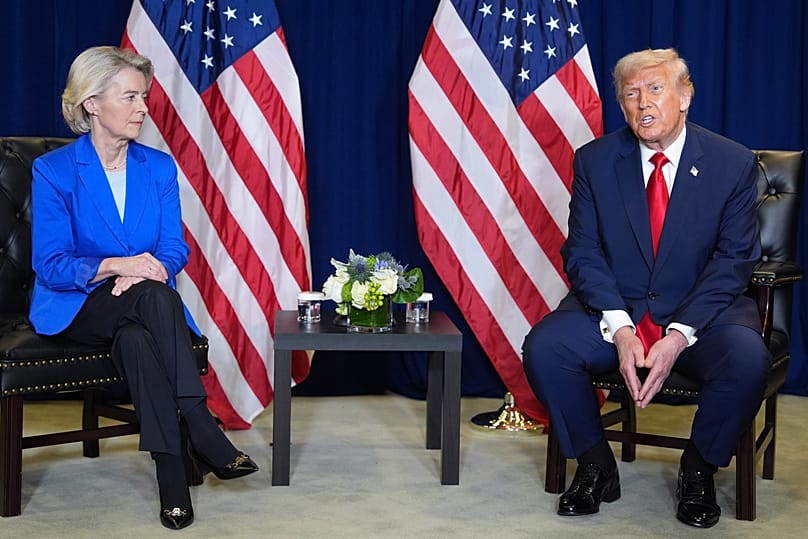
He gave the EU until 4 July to sign off on its side of the agreement, and the bloc is now preparing to approve the deal with a vote scheduled for 16 June.
Under the agreement, the EU is expected to remove duties on US industrial goods and to provide preferential market access for several seafood and agricultural goods, "including tree nuts, dairy products, fresh and processed fruits and vegetables, processed foods, planting seeds, soybean oil, and pork and bison meat", the White House said.