

















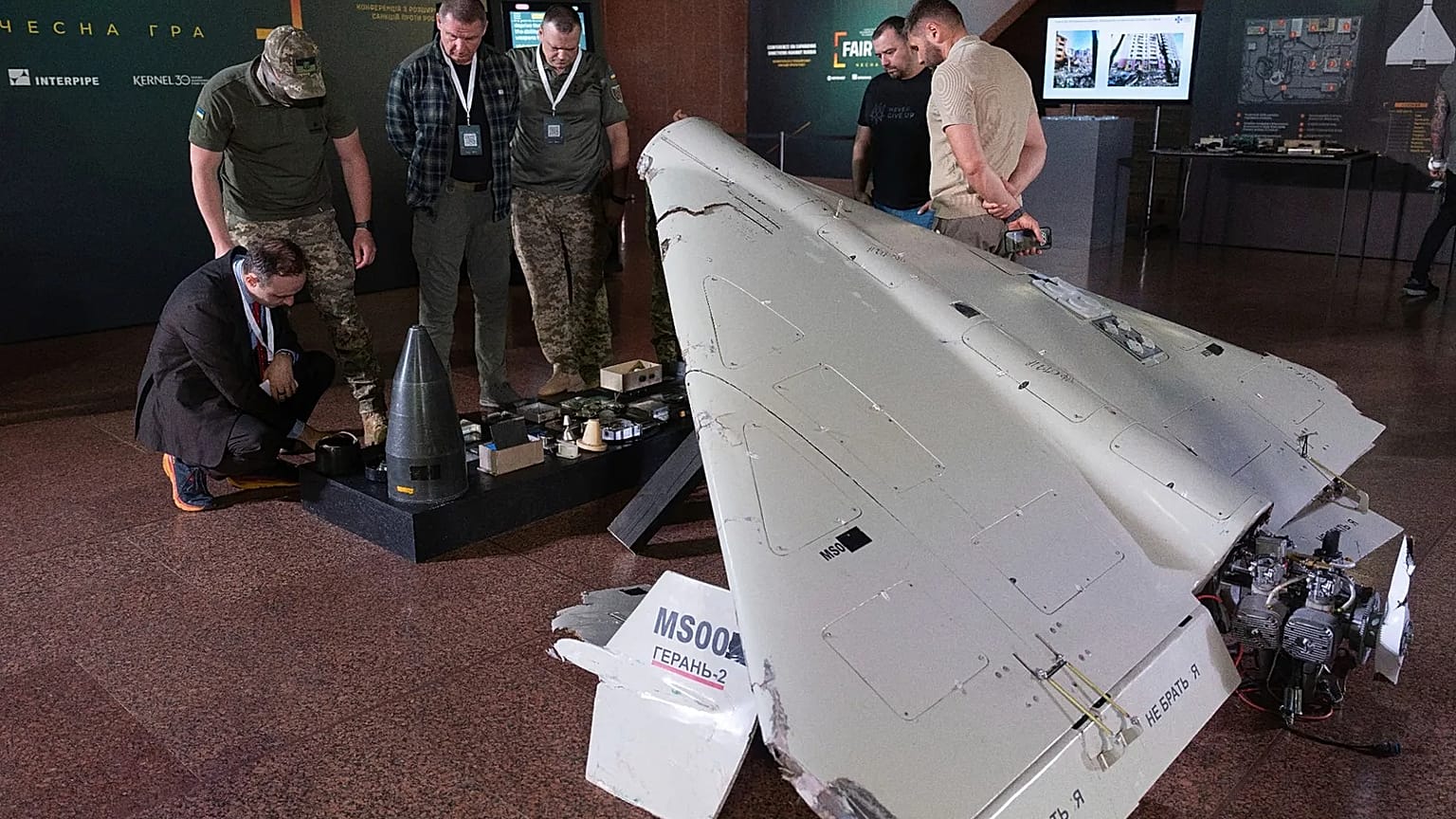













The Iranian-made Shahed drones are one of Russia's main long-range strike UAV’s used by Moscow against Ukraine. First deployed back in 2022, Russia then set up domestic production, calling them Geran.
Shahed-type drones have been Russia’s weapon of choice since the very beginning of Moscow’s full-scale invasion of Ukraine in February 2022.
 ADVERTISEMENT
ADVERTISEMENT
ADVERTISEMENT
Launched in the hundreds, they are used by Moscow to strike military and residential targets, energy facilities and civilian infrastructure and also to overwhelm Ukraine’s air defences in mass attacks.
Because of their distinctive, loud buzzing noise similar to that of lawn mowers, they are frequently called “mopeds” in Ukraine.
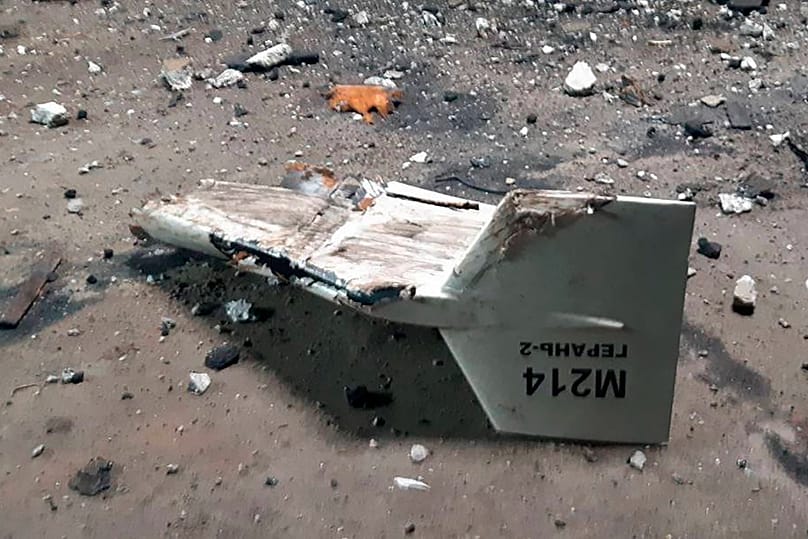
Shahed-136 or Geran-2?
The Geran-2 long-range one-way attack drone — often referred to as a kamikaze drone — is essentially a domestically manufactured Russian version of the Iranian-designed Shahed-136.
Moscow established home-made assembly lines for the Geran-2 drones in 2023, a year into its all-out war with Ukraine.
“Geran” or “geranium” are produced at a plant in Russia’s Tatarstan. Since the home-made production was established, Russia ramped up its attacks against Ukraine, launching hundreds of drones in a single night — more than were used during some entire months earlier in the war.
Geran-2 characteristics
Geran drones usually fly relatively slowly at 180 km per hour, but their range can reach 2,000 kilometres. They can carry a relatively big load of 50 kilograms of explosives.
While Russia’s ballistic and cruise missiles fly much faster and pack a bigger punch, they cost millions and are available only in limited quantities.
A Shahed/Geran drone costs between €25,000 and €40,000 — a tiny fraction of a ballistic missile.
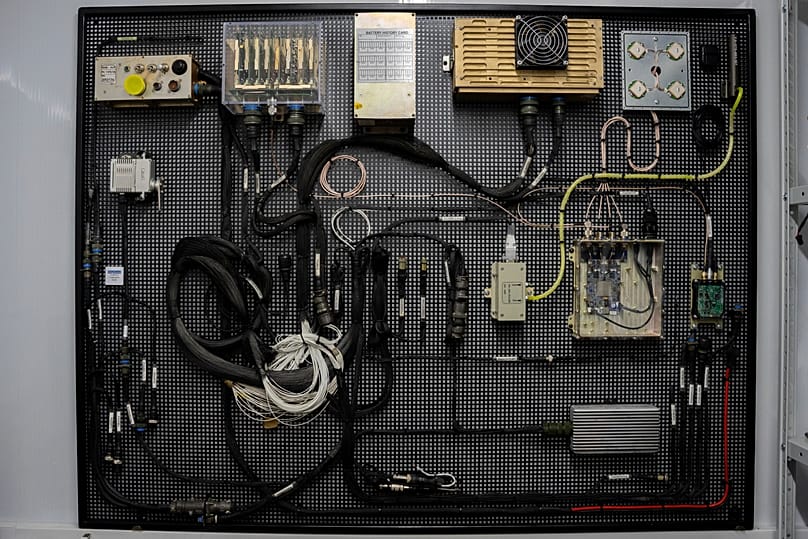
Geran drone’s components
Despite EU sanctions prohibiting direct exports, hundreds of components produced by European companies still end up in Russian drones.
By dissecting the charred remains of downed Geran-2 drones, Ukraine’s military intelligence agency mapped out the anatomy of this model and the components that go into it.
According to a joint media investigation by the Organised Crime and Corruption Reporting Project (OCCRP) in February, while the total number of components is in the hundreds, only a few dozen are of Russian origin.
Many are produced by companies in the US and China, but over 100 are produced by about 20 European firms. The items include microchips, receivers, transistors, diodes, antennas and a fuel pump.
The EU forbids direct export of many of these items to Russia. But trade data obtained for the investigation showed 672 shipments of sanctioned components produced by these European firms being sent to the country between January 2024 and March 2025.
The shipments originated from 178 companies, mostly in China and Hong Kong.
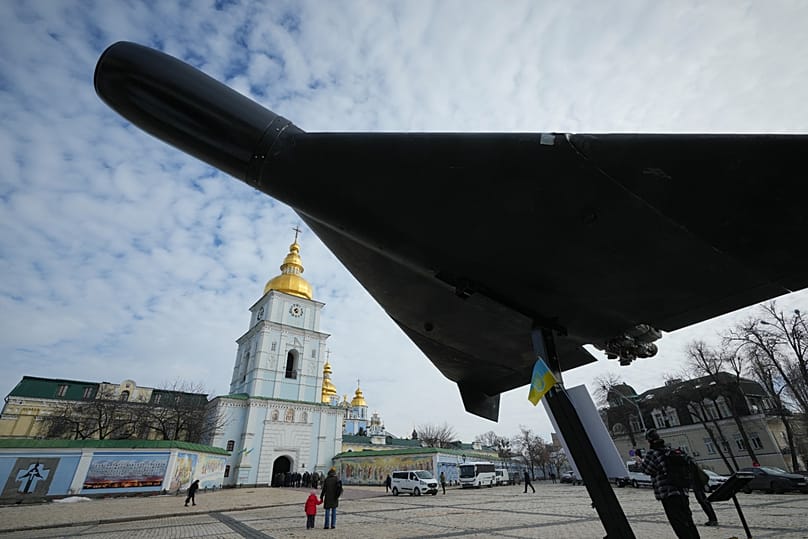
Geran-5
Since setting up domestic production, Russia has further improved the Geran drones, increasing their altitude, making them more resistant to jamming and equipping them with more powerful warheads.
All the variants that have emerged since are deadlier than the previous versions.
In May Russia unveiled the Geran-5 jet-powered attack drone. It is about 6 metres long, with a wingspan of up to 5.5 metres, specifications that correspond to those of a small winged missile.
Geran-5 is powered by a Chinese-made Telefly jet engine.
The drone’s payload consists of a 90-kilogram warhead, and its stated strike range is approximately 1,000 km with a cruise speed of 450-600 km per hour.
The Defence Intelligence of Ukraine noted that the Geran-5 can be deployed from airborne platforms, such as Su-25 attack aircraft.
In addition to the main warhead, the drone can carry R-73 air-to-air missiles with infrared homing heads.
The Geran-5 also reportedly relies on Western microelectronics. The microchips originate from countries such as Germany and the US.
Geran interception rates
In 2025, Moscow attacked Ukrainian cities on 357 nights out of 365, meaning Ukraine had only eight nights without attacks the entire year.
With these mass attacks getting broader and potentially deadlier with Russia’s effort to modernise Shahed-type drones, Ukraine has been ramping up its air defence system and specifically Geran-countering techniques.
In one of Russia’s largest attacks on 23 May, when Moscow launched 600 drones, 36 ballistic missiles, Kinzhal and Zircon hypersonic missiles, as well as Oreshnik intermediate-range ballistic missiles, Ukrainian forces managed to intercept the vast majority of them.
Shahed-type drone interception rate stood at over 91%.