
















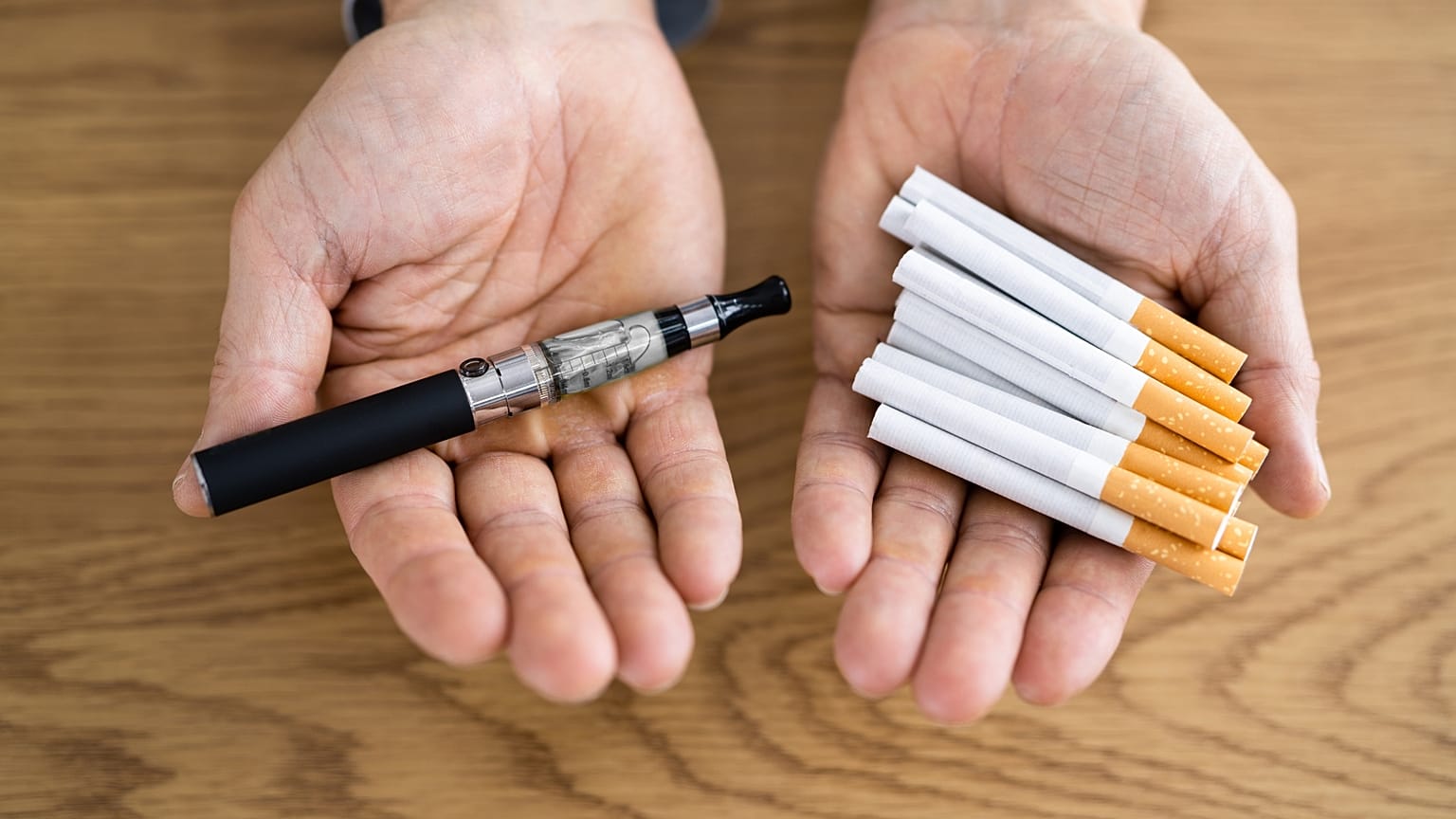













Smoking, vaping or taking a nicotine pouch – while not equally dangerous, all nicotine-containing products are harmful to the heart.
Nicotine is harmful for cardiovascular health no matter whether it is consumed through smoking a cigarette or chewing tobacco, a major review published in Nature Reviews Cardiology today found. While novel nicotine products – such as e-cigarettes or nicotine pouches – eliminate the smoke and combustion, they are still harmful for the heart.
 ADVERTISEMENT
ADVERTISEMENT
ADVERTISEMENT
The review does not suggest that all nicotine products carry the same level of risk. Conventional cigarettes and waterpipes remain the most harmful, largely because of the toxic chemicals produced by combustion. But the authors argue that moving away from smoke does not eliminate cardiovascular harm.
Instead, the researchers describe a “cardiovascular continuum of harm”: combustion products sit at the top, followed by heated-tobacco products, e-cigarettes and oral nicotine products such as chewing tobacco and nicotine pouches.
So while getting rid of smoke reduces cardiovascular harm, getting rid of nicotine altogether is the only way to eliminate the nicotine-related cardiovascular risk.
“E-cigarettes and heat-not-burn devices were initially marketed as reduced-risk alternatives to combustible cigarettes, but our data show these products sit on a continuum of cardiovascular risk, not off it,” said Thomas Münzel, lead author of the review and a professor at the University Medical Centre Mainz, Germany. “Removing combustion clearly reduces harm – but it does not remove it.”
Nicotine’s double hit
Researchers looked at how nicotine damages the cardiovascular system – tracing the biological pathway from nicotine's interaction with receptors in blood vessels to the processes that can contribute to atherosclerosis, heart attacks and strokes.
They identified two separate mechanisms through which nicotine can damage blood vessels.
First, nicotine affects the endothelium — the thin layer of cells lining the inside of blood vessels. It suppresses prostacyclin, which helps blood vessels relax, while increasing endothelin-1, a powerful vessel-constricting hormone.
Nicotine also acts directly on vascular smooth muscle cells, which control blood vessel diameter. By interfering with potassium channels and calcium regulation, it can promote constriction even when the endothelial lining is not itself damaged.
The researchers also point to oxidative stress, arterial stiffness and inflammatory responses as common features of nicotine exposure. Endothelial dysfunction, they argue, provides an important early marker of cardiovascular damage.
The result is a vascular system that constricts more readily, relaxes less effectively and is more prone to inflammation and clotting.
“It is apparent that nicotine is an active driver of endothelial dysfunction, the earliest step on the path to atherosclerosis, hypertension and heart failure — and only abstinence is risk free,” author of the study, Filippo Crea, said.
The findings land as the EU is already preparing to overhaul its tobacco-control framework — and as Brussels tries to reconcile declining cigarette use with the rapid rise of e-cigarettes, heated tobacco and nicotine pouches.
“Nicotine’s cardiovascular toxicity at the molecular level, combined with its well-documented, high dependence-forming potential make the case for a coherent, nicotine-based regulatory framework rather than the current patchwork of product-specific rules,” said Münzel.