
















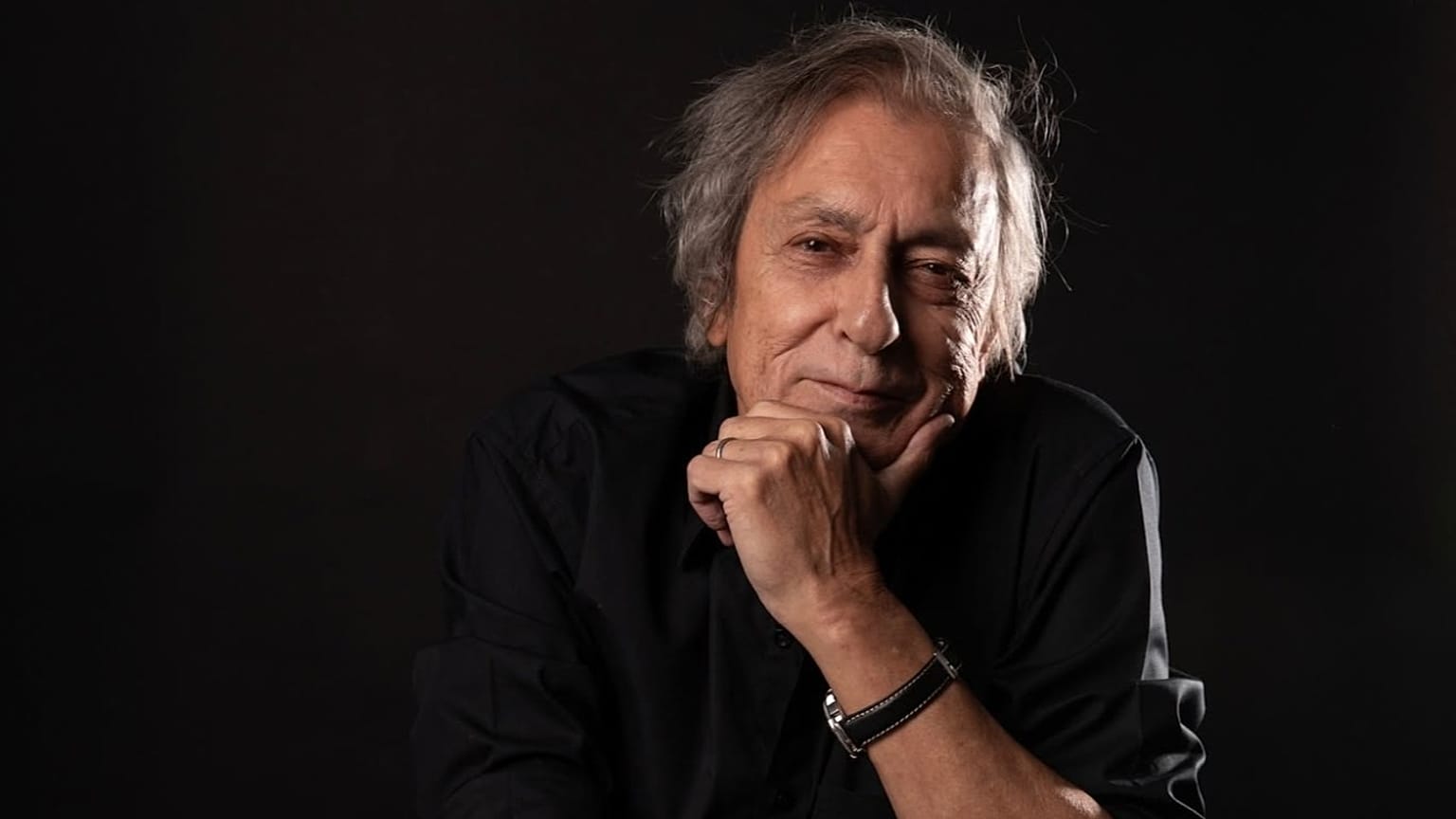













The singer of "Deixa-me Rir" and "A Gente Vai Continuar" has died aged 76 following cardiorespiratory arrest, after more than 50 years devoted to Portuguese music.
Jorge Palma, one of the most influential singer-songwriters in contemporary Portuguese music, died this Monday at the age of 76, his family announced in a message on social media.
 ADVERTISEMENT
ADVERTISEMENT
ADVERTISEMENT
"It is with deep sorrow and consternation that Jorge Palma's family and agency announce his death, which occurred this Monday night at the age of 76, following cardiorespiratory arrest," the musician's family said.
In what they described as a moment of 'immeasurable pain', Rita Tomé, the musician's wife, his sons Vicente and Francisco Palma, and his agents, André Sebastião and Tiago Branco, asked that Jorge Palma be remembered through what best defined him: his songs and his words. The family also thanked the expressions of friendship they had received over the years.
The family also recalled that over a 54-year career Jorge Palma "leaves a remarkable body of work that forms part of the history" of Portuguese music, as well as "many friends around the world, people he won over with his generosity and genius."
Born in Lisbon in 1950, Jorge Palma entered the world of music early and went on to become one of the most distinctive singer-songwriters in contemporary Portuguese music. At the age of six he began taking lessons and, four years later, enrolled at the Lisbon Music Conservatory.
But at 14 he decided to give up classical music to devote himself to pop rock, beginning a path that would span several generations.
Before performing under his own name, he played in the bands Sindicato, which took part in the first edition of the Vilar de Mouros Festival in 1971, and Black Boys. At the same time, he began working in areas such as composition, orchestration and recording.
In 1972, when he was just 22, he released his first solo single, "The Nine Billion Names of God". Shortly afterwards, he was called up for military service, but chose to leave Portugal and settle in Denmark.
It was only in 1974, after the 25 April revolution, that he returned to Portugal, began working as an orchestrator and, the following year, released his first album, "Como uma viagem na palma da mão".
Over the course of his career, he released 13 more albums of original material. For Jorge Palma, each record worked as a snapshot of a particular period in his life. In an interview with Lusa in 2022, he explained that the people he related to, the places he lived, everyday life, what he listened to and what he read ended up leaving different marks on each album.
In the 1980s, he resumed his piano studies at the conservatory, which he completed in 1990. The following year came "Só", a project in which he revisited, on piano alone, songs from his records of the previous two decades, becoming the first compilation of his career.
The 1990s opened up new horizons. Jorge Palma formed Palma's Gang alongside Zé Pedro and Kalu, from Xutos & Pontapés, and Flak and Alex Cortez, from Rádio Macau. He composed for theatre and for other artists and joined the project Rio Grande. After a decade of multiple experiences, he returned to albums of original songs with "É proibido fumar" in 2001.
That was followed by "Norte" (2004), "Voo nocturno" (2007) and "Com todo o respeito" (2011). His most recent album, and his last, "Vida", was released in 2023.
Over the years, his work was recognised with several awards. In 2002, he received the José Afonso Prize for the album "Jorge Palma". Ten years later, he won the first edition of the Pedro Osório Prize, awarded by the Sociedade Portuguesa de Autores, with "Com todo o respeito".
In 2020, at the end of a concert marking his 70th birthday, he was honoured by Lisbon City Council with the medal of cultural merit. That same year, he received from the then President of the Republic, Marcelo Rebelo de Sousa, the decoration of Commander of the Order of Infante D. Henrique.
This April, Jorge Palma received the Career Award at the 8th PLAY – Prémios da Música Portuguesa, granted by decision of the board of Audiogest, the body that represents and manages the rights of multinational, national and independent record labels.