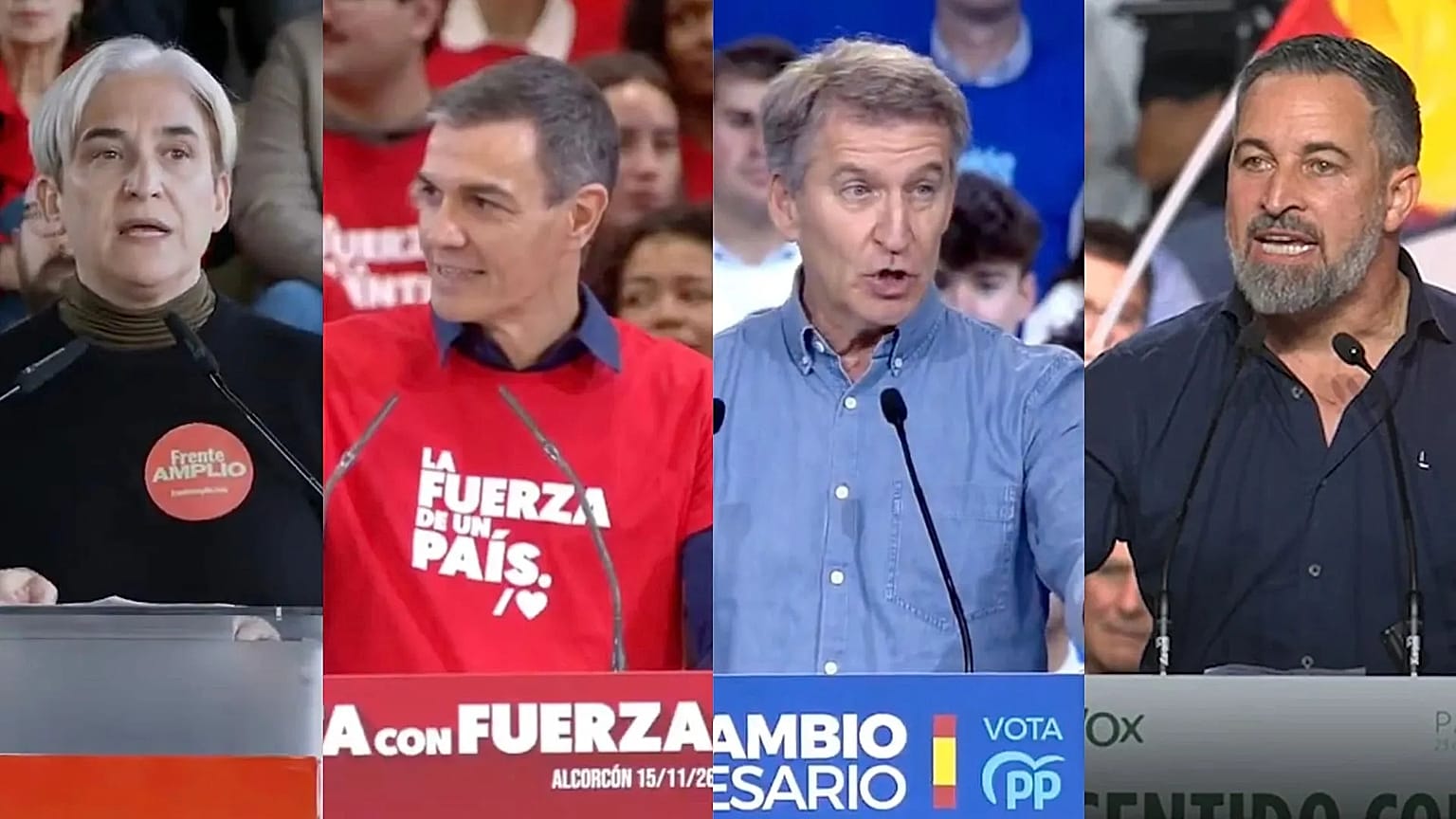













The far-right could enter the government for the first time in Spain's post-dictatorship democracy in an election that is seen as a referendum on incumbent socialist Prime Minister Pedro Sanchez.
More than 38 million Spaniards are called to the polls this Sunday to elect 350 deputies and 209 senators, with four candidates fighting to take the lead of the country.
 ADVERTISEMENT
Ballots were cast starting at 9:00 this morning, with four main candidates — Pedro Sánchez (socialist party PSOE), Alberto Núñez Feijóo (right-wing PP), Santiago Abascal (far-right Vox) and Ada Colau (left-wing coalition Frente Amplio).
Dominated by housing affordability concerns, the polls have placed the right-wing Popular Party (PP) in front of Pedro Sánchez's PSOE. The PP might need the support of the far-right anti-immigration Vox to form a government.
This could bring the far-right into power in Spain for the first time in the country's transition to democracy after General Francisco Franco's fascist-backed dictatorship (1938-1975).

'Historic mobilisation'
After voting, Sanchez told reporters he sees "a historic mobilisation, and I have good feelings" as he seeks to stay in office, but he has been generating greater division among his supporters.
Seen as a progressive left leader, his detractors accuse him of often changing position and negotiating with any political formation in order to stay in power.
Sanchez has been criticised for gaining backing from the far-left and separatist parties to win the 2023 election.
Attacked on all sides, Sanchez has warned voters that a conservative government wouldn't make their lives easier and that it would take Spain backwards.
Right-wing opposition leader Alberto Núñez Feijóo (PP) has repeatedly denounced Sanchez for high-profile corruption scandals, concessions to Catalan separatists, but also for two fatal train crashes this year that killed 115 people, July's migrant rush in Ceuta and a nationwide blackout in April 2025.
Elections focused on housing crisis
Soaring home and rental costs in cities and tourism hot spots have caused widespread discontent in Spain, especially among the young, with nationwide protests sparked by the eviction of an 87-year-old woman from her apartment in Madrid.
Sanchez has tried to leverage anger over a chronic housing crisis, passing measures for tenants earlier this month.
But the housing decrees were rejected by the right in October, which prompted Sanchez to call for a snap election.
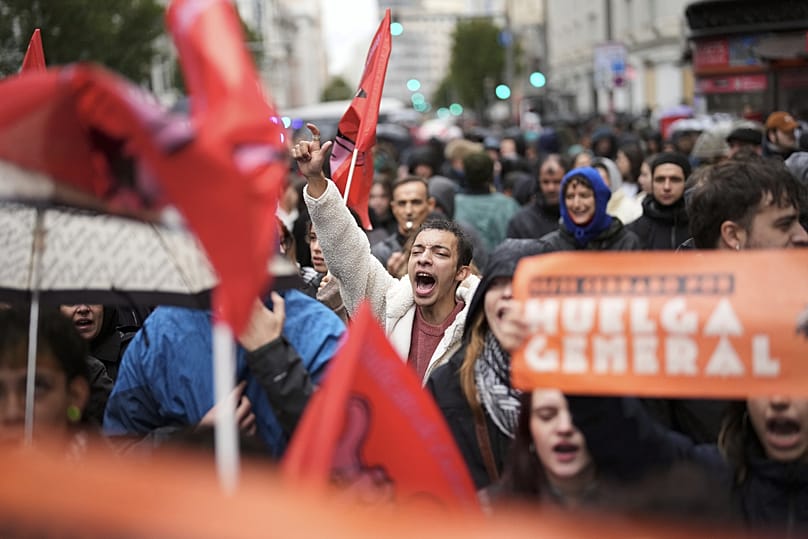
Retiree Domingo Perez, 55, said: "there needs to be a change, because of everything that's happened, so much corruption, the Spaniards who can't make ends meet."
Led by 50-year-old Santiago Abascal, Vox has focused its campaign on immigration, which it connects with the housing crisis and other issues to tap into popular frustration, particularly among the young.
Europe watching closely
Sanchez, one of the few leftist leaders in Europe, has emerged as a darling of the international left in recent years, but his polarising status at home has imperilled his eight-year term. He has however made his name by escaping seemingly hopeless situations.
The result of these elections will be closely watched across Europe before an election-packed 2027, in which voters will head to the polls in France, Italy, Greece and Poland.
In France, the far-right National Rally is aiming to take power, while in Italy, Premier Giorgia Meloni's right-wing coalition is expected to seek another term.