












The winter solstice falls on the shortest day and the longest night of the year, and across Europe this is marked with celebrations steeped in tradition.
Europe’s winter calendar isn’t just about chilly temperatures, cream-topped cups of hot chocolate and donning gloves. Across the continent, the festive season is also a time to observe the winter solstice.
 ADVERTISEMENT
The astronomical event marking the shortest day and longest night of the year in the Northern Hemisphere derives its name from the Latin word “sōlstitium”, which means the “sun stands still”.
While the December date it’s celebrated on varies slightly from country to country in Europe, centuries-old traditions are what’s common, including bonfires and parades to ward away the gloom and doom of the year and ushering in new beginnings and light.
From England to Latvia, the occasion continues to draw visitors. Here’s where to set off to in Europe if you have your sights on celebrating the winter solstice.
Must-visit destinations for the Winter Solstice
Stone Circle at Stonehenge, England
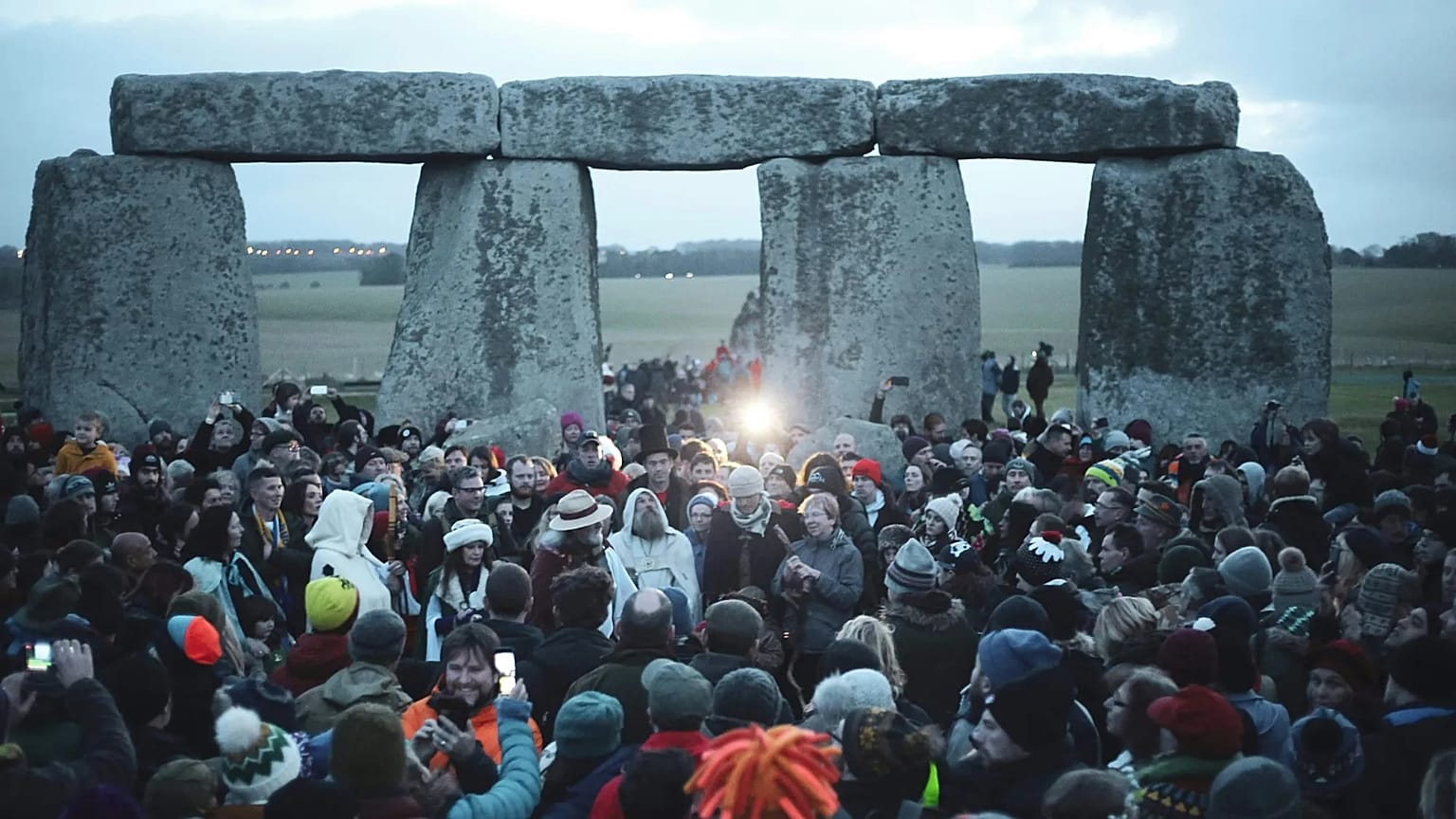
One of Europe’s most iconic destinations to observe the winter solstice is at Stonehenge’s Stone Circle.
The mysterious monument, which has a history spanning 4,500 years from the Neolithic and Bronze Age, may have been built especially to mark the occasion with experts noting that the stones are shaped and set up to frame the midwinter sunset at the time of winter solstice.
Archaeologists also estimate that Neolithic people may have gathered at Stonehenge during the winter solstice to have feasts and take part in celebrations.
On 22 December 2026, sunrise in Stonehenge will be at 8:09 am and entry will be free for the scores of spiritualists and tourists that will gather for the year’s shortest day.
The ‘Old Solstice’ in northern Europe and Nordic countries
Observed on 13 December in countries like Sweden, Finland, Denmark and Norway, St. Lucia’s day is a Scandinavian and Nordic tradition to usher in light during the darkest days of the year.
With roots in both Christian and older Norse folkloric tradition, the occasion honours the martyrdom of St. Lucia, whose name means “light”. The date originates from medieval Scandinavia’s winter solstice according to the Julian Calendar.
In Sweden, “Luciatåg” processions are broadcast on national television as well as held across the country’s schools, churches, town halls and celebrated in homes and offices. Observes dress in white robes and a young girl portrays the Saint, wearing a crown and holding a candle.
In Helsinki, Finland, the Lucia crowning ceremony and parade attracts around 30,000 people each year. A young girl is chosen to represent Saint Lucia and given the duty of leading parades through the city.
Meanwhile in Norway, “Lucia-dagen” is marked with the tradition of eating “lussekatt” s-shaped buns, baked with saffron. Traditionally only eaten on St. Lucia’s Day, the yellow colour was once associated with light, purity and protection from evil in medieval Europe.
Koliada in Slavic countries
In countries like Czechia and Poland, you may catch parades of people dressed as goats, bulls and even evil spirits as part of Koliada, or Koleda as it’s otherwise known, celebrations.
Also having roots as a pre-Christian festival to mark the winter solstice, in ancient times, a procession of young people, called “the koledari” in Czechia, dressed in costumes that were thought to ward off demons.
They would also sing carols for each house they passed by to cleanse it, and, in turn, homeowners would give them sweets and money.
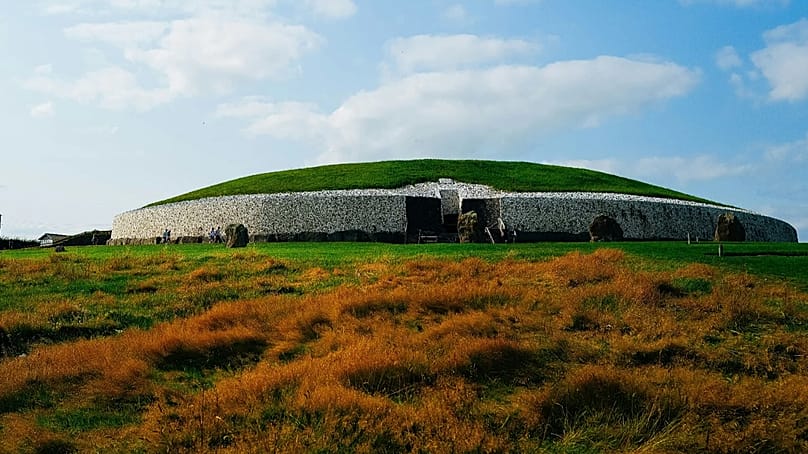
**Newgrange, Ireland **
This mysterious kidney-shaped mount in County Meath, Ireland, is thought to have once served as a religious and ceremonial hub among Neolithic people and took 300 people to build over 20 years.
One of the oldest astronomically-oriented structures in the world, a beam of light spears into the roof-box and reaches up to 19 metres along the passage and illuminates the chamber during the mornings of the winter solstice. This happens from 19-23 December each year and lasts for 17 minutes.
The ancient ceremony has a limited capacity, with a controlled lottery selecting fewer than 40 people who can come accompanied by a guest to witness the solar phenomenon.
**Yule Logs, Latvia **
Across Latvia, it’s tradition to don a mask and drag a yule log around one’s home or neighbourhood before burning it in a communal fire to mark the solstice on 21 December.
This is thought to represent shedding the hardship, adversities and misfortunes of the soon-to-be previous year and chase away evil spirits.
In the country’s capital, Rīga, at the Town Hall in the old town, this tradition unfolds with singing, dancing and traditional Latvian games as the symbolic log is rolled through several streets before being burned in a large bonfire.