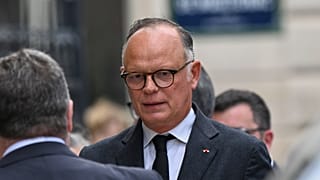














Although around forty figures have so far declared their intent to run in the presidential election — or are seen as potential candidates — not all will go the full way.
Five months ahead of France’s presidential elections, the country’s annual mayoral congress transformed into a political hunting ground as candidates sought to win over local officials and get their endorsements this week.
 ADVERTISEMENT
Although around forty figures have so far declared their intent to run in the presidential election — or are seen as potential candidates — not all will go the full way. To qualify, they must secure at least 500 endorsements from elected officials, with mayors representing the largest pool of potential sponsors.
After nearly a decade of Emmanuel Macron's presidency, France's government has been criticised for concentrating power and decision-making at the national level. Against this backdrop, candidates have been seeking to demonstrate their local roots and build support among rural communities.
David Lisnard: 'rules are like cholesterol'
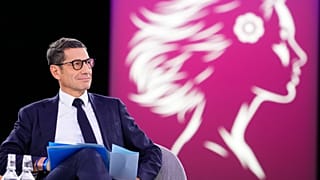
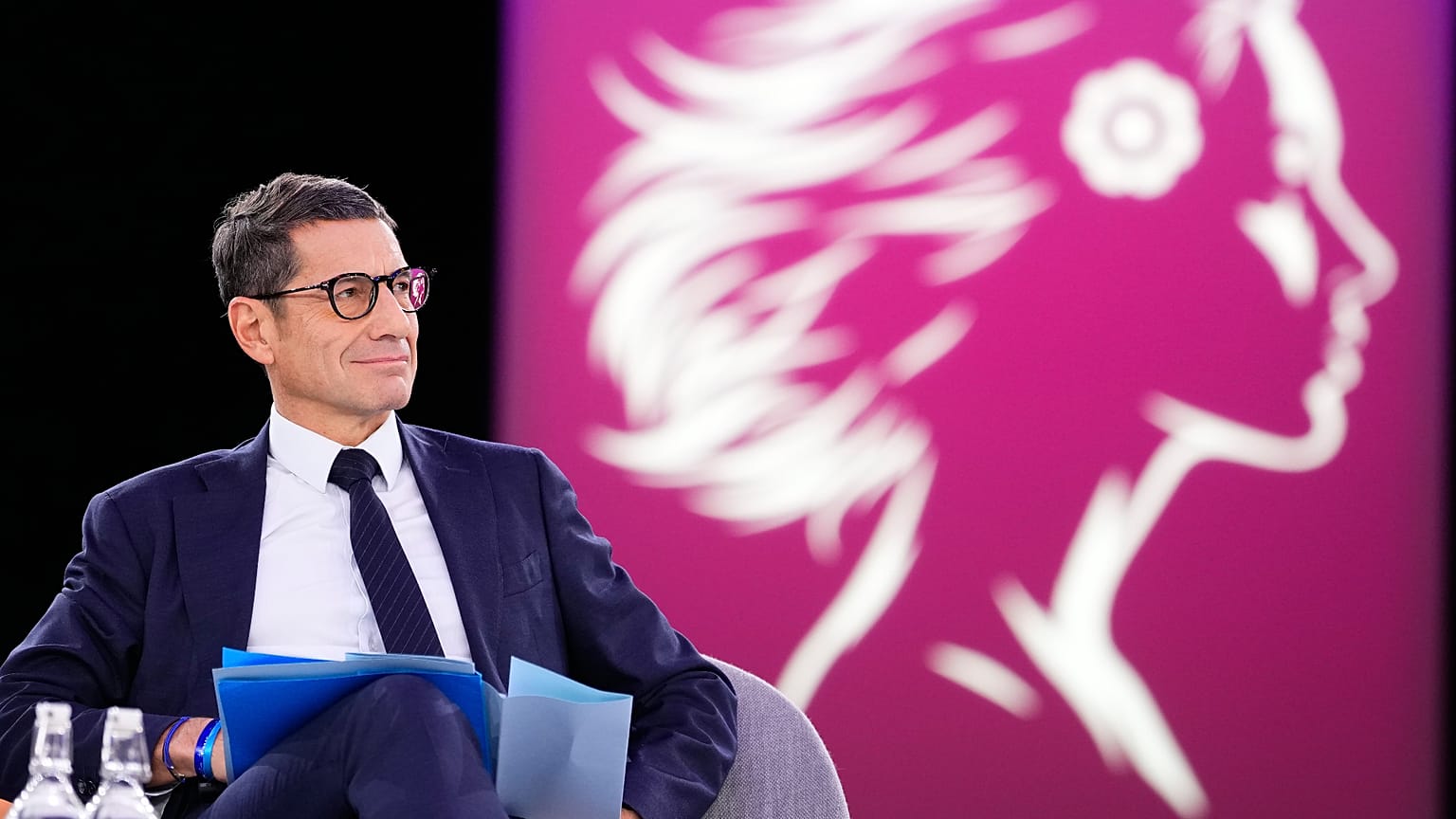
David Lisnard, the mayor of Cannes, was re-elected on Wednesday as head of the Association of Mayors of France (AMF), while pursuing his presidential ambitions with his conservative Nouvelle Énergie party.
Speaking to Euronews, he warned that democracy was under attack from both external and internal threats, calling for a stronger role for local government and praising grassroots politics.
France's mayoral association brings together the mayors of some 34,000 French municipalities, most of whom are elected without a partisan party label.
"We must regain the ability to act and let the local level show the way," said Lisnard, while criticising excessive bureaucracy, red tape and contradictory regulations.
He added that "rules and standards are necessary, but like cholesterol or technocrats, too much is harmful," he added.
Meanwhile, on foreign policy, he warned against "illiberal empires" with expansionist ambitions, naming Russia and China, while also calling out radical Islamism.
A fragmented political race
Lisnard's standing in the polls has risen in recent weeks, amid divisions within the centre-right bloc.
Certain polling scenarios have placed him ahead of former Prime Minister Édouard Philippe, who was previously viewed as a potential challenger to the far-right National Rally party's Marine Le Pen in a second round.
Polls indicate that Le Pen is currently heading the presidential race, followed by the left's Jean-Luc Mélenchon with his France Unbowed party on the left.
Lisnard is campaigning on a programme centred on cutting public spending and taxes, easing business regulations and sharply reducing immigration — leading Le Pen to accuse him of seeking to "grind down" workers' rights with his labour and social policies.
He has also cited Argentine President Javier Milei as an example of radical economic reform and pledged to “turn off the tap” on immigration.
Lisnard has also faced criticism over allegations that he is using his position at the head of the AMF, which he has led since 2021, to advance his presidential ambitions and secure the endorsements needed to qualify for the race.
'All eyes in Europe are on our country'
Former French Prime Minister Dominique de Villepin, who failed to secure the 500 endorsements required to stand in the 2012 presidential election, has called for a "strong France", which can restore its credibility.
He told Euronews that it was vital for France to address its "triple" debt,calling for a strong country that "regains its credibility and regains its health".
"We have a significant financial debt to settle", he stressed, while also pointing to an ecological debt and social debt in "a country where inequalities are increasing".
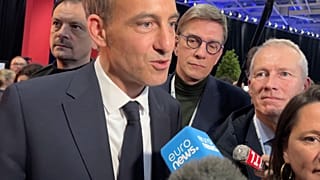
Meanwhile, centre-left presidential hopeful Raphaël Glucksmann, leader of the Place Publique party, told Euronews that "the eyes of Europe are on France" ahead of its elections.
Referring to the 18 November summit involving Donald Trump, Xi Jinping and Vladimir Putin in Shenzhen, he described the three leaders as "masters of the world who intend to share it."
He argued that "the only obstacle" to this division of the world was "a powerful, independent and free Europe". France, he said, would be "the cornerstone of this Europe", adding that this was "the most important issue at stake in the election."