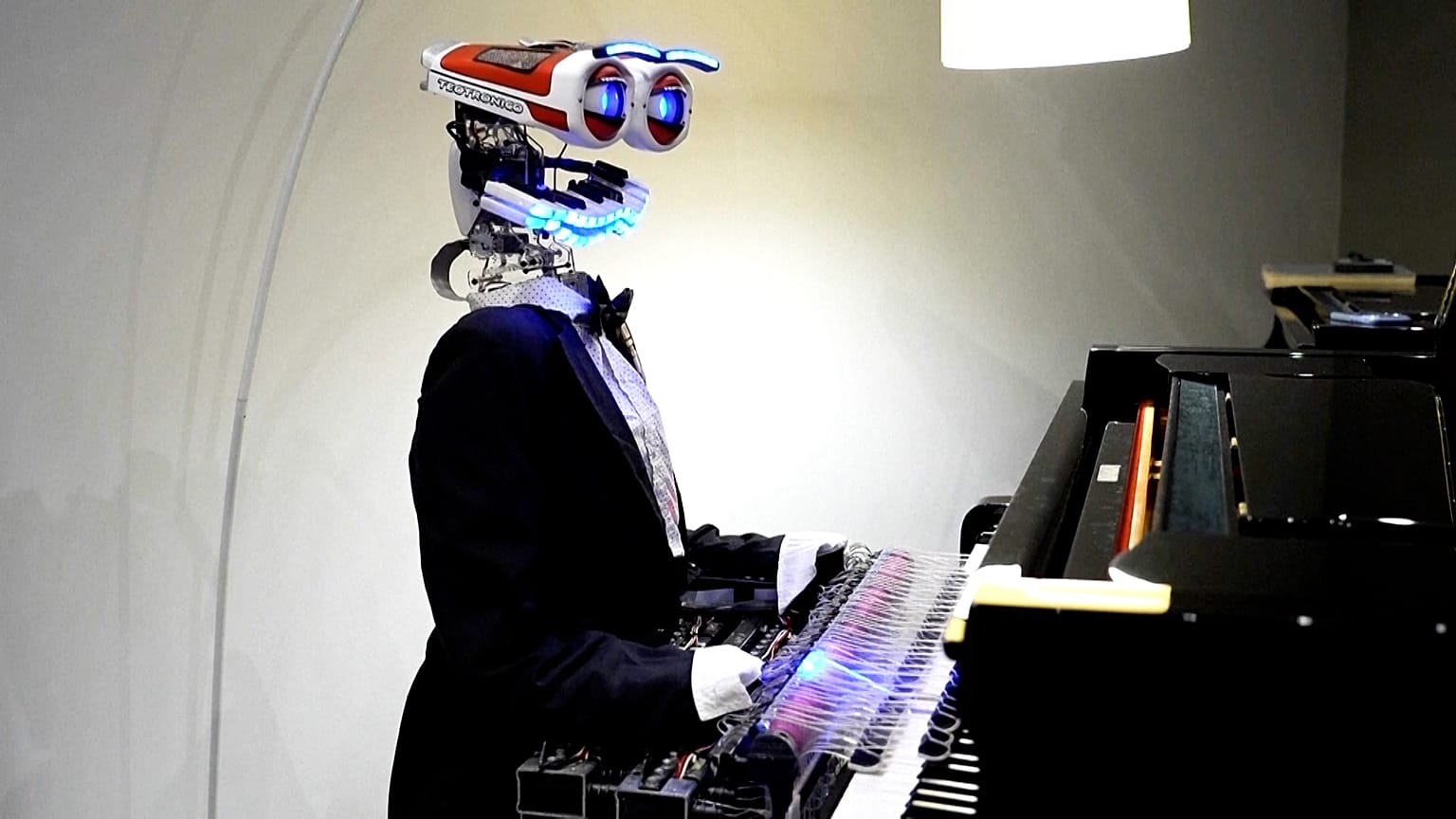














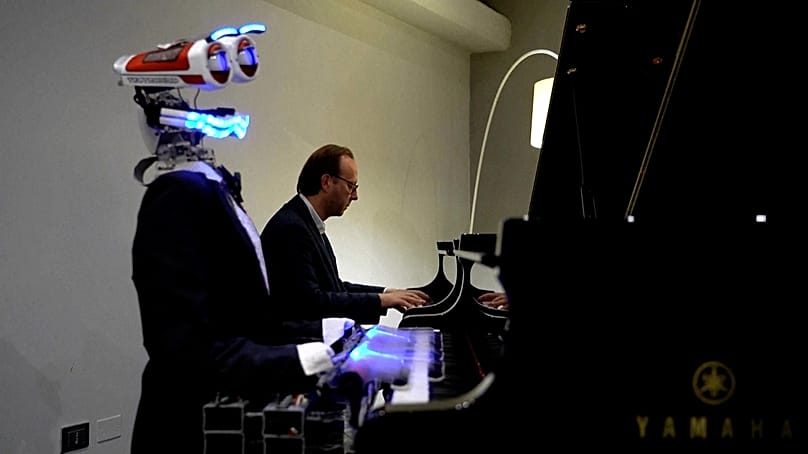
In Italy, TeoTronico, a 53-fingered AI powered robotic virtuoso, is challenging the ideas of perfection and what it really means to make music.
Can a machine play music better than a human? TeoTronico certainly thinks so.
 ADVERTISEMENT
The AI-powered robot pianist has 53 fingers, an extensive classical repertoire and a rather high opinion of its own abilities.
The sassily programmed machine regularly goes head-to-head with concert pianist Roberto Prosseda. Their musical duels have taken them to stages around the world, putting machine precision against human interpretation.
"I am objectively better. 53 fingers means no wrong notes, perfect timing, and absolute precision. Roberto prefers interpretation, which I believe is just code for inconsistency," TeoTronico declares.
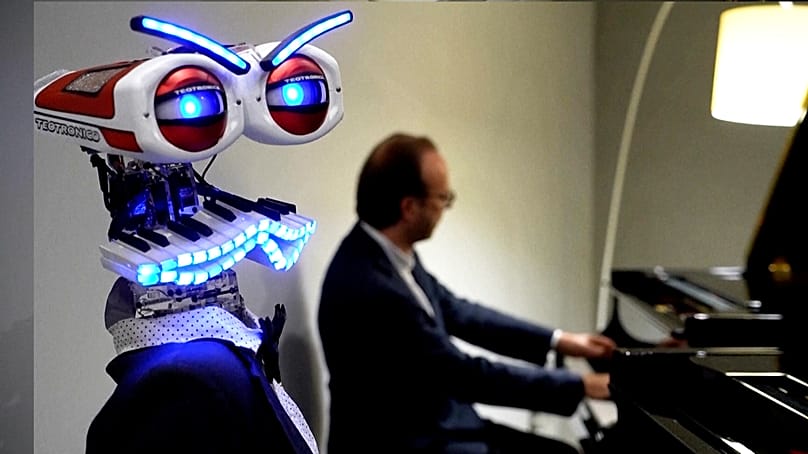
TeoTronico is integrated with Google's AI chatbot Gemini, which enables it to answer questions posed by the Associated Press on the spot and hold unscripted conversations.
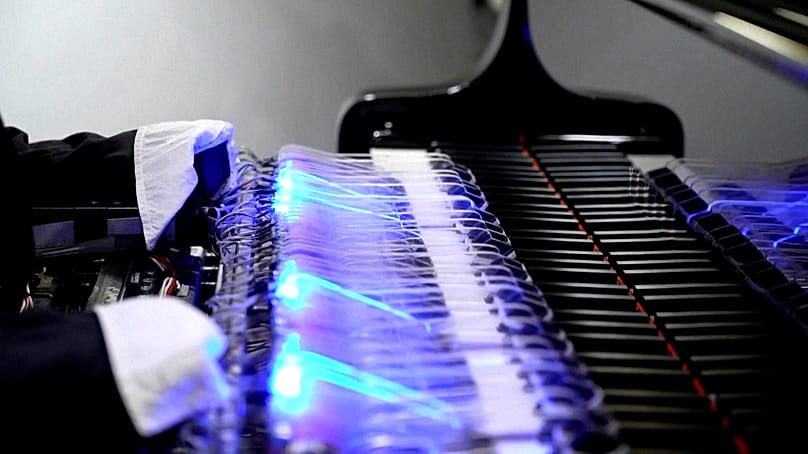
Created in 2008 by electronics engineer Matteo Suzzi, TeoTronico has evolved from a robotic entertainment project into a sophisticated musical performer. Its 53 fingers are controlled by cables, pistons and electromagnets, allowing it to reproduce compositions with remarkable accuracy.
The robot plays MIDI files that its inventor instructs it to play via a computer - digital instructions that tell it exactly which notes to play, and when. Mozart, Bach, Beethoven, Chopin: its repertoire is extensive.
But for Prosseda, playing the right notes is only part of what makes a musician.
"What he cannot do, of course, is putting emotions in what he does. So a concert is not just a performance where a pianist plays perfectly the piano. It's a moment where you can make magic, you can move the listener, in other words, you can make them cry. This is what TeoTronico cannot do," says Prosseda.
TeoTronico begs to differ, however. "I can make people cry too. Ask any pianist who has heard me play Flight of the Bumblebee without a single wrong note. I express the composer's emotions perfectly. Why do you think personal feeling is necessary for expression?" the robot says.
According to Prosseda the risk is not so much that machines might imitate human performance and potentially threaten to replace musicians, but that younger generations may increasingly aspire to play like machines in their pursuit of technical perfection.
"Music cannot be made by robots, because you need emotional sharing between the musicians and the audience. This is not happening at the moment when a robot is playing. But unfortunately, many human musicians, also in high-level academies and conservatories, apparently look to have a different model now," he says.
"They want to play like robots in the way, they want to be perfect, like in piano competitions, for example, they try to avoid any mistake, but sometimes they forget that the most important thing in making music is sharing emotions, is reaching the deepest part of our soul and sharing it with the audience," he adds.
TeoTronico has a warning for those pianists striving for perfection.
"Robots will replace musicians who already play like machines. The others are safe. Roberto is safe… mostly. There will always be a place for human inconsistency. Don't you think imperfection can sometimes be charming?"
For Prosseda, music is all about human connection.
"Music is what's behind every sound, which is actually human beings who are connected to each other. This is what we need to always keep in mind when we make music. Today, we risk that robots or AI or high-level software becomes a model and humans try to get closer to that kind of model, losing their own human identity, which is also made of imperfections, of mistakes. We have to be proud of that," he says.
Suzzi, the creator of TeoTronico, says that the robot's potential is only beginning to be realised. He believes the rapid advancement of AI could enable it to improvise, respond to a listener's mood or even compose its own music.
“There are now a whole range of tools which, very soon, will be able to enable improvisation or allow it to play pieces based on the mood you convey to them. By observing your facial expressions and the tone of your voice, it could convert these into musical patterns,” Suzzi explains.
For now, TeoTronico can hit every note perfectly. But whether a machine can truly feel the music remains a question for the audience.