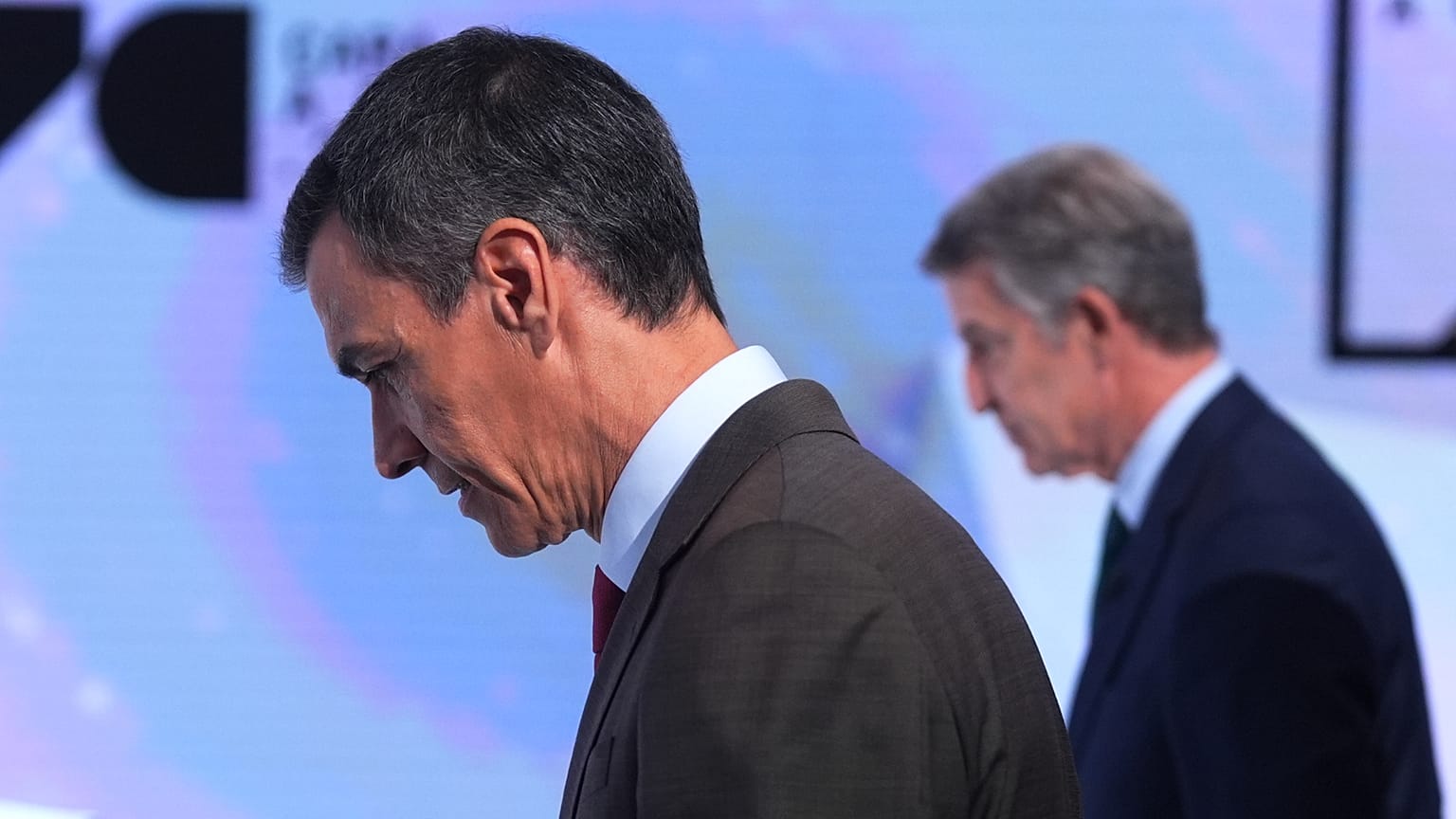













Spain is heading to the polls this weekend, in an election marred by disinformation online. With France, Italy and Poland also holding elections in the coming months, how prepared is Europe to deal with a new wave of fake political news?
Pro-Russian actors are spreading fake news reports and misleading videos ahead of Spain's 29 November snap election, impersonating media outlets to undermine support for Ukraine and European sanctions against Russia.
 ADVERTISEMENT
What is the Matryoshka campaign?
Today's episode of Euronews Verify takes a look at the disinformation campaign known as Matryoshka, which takes its name from the traditional hollow, wooden Russian dolls that decrease in size and are stacked one inside the other.
It's been in action since at least 2023, according to France's foreign digital interference watchdog, VIGINUM, and primarily focuses on spreading anti-Ukraine narratives to try and weaken support for it in the West, although it pushes out fake claims about other European countries too.
One of its main strategies is to mimic legitimate sources, such as news outlets and research organisations, by stealing their visual identity to spread disinformation through a veneer of credibility.
It's also sometimes known as Operation Overload, a name used to refer to the campaign's other tactic of bombarding journalists, fact-checkers and researchers with fake claims to literally overload their resources.
Why is Matryoshka going after Spain?
Spain's government has recently been hit by railway disasters, corruption scandals, and a migrant crisis, meaning the conservative People's Party is now topping most polls.
The anti-immigration and Eurosceptic Vox party could also pose a threat, as it is consistently polling in third place and pinching votes from the Socialists.
Amid all this political instability, Matryoshka and other similar disinformation campaigns aim to capitalise on the uncertainty, interfering in the democratic process to try and destabilise Spain further, weaken Europe, and shake support for Ukraine and sanctions on Russia.
In a similar vein, they also try to spread narratives that benefit politicians more sympathetic to Moscow, or those who outwardly state they will reduce aid for Kyiv.
What's Matryoshka's prime target?
The economy appears to be the weak point that Matryoshka is trying to score hits on, in order to damage citizens' trust in democracy.
"It's one of the topics that are behind the defeat of [US President] Donald Trump in the mid-term elections," Andreu Casero-Ripollés, professor of journalism and political communication at Universitat Jaume I, told Euronews Verify.
"And this type of disinformation tries to generate the sensation that the economy is going very badly and has a lot of problems that can only be solved with radical measures," he added.
Is Europe prepared for a wave of political deepfakes?
Also in today's episode, from a fake video targeting the Spanish prime minister's wife to an AI-generated campaign video featuring Greece's prime minister, AI seems to be increasingly targeting political communication, with growing concern about deepfakes.
One reason for the rising use of AI is that it is cost- and time-effective, Kuhu Badgi, from the Center for Strategic and International Studies, told Euronews Verify.
"In the past, to create a political ad, whether it be an advertisement on TV or even a social media campaign, it would require resources like time. It would require many millions of dollars in terms of funding these initiatives."
What are the risks and how can voters spot deepfakes?
Experts claim that the use of AI-generated content is being spread and created across political lines.
In Europe, some parties using this tool are labelling their content as such, even if the font and colour are arguably too small, while others are not.
Under the EU's AI Act, manipulated video content that resembles existing persons, places or entities needs to be clearly disclosed.
These videos are also subject to national laws. For example, a former Socialist Party member in Spain has reportedly accused the People's Party of defamation and digital identity theft.
This is after a video used her likeness to hint at accusations that she worked to undermine the judiciary and law enforcement to help the Socialists.
While politicians discuss how ethically and politically correct this new wave of videos is, almost nine in 10 EU citizens agree that online manipulation, including AI-generated content and deepfakes, poses a threat to democratic processes.
Watch Euronews Verify
Join Euronews Verify live on TV, Euronews' website, and on digital platforms (YouTube, Facebook, X, and Instagram) every weekday at 6:40 pm Brussels time. In just under 11 minutes, our new format goes beyond the headlines to make sense of what's happening, fact-checking and untangling the day's most pressing issues to explain why they matter to you.