













The International Court of Justice ruled by nine votes to six that Myanmar had "committed" genocide against the Rohingya community.
The International Court of Justice has found Myanmar guilty of genocide against its Rohingya minority. It is the first time in the court’s 80-year history that it has ruled a state committed the crime.
 ADVERTISEMENT
"The Republic of the Union of Myanmar has committed genocide against the Rohingya group in northern Rakhine State, in violation of its obligations under the Convention on the Prevention and Punishment of the Crime of Genocide," ICJ President Yuji Iwasawa said on Thursday, reading the verdict in The Hague, Netherlands.
For almost three hours, Iwasawa set out the evidence from the military’s 2017 campaign against the mostly Muslim Rohingya, which drove hundreds of thousands of people across the border into Bangladesh.
He said Myanmar's security forces had killed thousands of Rohingya civilians and committed "widespread sexual violence" against women and "extreme violence" against children.
The judges found that Rohingya villages had been systematically destroyed and resettled with non-Rohingya people. They concluded that the "only reasonable inference" was that Myanmar intended to destroy the group, which is the legal test for genocide.
Compensation and return
The court ordered Myanmar to compensate the Rohingya for "the damage caused by the violations of its obligations... in so far as such damage is not made good by restitution". The amount will be decided at a later date.
Myanmar must also "allow and facilitate the safe, voluntary, and dignified return" of those who fled, and investigate and punish anyone suspected of taking part in the genocide.
ICJ rulings are binding and cannot be appealed. However, the court has no power to enforce them, and it is unclear whether Myanmar’s leaders will comply.
The verdict is likely to add to pressure on Min Aung Hlaing, who led the military during the 2017 crackdown. He seized power from Aung San Suu Kyi's elected government in a 2021 coup, and this year he was installed as civilian president after tightly restricted elections. The ruling could complicate his push for international recognition.
Agnes Callamard, Secretary General of Amnesty International, called the ruling "a historic and authoritative recognition of the atrocities committed against the Rohingya and a rare moment of justice for survivors, victims and their families".
Legal experts are watching the case for signs of how the ICJ might rule on South Africa's separate case accusing Israel of genocide in Gaza.
'I want justice'
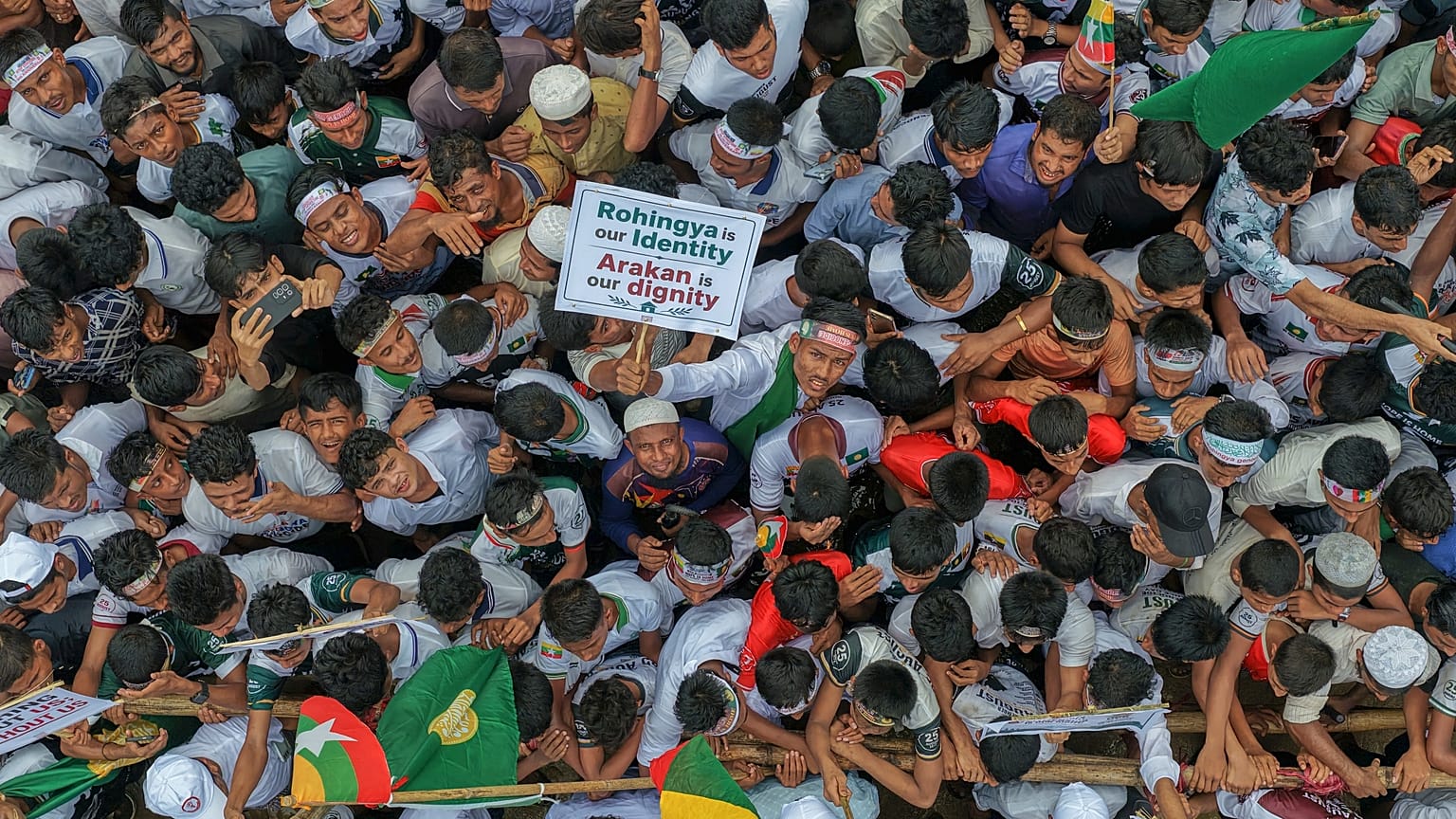
More than a million Rohingya now live in the world’s largest refugee camp, across the border in Bangladesh. Refugees there have described gang rapes, mass executions and attacks on families and children.
"I want justice," said a 23-year-old survivor of rape, speaking to AFP before the verdict from the cramped shelter she shares with her family. She asked not to be named.
"There should be stringent punishment for those who raped women," she said.
Mohammed Osman, 20, said he hoped the ruling would let him go home to perform last rites for his parents and younger brother, who were killed by the military.
"They shot my father dead, forced my mother into a house with a few other women, raped them and burnt down our homestead," he told AFP.
Seven-year case
The Gambia brought the case in 2019 under the 1948 Genocide Convention, which allows any signatory state to take another to court over suspected breaches. It has the backing of the 57-member Organisation of Islamic Cooperation.
"It is not about esoteric issues of international law, it is about real people, real stories and a real group of human beings," said Dawda Jallow, The Gambia’s justice minister.
Myanmar has always denied genocide. It says it was responding to an insurgency after militant attacks killed about a dozen members of its security forces.
"Myanmar was not obliged to remain idle and allow terrorists to have free rein," Ko Ko Hlaing, Myanmar’s representative, told the judges at hearings in January.