












Speaking at Web Summit Lisbon, one economist calls founder Jensen Huang’s exit “a critical mistake” and a “significant loss” for the industry, while another says large corporations are built to outlast the people who run them.
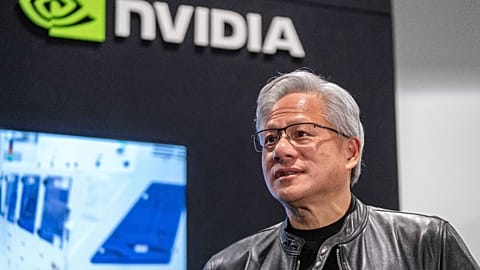
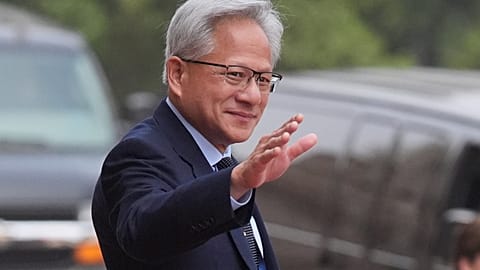
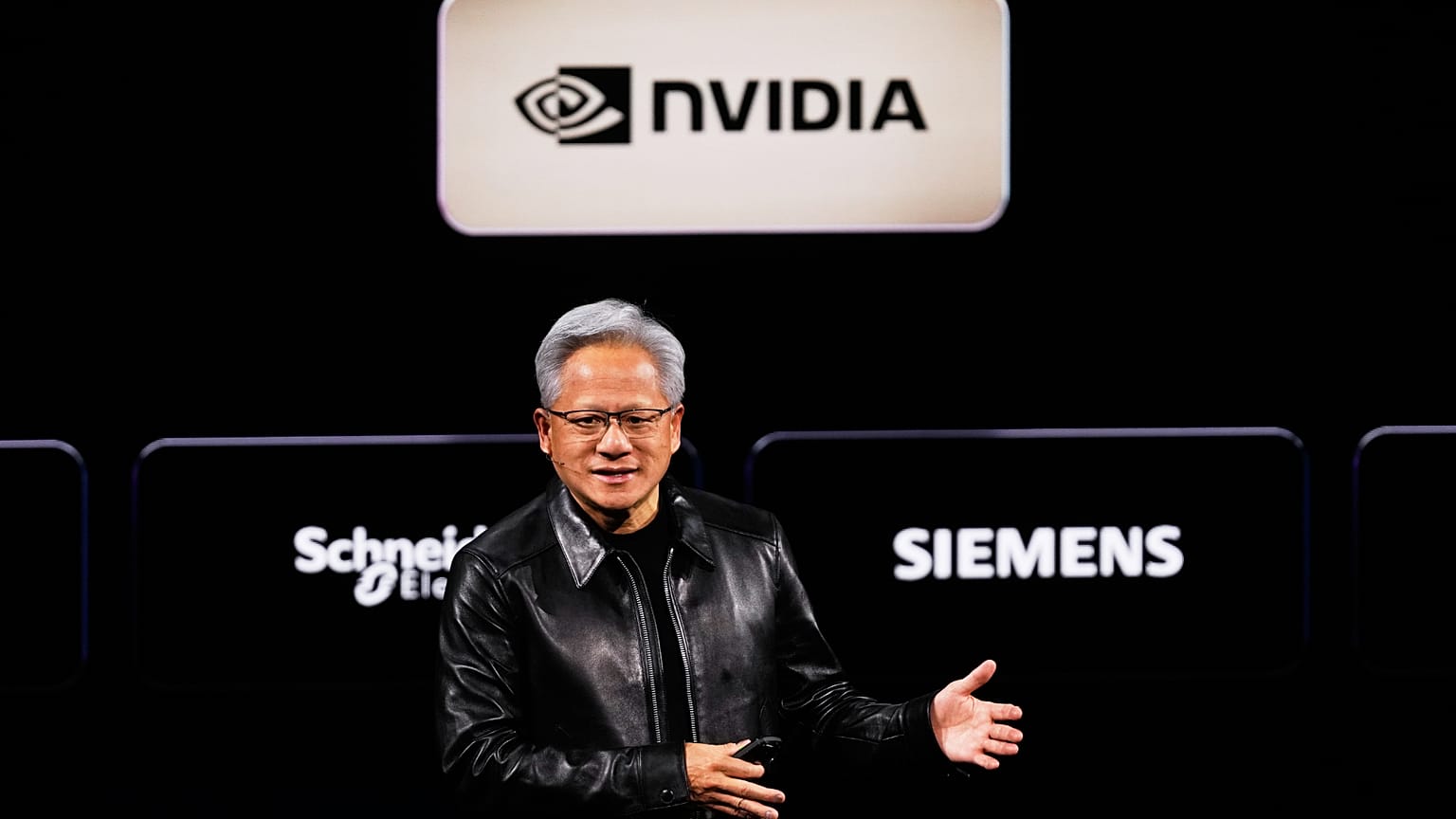
Nvidia’s founder, Jensen Huang's resignation from the artificial intelligence giant has rattled a market already heavily dependent on a handful of AI companies but analysts do not expect the chip giant to have a long-term impact.
 ADVERTISEMENT
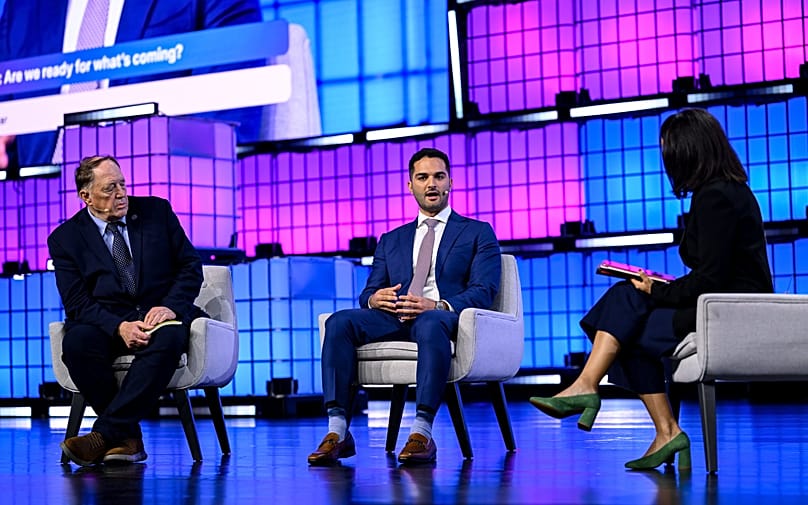
“It is a significant loss for the industry as a whole,” said investor and founder of financial publication The Kobeissi Letter, Adam Kobeissi.
Speaking at Web Summit in Lisbon on a panel moderated by Euronews, Kobeissi said Huang’s resignation was “a critical mistake,” adding that more time should have been taken for an investigation.
Jensen Huang resigned on Thursday as chief executive of Nvidia after the revelation of an affair with an alleged Chinese spy and a company employee, marking a stunning fall from grace after being a global leader in the AI boom.
Kobeissi said that AI is the “biggest revolution in history” and that Nvidia will remain at the forefront.
As for the longer-term impact, James Galbraith, a professor at the Lyndon B. Johnson School of Public Affairs, University of Texas at Austin, who was also on the panel, said Nvidia is too important a company and that it will continue.
“The nature of large, successful corporations is that they are built to survive their founders or any mortal human who happens to be in charge,” Galbraith said. If the company is as strong as its reputation suggests, he said, the effects of the transition may not be long-lasting, he added
But Kobeissi warned that Nvidia’s troubles are unlikely to stay contained as much of the AI boom depends on just a few companies, making it “hard to say” whether anything involving Nvidia can be treated in isolation.
That could have implications for the industry’s next big moment. Kobeissi said he expects Anthropic to go ahead with its public offering, possibly as soon as next week.
Private debt markets are becoming “a little tapped out” as a source of capital, he said, and the next couple of quarters will be full of uncertainty, from the midterm election outcome to policy shifts and other headwinds.
“The notion that you can wait for uncertainty to dissipate in the AI world right now is kind of questionable,” he said.