

















Good morning. I’m Luca Bertuzzi, holding the pen for today’s newsletter. In this edition, leaders from across the world are flocking to Dublin for the European Political Community summit, where the war in Ukraine looms large, while the latest EU-UK draft statement significantly softened its wording.
All eyes on Dublin. After a week dense with diplomacy, the spotlight moves to the Irish capital, which hosts the ninth European Political Community summit today, with leaders from more than 45 countries expected.
 ADVERTISEMENT
The war in Ukraine and Russia’s hybrid campaigns in Europe are set to dominate the talks. US envoys Jared Kushner and Steve Witkoff are due to land in Ireland after a short visit to Russian President Vladimir Putin in the wake of the Abu Dhabi negotiations.
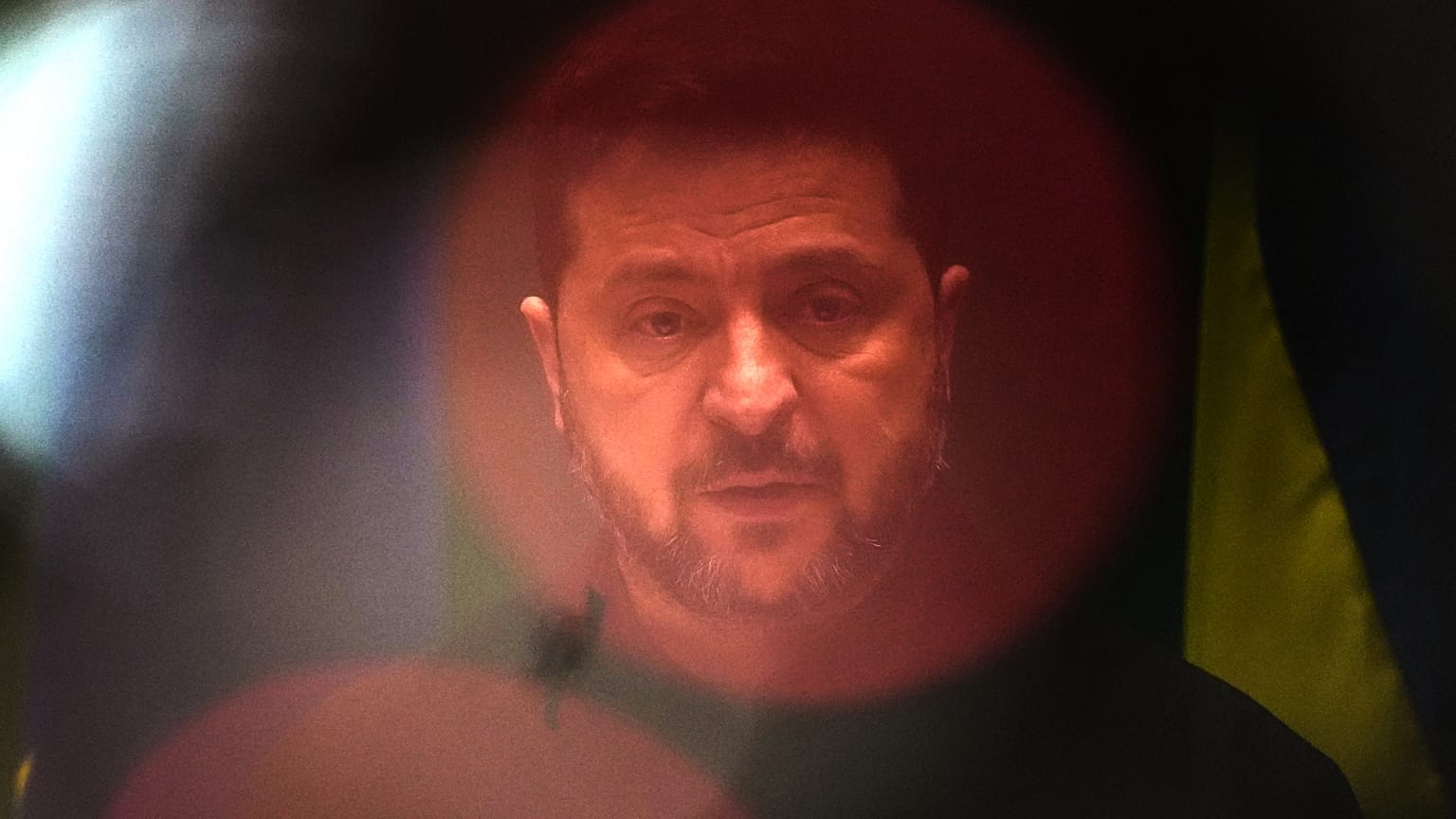
Ukrainian President Volodymyr Zelenskyy will hold several bilateral meetings with government delegations and join plenary sessions, my colleague Shona Murray writes in. He will also attend the Friends of Ukraine event, chaired by Irish Prime Minister Micheál Martin and UK Prime Minister Andy Burnham.
Irish police are on high alert for “all eventualities” after hoax bomb threats hit hundreds of schools yesterday morning in Ireland, the UK and Italy. The agenda will also cover competitiveness, energy security and migration, with a joint statement expected from Italy, Denmark and the UK.
Prisoner swap deal. What was the outcome of Abu Dhabi, you may ask. A large-scale prisoner swap is the only tangible result of the latest round of Ukraine peace talks, as Washington prepares to take its proposals directly to Putin.
Ukraine and Russia agreed in principle to what Kushner described as the largest humanitarian release of prisoners since the start of the war, with final numbers due to be confirmed today.
Zelenskyy had previously said negotiators were discussing an exchange of 1,000 prisoners on each side, potentially rising to 1,500.
But two days of US-mediated talks in Abu Dhabi produced no breakthrough on a ceasefire or the territorial disputes blocking a settlement.
Russia’s chief negotiator Vladimir Medinsky kept questioning Europe’s very security architecture, arguing that “the conflict in Ukraine has shown that the entire security system established in Europe after Yalta and Potsdam is functioning very poorly.”
Negotiating the negotiator. Briefing reporters after yesterday’s talks, Kushner said he will ask Putin for his "blessing" to extending the format to the Europeans, making it effectively multilateral.
“If Europe could identify one person to speak on their behalf, that would be a bigger achievement than getting the Russians to include them in the negotiation,” Kushner said at the press conference, prompting both Witkoff and Ukraine’s chief negotiator Rustem Umerov to suppress a grin.
Jibe aside, finding an EU representative with a clear mandate now looks close to unavoidable, amid pressure from European leaders like Giorgia Meloni and from Zelenskyy himself, who has urged European governments to agree on the matter by the end of November.
EU-UK latest. Yesterday, EU ambassadors discussed a new version of the EU-UK joint statement ahead of the much-hyped summit on 20 November. After repeated leaks to the press, the discussion took place in restricted format, with only ambassadors present and no devices allowed.
Still, the latest draft of the conclusions, seen by Euronews, shows where the summit is heading. It significantly softens the most controversial language, notably by dropping the pledge to suspend the deportation of foreign national offenders in favour of “close coordination”, continued bilateral talks on advance notification of removals, and on prisoner transfers.
The explicit language on the UK agreeing to pay into the EU funding programme for the bloc’s low-income regions in exchange for access to the EU electricity market has also been scrapped, though a financial contribution remains in the cards to be negotiated separately.
On the thorny issue of youth mobility, the draft now explicitly states that both sides will agree on equal treatment of tuition fees within six months of the summit, while language on the UK’s participation in Erasmus+ after 2028 has been dropped.
The Youth Experience Scheme carries a tentative target date of January 2030. The agreements on agrifood standards (SPS) and the Emissions Trading System (ETS) are also in square brackets, with 1 March 2028 pencilled in for SPS and no date yet for ETS, a sign that both are still being negotiated.
Bring the children home. The European Parliament is expected to adopt a resolution today urging Moscow to immediately and unconditionally return all Ukrainian children forcibly deported to Russia or transferred to occupied territories, insisting that their fate must not be used as a bargaining chip in negotiations to end the war.
Addressing MEPs yesterday, EU foreign policy chief Kaja Kallas said more than 20,500 children had been illegally deported. She described the deportations as a state-orchestrated campaign to erase Ukrainian identity, saying that “all evidence points to a crime against humanity”.
Winter is coming. US Undersecretary for Defence Elbridge Colby and Ukrainian Defence Minister Evgeniy Khmara will attend Monday’s Foreign Affairs Council on defence, with the focus on strengthening Ukrainian resilience ahead of winter.
EU plans Doha defence talks to strengthen security ties with Gulf countries
EU Ambassador to Qatar Antonino Maggiore tells Euronews that Europe plans to strengthen defence cooperation with Qatar and the Gulf countries, as "every crisis brings opportunities," while also deepening political and economic cooperation with the region.
The European Union and Qatar are deepening their defence cooperation, and "security is fundamental in the current geopolitical context and it's a mutual interest," the EU's new ambassador to Qatar Antonino Maggiore told Euronews in Doha.
Maggiore described the EU's defence cooperation thrust in Qatar and the Gulf countries as following two main objectives: connecting private defence industries through a new platform and presenting the EU's common defence industry policies to Qatar and the Gulf Cooperation Council (GCC) countries.
In a wide-ranging interview with Euronews at the start of his mandate in Qatar, Maggiore said that the EU and Qatar are organising a seminar on defence technology and artificial intelligence in Doha on 3 December, to connect private-to-private industries, "to create a platform for our defence industry to work together with the Qataris counterpart and possibly also from the GCC."
Aadel Haleem has the story.
More from our newsrooms
A Portuguese group will manufacture components for Swedish Saab fighter jets
A Swedish company announced a partnership with Portuguese industrial group Vangest to produce eight complex parts in Portugal for Gripen E/F fighters. The Swedish jet is among the options to renew the Portuguese Air Force's F-16 fleet. Diana Rosa Rodrigues has the details.
Schools in Italy, Ireland and UK evacuated after hoax bomb threats that also target Meloni
Italian ministers suspect a deliberate strategy to spread fear, after similar hoaxes hit schools in Britain and Ireland and media outlets in Bulgaria. Read more.
Iran rejects France's 'baseless accusations' on fridge cyberattacks
Tehran instead blames the French government for the cyber incidents that affected hundreds of fridges in October. Jonathan Benton has the report.
We’re also keeping an eye on
- The ninth European Political Community summit is taking place in Dublin. António Costa, President of the European Council, Ursula von der Leyen, President of the European Commission, Kaja Kallas, High Representative for Foreign Affairs and Security Policy, and Roberta Metsola, President of the European Parliament, will all attend.
- Commissioner for Preparedness and Crisis Management Hadja Lahbib visits Greenland.
- Commissioner for Enlargement Marta Kos travels to Warsaw to open the third EU-Ukraine Investment Conference and meet Ukrainian Economy and Environment Minister Oleksandr Kravchenko and Estonian Economy and Industry Minister Liina Vahtras.
- Commissioner for Defence and Space Andrius Kubilius travels to Italy, where he meets Italian Industry Minister Adolfo Urso and Defence Minister Guido Crosetto.
- The European Parliament's Brussels mini-plenary continues. MEPs debate further EU sanctions against Russia and vote on a resolution concerning Ukrainian children forcibly deported to Russia.
That’s it for today.