












MWC26 returned to Doha as the industry faces a dual challenge: building the networks that will power artificial intelligence and narrowing a digital divide that still leaves millions of people without mobile internet.
The Middle East and North Africa’s mobile economy is projected to reach €421 billion by 2030, but a new industry report highlights a persistent problem: economic growth is accelerating, yet millions of people still are not benefiting from the digital economy.
 ADVERTISEMENT
GSMA’s Mobile Economy MENA 2026 report, released on the opening day of MWC26 Doha, revealed that mobile technologies and services generated an estimated €340 billion in economic value in 2025, supporting 2.2 million jobs and contributing around €35.8 billion to public finances.
Meanwhile, 48% of MENA’s population used mobile internet last year, while 49% remained offline despite living in areas covered by mobile networks.
The figures point to a challenge that extends beyond infrastructure: ensuring people can afford, access and use the technology available to them.
Doha at the centre of the global connectivity debate
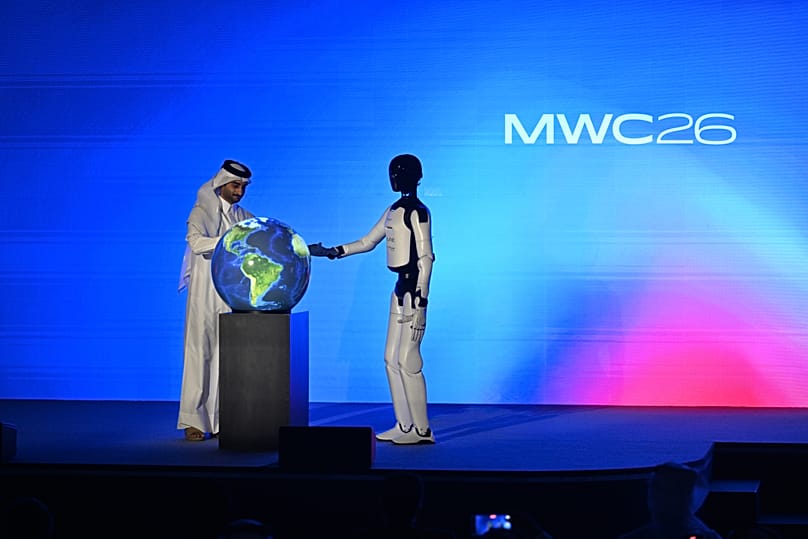
This year’s MWC26 Doha carries added significance as it takes place alongside the International Telecommunication Union’s Plenipotentiary Conference, the first time the two events are being held at the same location.
The two gatherings bring industry leaders and policymakers together at a time when decisions on connectivity standards, digital infrastructure and technological governance will help shape how the global digital economy evolves.
Held in partnership with Qatar’s Ministry of Communications and Information Technology, the three-day MWC26 Doha aims to advance digital connectivity while also creating meaningful access for consumers.
The event is also being held as the region faces continued uncertainty over the future of the US-Iran war, but opening-day turnout has signalled resilience in the ICT industry and that connectivity remains a business priority.
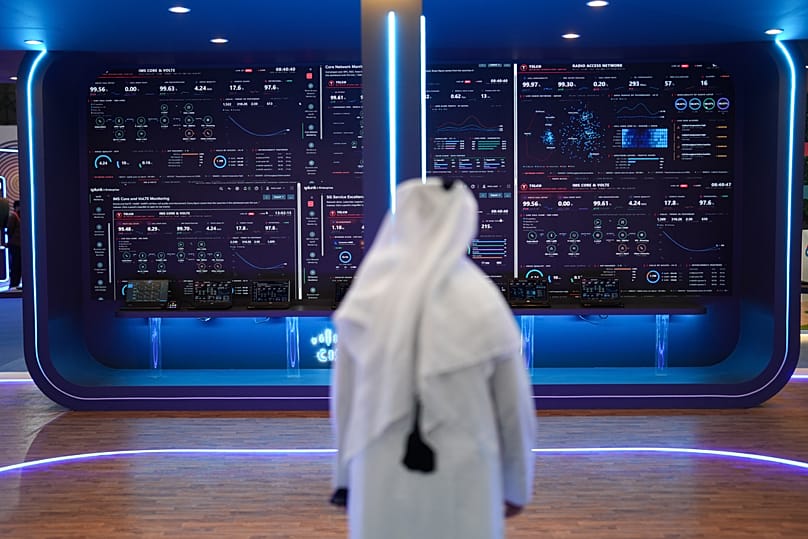
Building the infrastructure behind the AI boom
As AI systems rapidly evolve to carry out more complex tasks autonomously, the industry faces growing pressure to provide the computing power, capacity and resilience needed to support them.
Speaking at the opening ceremony on Sunday, Qatar’s Minister of Communications and Information Technology, Mohammed bin Ali Mannai, noted the rise of AI agents was increasing the need for more resilient networks and advanced computing capabilities.
For GSMA Director General Vivek Badrinath, the region’s digital future depends not only on expanding connectivity, but also on ensuring networks, services and devices work across borders and communities.
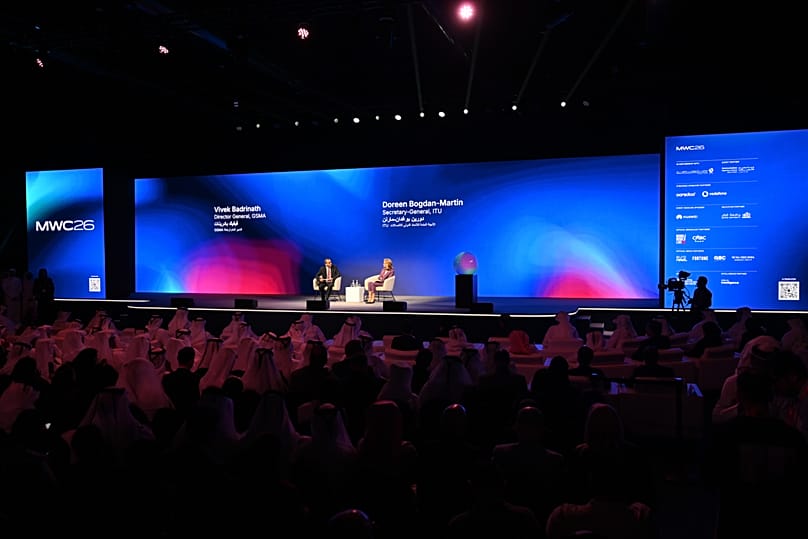
“Progress only counts if everyone shares in it. That means two things: global standards that keep networks, services and devices working across borders, and a concerted effort to connect the people who are still offline,” Badrinath said at the opening ceremony.
Speaking to Euronews, he acknowledged that the industry had not done well in the past year to make mobile connectivity more affordable to the people who really need it.
“A year ago, we were hoping to be able to bring to the market smartphones in the $50 range. That's very much impossible today with the increase of RAM prices driven by the huge demand for AI. This is an unfortunate side effect,” Badrinath said.
He added that strong demand for AI is depriving smartphone producers of the resources they need to make entry-level phones.
Still, investment forecasts are encouraging. GSMA projects that operators will invest around €80 billion across MENA between 2025 and 2030.
But the challenge is ensuring these investments translate into services people and businesses can use.
Quantitative models: AI’s next frontier
While connectivity has become the foundation of most AI functions, the technology is moving fast beyond content generation and chatbots, expanding into fields such as scientific research, healthcare, materials, and energy.
In an interview with Euronews, SandboxAQ CEO Jack Hidary said quantitative AI approaches can help tackle complex problems traditional methods may still struggle to solve.
“The second bucket of AI is AI for the physical world, for the real world. We look at biomedicine, energy, financial services, these big sectors are really areas for LQM and LLMs, so it's great to see the convergence of these two now,” Hidary said.
Fresh from a recent deal with Anthropic and a €449 million R&D award from the US Commerce Department, Hidary believes these milestones will give the company leverage to innovate further.
“It's a very exciting new award that we got to focus on batteries, on magnets, on the things that we need to produce semiconductors in the United States so that we can really power the economy,” he added.
Narrowing the digital divide
Extending network coverage alone will not be enough to prevent the onset of a second digital divide if governments and policymakers do not commit to removing barriers like smartphone affordability, access to data packages, and the skills needed to use digital services.
These barriers risk becoming more consequential as AI reshapes industries and workplaces, impacting people without the tools or training.
Assistant Resident Representative and Inclusive Growth and Innovation Team Leader at UNDP Egypt Abeer Shakweer echoed GSMA’s call for growth that benefits all segments of society.
“Globally, women, persons with disabilities, people in remote and rural areas, and vulnerable young people are at most at risk of being left behind,” she told Euronews in an interview.
Through acceleration programmes that expand access to financial services and new markets, as well as supporting youth at the ideation stage, Shakweer's work at UNDP Egypt helps empower young entrepreneurs and innovators as real contributors to growth.
Ultimately, rapid advancements in the digital economy should not only be about the technology deployed, but about how it gives people the opportunity to shape it, contribute to it, and benefit from it.
Turning connectivity into everyday value
One way connectivity has opened up a tangible pathway for inclusive growth is through financial services.
Mobile wallets and digital payments platforms can give people and businesses new ways to send and receive money, giving merchants a chance to reach more customers and manage transactions more easily.
Mirko Giacco, CEO of Ooredoo Fintech, works at the intersection of connectivity and financial services, tapping into the parent company's vast network while also prioritising underserved communities in the MENA region, such as Tunisia, Oman, the Maldives and Qatar.
“In Qatar, more than 20% of the market share international remittance goes through our products. That means we give users, migrant workers that are here, the tools to send money back home. They do it with us in a way that is safe, convenient, and economically viable,” Giacco told Euronews.
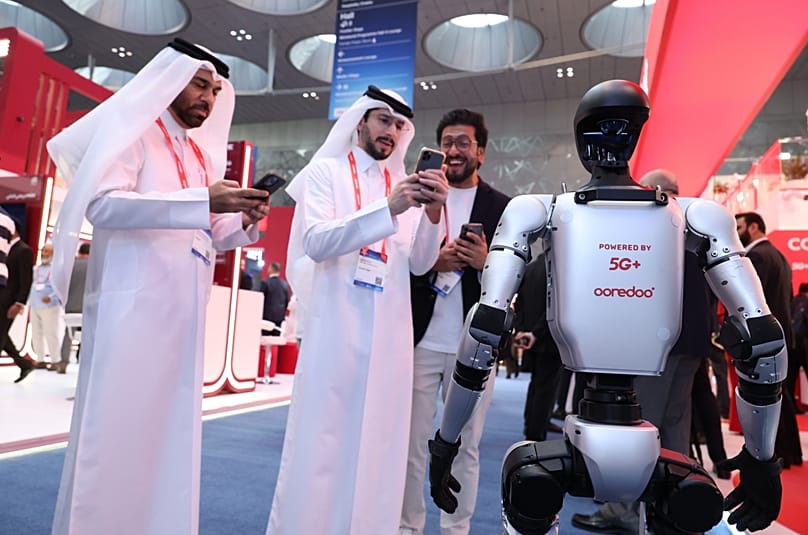
Meanwhile in the Maldives, Ooredoo Fintech has been the first fintech company to enable gig workers to receive payments in US dollars, through a partnership with PayPal.
The GSMA also released a report at MWC26 Doha which looks at how operators in MENA are turning network investments into sustainable returns.
The 5G Monetisation MENA report found that 17 of the region’s 24 markets had launched commercial 5G services by September 2026, while 5G connections are expected to rise from 67 million in 2025 to almost 350 million by 2030.