




Clashes erupted between protesters and police across several Italian cities on Saturday, with officers deploying water cannons and tear gas as demonstrations turned violent. Thousands took to the streets of Rome, Milan, Turin, Bologna and Florence, with protesters throwing bottles, stones and firecr
Rome: Clashes broke out on Saturday evening as protesters marched through the Italian capital. Near Largo di Santa Susanna, demonstrators confronted a police cordon, throwing bottles and setting off firecrackers. Several street signs were also knocked down. Police responded with water cannons.
 ADVERTISEMENT
Milan: Two separate demonstrations involving students, activist groups and pro-Palestinian protesters merged into a single large procession heading towards Piazza Leonardo da Vinci, home to the Polytechnic University of Milan.
Earlier, police blocked a march that had set off from the square towards the city centre, forcing demonstrators back towards Corso Venezia. Some participants subsequently joined a second procession that had started at the Piccolo Teatro.
Around 10,000 people were reportedly taking part in the combined march, which was expected to conclude at Piazza Leonardo da Vinci.
Turin: Tensions escalated as protesters clashed with police, prompting officers to deploy tear gas. After marching through the Aurora neighbourhood, demonstrators reached the Mosca Bridge, where police blocked their route towards the city centre.
Some protesters threw stones, bottles and smoke bombs at officers, who responded with tear gas. The procession later resumed along Via Cigna.
Bologna: Emergency services were called to Via Marconi following clashes between demonstrators and police. Paramedics treated an injured young protester at the scene.
Florence: Protesters threw firecrackers and glass bottles at police as tensions rose during a march through the city. Near the Santa Trinità Bridge, at the junction with Via Tornabuoni, some demonstrators attempted to break through a riot police cordon.
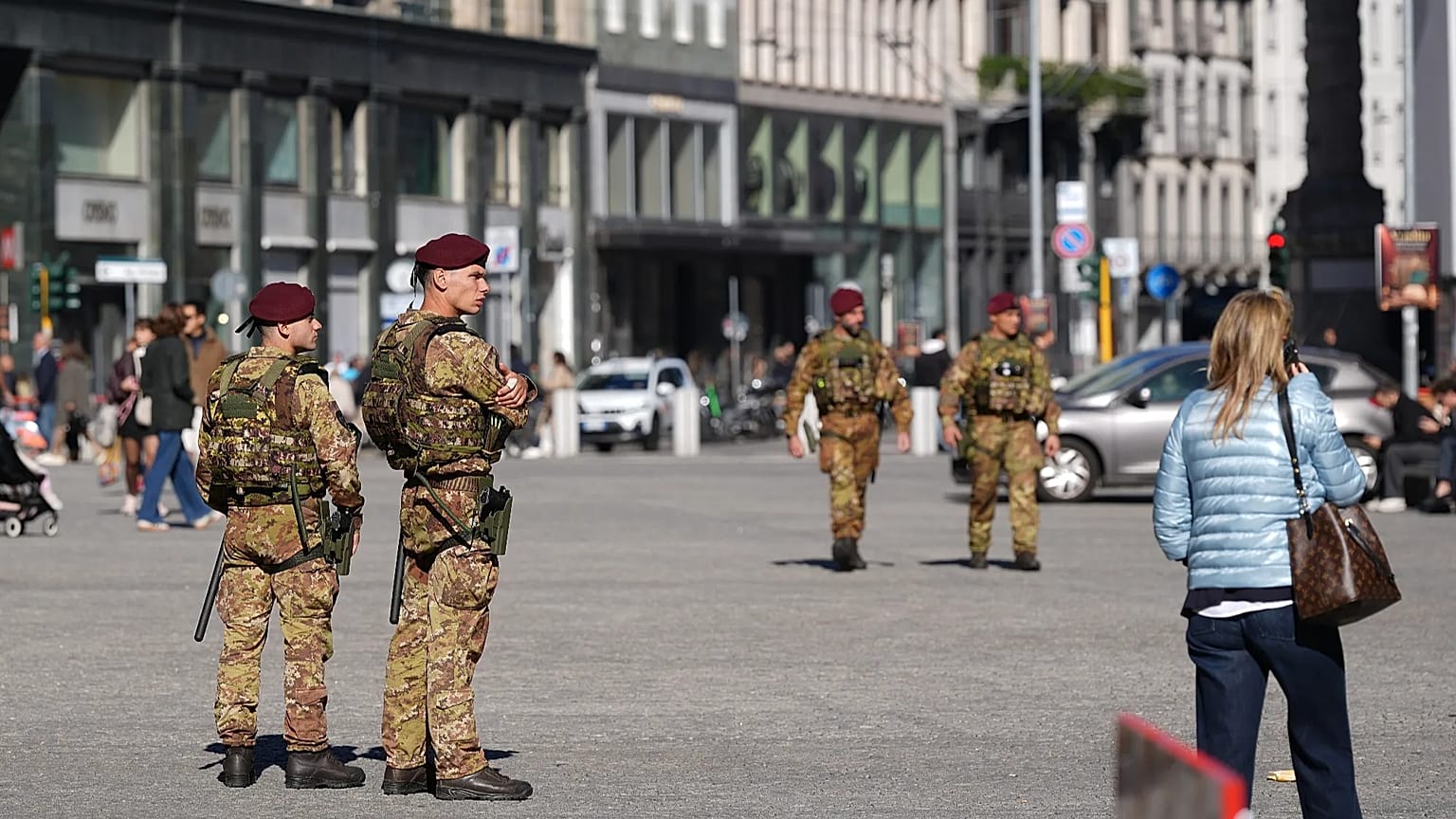
Italian authorities have deployed hundreds of additional soldiers and stepped up security across major cities on Saturday as a new wave of demonstrations raises fears of further violence following last weekend's clashes between protesters and police.
Protests are planned in Milan, Rome, Turin, Naples and several other cities, with demonstrators voicing anger over rising living costs, low wages, military spending and government policies.
Milan is on particularly high alert after violent unrest on 17 and 18 October, when clashes with police, vandalism and looting caused widespread damage in the city centre.
Prime Minister Giorgia Meloni's government has ordered the deployment of an additional 500 soldiers to Milan, reinforcing the security forces already stationed in the city.
Authorities have also introduced drone surveillance, railway station checks and rapid-response units to prevent further disorder.
Police carry out more than 150 searches ahead of protests
Italian police carried out more than 150 searches in Milan, Monza and around 20 other cities on Saturday morning as part of investigations into last weekend's violence.
The searches reportedly targeted individuals suspected of involvement in the unrest, including students and minors.
Interior Minister Matteo Piantedosi has suggested that the previous disturbances were coordinated, while authorities are investigating messages exchanged in online groups ahead of the latest demonstrations.
The newly formed "17 October Movement," which has been linked to the recent mobilisation, announced that previously advertised protest locations had been cancelled and that new meeting points would be communicated shortly before the marches.
The decision has complicated security preparations, with police warning of the possibility of spontaneous gatherings in several parts of the country.
Demonstrations spread from Rome to Turin and Naples
In Rome, protesters gathered for a national demonstration under the slogan "Keep Italy out of the war", opposing military involvement and increased defence spending.
In Turin, students and activist groups have called for a march against rearmament, rising fuel prices and the cost of living, while also demanding better access to housing, education and healthcare.
In Naples, demonstrators mobilised against economic hardship and rising prices.
Meanwhile, thousands were expected to march in Castel Volturno, near Naples, against plans to establish a migrant detention and repatriation centre. Religious organisations, charities, migrant groups and agricultural workers are among those supporting the protest.
Meloni government under pressure after violent unrest
The latest mobilisation comes a week after violent clashes in Milan and Turin prompted the government to announce tougher security measures.
Police said around 2,000 young people took part in the earlier unrest, which resulted in 45 arrests, including 34 minors.
Meloni has condemned the violence and pledged a tougher response to attacks on police officers and businesses.
The unrest has also renewed debate over economic inequality, social exclusion and the government's approach to public order.
Authorities remain concerned that Saturday's demonstrations could bring together student movements, trade unions and more radical activist groups, increasing the risk of further confrontations.
The protests are taking place alongside demonstrations elsewhere in Europe, including France, Spain, Portugal and Albania, where campaigners are mobilising over issues ranging from living costs to public services and government policies.