































Latvia is focusing on a technological niche: fibre optics. It exports more than 90% of its production. This versatile technology, made from synthetic quartz, is flexible and capable of transmitting ultraviolet and infrared rays.
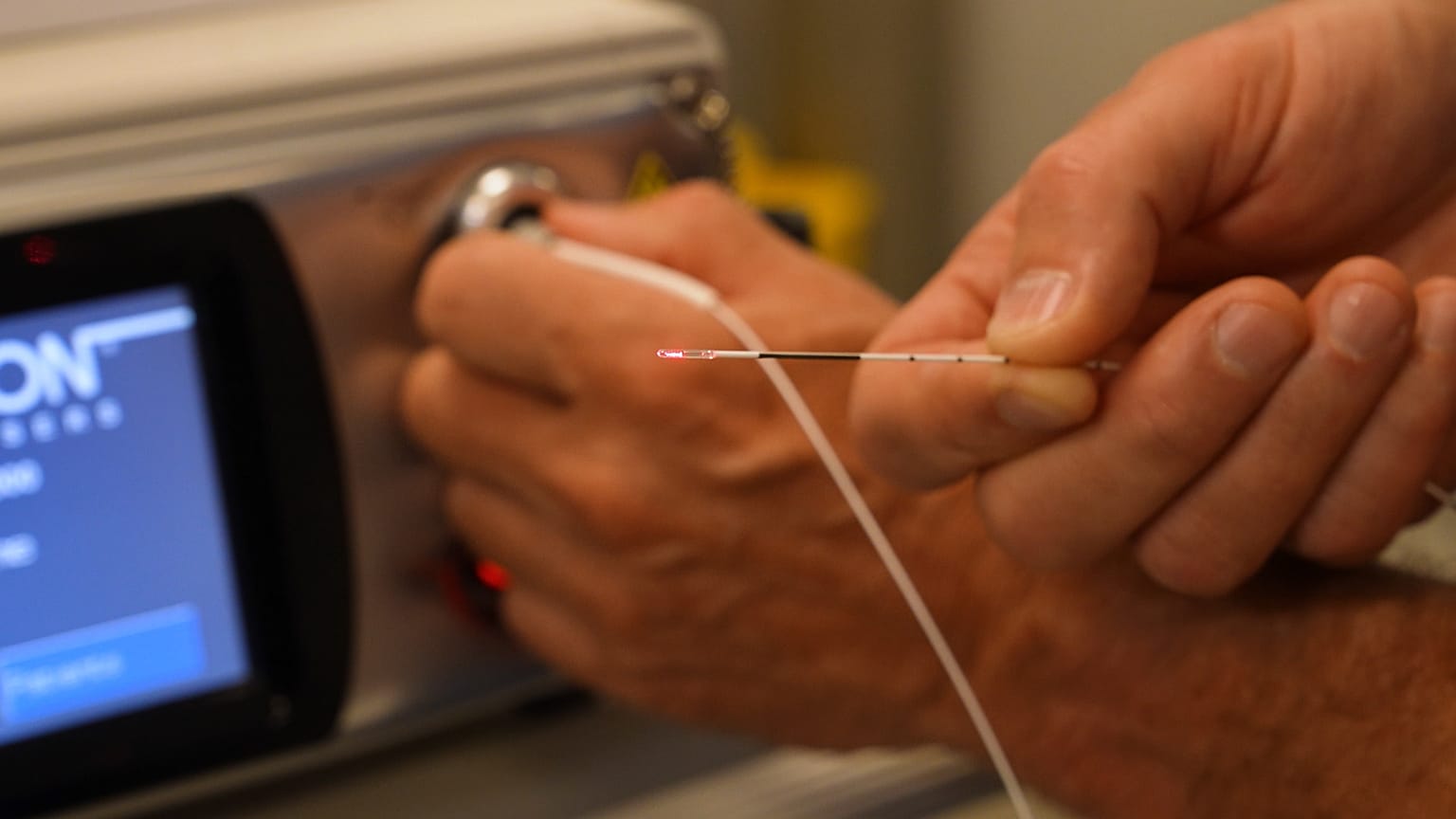
Dr Ints Ūdris, a vascular surgeon and phlebologist, uses fibre-optics every day in his operations. They are flexible and can transmit light, ultraviolet and infrared rays. Since 2016, Ūdris has been working with one of Latvia’s leading companies in the sector, Lightguide, to develop catheters. They are very thin and flexible; the heat isn’t concentrated in a single point, the procedure is less invasive and the recovery is quicker, he says, holding up a fibre-optic catheter., he says, holding up a fibre-optic catheter.
 ADVERTISEMENT
ADVERTISEMENT
ADVERTISEMENT
The region of Latgalia, which borders Lithuania, Russia and Belarus, is the centre of the Latvian fibre-optic industry. A range of specialist companies has sprung up in the town of Līvāni, thanks to the European project: Optical Fiber Valley, the fibre-optic valley. At Lightguide, for example, they produce around 20 million metres of optical fibre a year, tailor their products to each customer’s requirements and export to more than fifty countries. According to Santa Vucina, the quality manager, the products they manufacture have a wide range of applications.“In the case of simple medical devices, consisting of a single fibre and a basic connector, we manufacture around one million units a year,” she says. “Fibre optics transmit light from point A to point B with virtually no loss, which makes it possible to carry high-energy or highly precise signals. Some of our optical fibres are as thin as a strand of hair," she says. “Here we work with fibres whose core has a diameter of approximately 50 micrometres, perhaps a little less; but we do not work with tiny fibres such as those used, for example, in telecommunications. We currently have no information to suggest that our products have been used in military technology, but it is a possibility," she explains.
The total budget for Optical Fiber Valley exceeds €5.4 million, of which 40.4% comes from the European Cohesion Policy and 59.6% from companies and organisations associated with this project.

It is expected that by 2036 the fibre-optic sector will account for 10% of Latvia’s GDP
Demand for optical fibre in the medical sector and other areas is booming in Europe. The Latvian Investment and Development Agency (LIAA) promotes this business activity, notes Vita Balode Andrews, head of the Export and Innovation Services Department.
In medicine, this type of fibre-optic instrument is used “in proctology, plastic surgery, liposuction, urology, ophthalmology and cardiology,” explains Dr Ints Ūdris, adding that not only do they improve patients’ quality of life, but these medical devices also consume “approximately four times less energy than twenty-five years ago”.