



























An innovative modular construction system and 24 tonnes of structural adhesive have dramatically accelerated work on Gaudí's Sagrada Familia. More than 140 years after construction began, the Barcelona basilica is reaching one of the defining milestones in its extraordinary history.
Some projects defy the passage of time. And then there is the Sagrada Família. In the heart of Barcelona, Antoni Gaudí's masterpiece has been under construction for more than 140 years. That prospect did not seem to trouble the architect, who was fond of saying, "My client is not in a hurry" — a reference to God.
 ADVERTISEMENT
ADVERTISEMENT
ADVERTISEMENT
This year, however, after accidents, delays, a pandemic and countless other setbacks, the basilica could finally emerge from its now-familiar scaffolding.
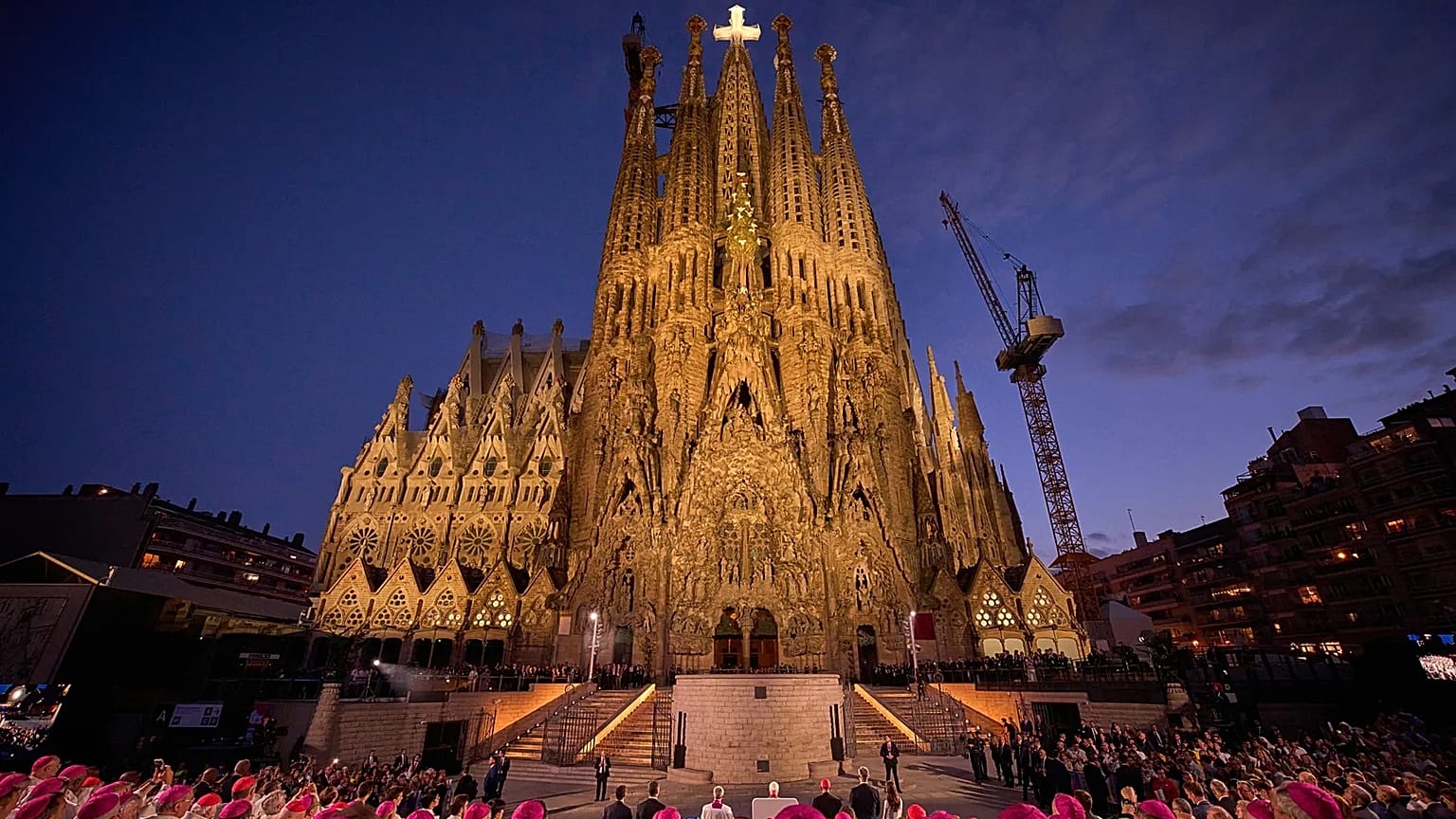
The moment coincides with two remarkable milestones: the centenary of Gaudí's death, after he was struck by a tram in 1926, and the completion of the Tower of Jesus Christ, which has taken the basilica to a height of 172.5 metres, surpassing Germany's Ulm Minster as the world's tallest church.
Behind that achievement lies one of the most fascinating aspects of the Sagrada Família's construction: the convergence of Gaudí's 19th-century geometric vision with 21st-century engineering and materials science. It is a combination that would surely have fascinated an architect who always knew that future generations would have to complete his greatest work.

Mysticism carved in stone
The Sagrada Familia is not simply something to be seen; it is a building to be experienced and deciphered. Gaudí, a devout Catholic who is in the process of beatification, did not merely design a church; he conceived a Bible in stone, one that speaks through organic forms and layers of symbolism. The building has 12 towers representing the 12 apostles, while its floor plan evokes the body of Christ and each façade depicts different episodes in the life of Jesus, from the Nativity to the Passion.
Look closely at the Passion Façade and you can find a tribute to the Catalan architect himself: his face is immortalised in one of its figures.
Higher up, the depiction of the crucified Christ departs from traditional iconography. Christ appears naked, while his head is replaced by the geometric form of an open book - a striking symbol in a building Gaudí conceived as a "stone catechism", a book through which the faithful could read the Christian story.

Gaudí, who devoted 43 years of his life to the project, used real people as models for his sculptures. During the final 12 years of his life, he devoted himself entirely to the Sagrada Familia, turning down other commissions and seeking private funding. The temple received no public money; its construction was financed by donations from the faithful.
'Star Wars' and the legend of Saint George and the dragon
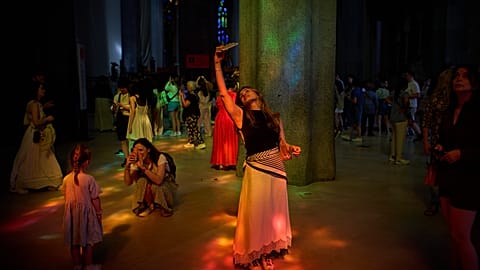
The temple's blend of Gothic and naturalistic elements - its interior evokes a forest, with coloured light filtering through the stained-glass windows and bathing the columns - has proved so captivating that its influence has even reached popular culture.
The basilica's guides point to a curious connection between Gaudí, Barcelona and 'Star Wars'. According to a story they tell visitors, George Lucas found inspiration for the helmets of his iconic Stormtroopers in the figure of a Roman soldier depicted on the façade.
Another curiosity within the basilica evokes the legend of Saint George and the dragon. Inside, a figure of the saint stands beneath a white structure whose twisting form suggests the body of the dragon.

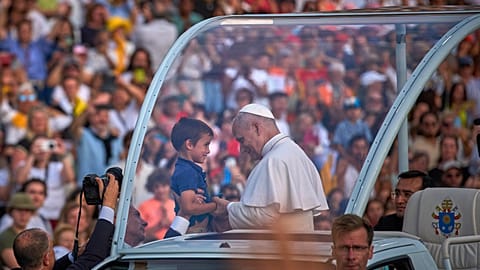
The basilica's latest milestone, however, is one that has transformed Barcelona's skyline. Last week, Pope Leo XIV visited the city to bless the imposing Tower of Jesus Christ, the central and tallest tower of the Sagrada Familia.
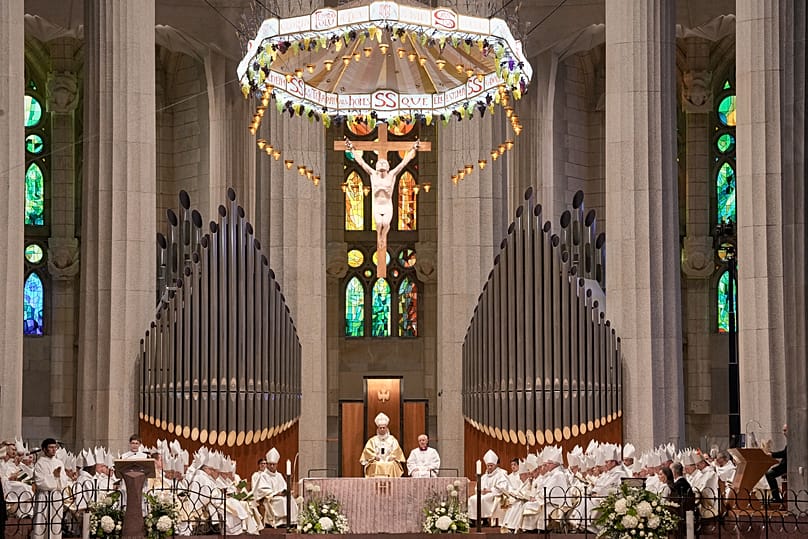

Inside the tower is a striking sight: a glass lamb created by Italian artist Andrea Mastrovito, through which the warm Mediterranean light filters into the space. From 2027, the tower is expected to open to the public, offering a walkable viewing platform at the highest vantage point in the Catalan capital.

A titanic puzzle: stone, steel and invisible chemistry
Gaudí knew that he would not live to complete the monumental work he had envisioned for Barcelona. He therefore left behind models and instructions, trusting future generations to carry on the construction of the Sagrada Familia.
In 1926, at the age of 73, Gaudí was struck by a tram. Contemporary accounts describe how, as he attempted to cross the Gran Via, he avoided one tram only to be hit by another. He died from his injuries a few days later, leaving the project in the hands of his closest collaborators.
Since his death, generations of architects have taken up the challenge of continuing Gaudí's vision while inevitably leaving their own mark on one of the world's most iconic buildings. Among the greatest structural challenges has been the construction of the six central towers: complex, hyperbolic structures designed to withstand wind, seismic forces and immense loads. The most ambitious of them is the Tower of Jesus Christ, crowned by a monumental 17-metre cross.

How has a seemingly endless process been sped up?
The answer lies partly in modern engineering: a structural adhesive developed by Henkel after a decade of research and testing.
Step 1: Modular construction
Instead of placing individual stones hundreds of metres above the ground, the towers were divided into a giant puzzle of 826 modular panels incorporating more than 2,100 stone pieces, which are pre-assembled at the quarry.
Step 2: Bonding stone and steel
To make the stone and steel work together as a single structural unit, engineers apply Loctite EA 9497, a two-component epoxy adhesive developed by German manufacturer Henkel and produced at its factory in Montornès del Vallès. Around 30 kilograms of epoxy resin are used for each panel.
Step 3: Controlled curing
The panels undergo a 24-hour curing process under controlled temperature conditions. As the adhesive cures, it fills the microscopic gaps between the materials, creating a durable bond between the steel and stone.
Step 4: Final lifting
The completed panels were transported to the basilica, lifted into position and assembled level by level with millimetre precision, like building blocks on a monumental scale.
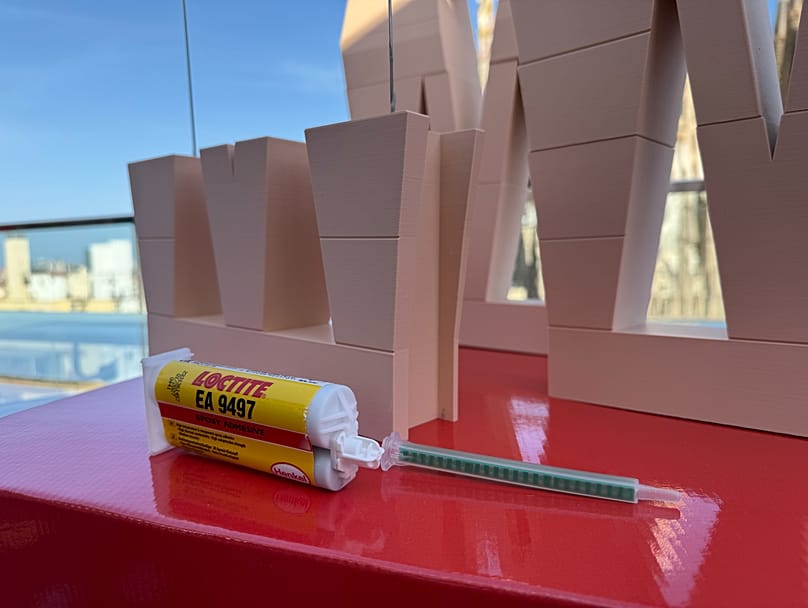
This modular approach has allowed construction to progress up to ten times faster than with traditional methods. According to project manager Begoña Cantera, work completed in barely eight years would have taken between 50 and 60 years using conventional construction techniques. That leap in efficiency has helped bring the central towers to completion in time for the centenary of Gaudí's death.
Designed to withstand time and the city
The structure stands out not only for its architectural complexity, but also for the engineering designed to protect it from the stresses of its urban and coastal environment. In total, 24 tonnes of adhesive have been used in a structure exposed to a demanding combination of environmental conditions:
- Marine environment: located just 2.5 kilometres from the Mediterranean Sea, the basilica is exposed to salt-laden air, which can accelerate the corrosion of steel.
- High humidity: relative humidity levels of between 65% and 75% place additional demands on the materials over time.
- Thermal cycles: temperatures ranging from around 5°C in winter to more than 30°C in summer cause repeated expansion and contraction of the materials.
- Urban vibrations: two metro lines pass beneath the basilica, generating vibrations that must also be taken into account in the structural design.
The resin used in the project is designed to accommodate small movements between the steel and stone without cracking. According to the project team, the bonded structure can withstand loads equivalent to the weight of around 100,000 people per square metre - roughly the combined weight of a capacity crowd at FC Barcelona's stadium. That strength is particularly important for supporting the monumental cross that crowns the Tower of Jesus Christ.
Antoni Gaudí did not live to see his masterpiece completed, but today he rests in the crypt of the basilica to which he devoted the final years of his life.
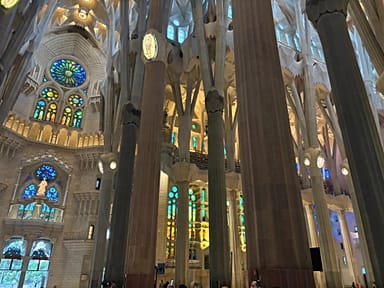
Gaudí designed the Sagrada Familia with the height of Montjuïc in mind, believing that the work of man should not surpass the work of nature.
Today, at 172.5 metres, the basilica has become the tallest church in the world. It has reached that height not through the construction methods of Gaudí's time alone, but through a combination of his original vision and technologies developed generations after his death.
More than a century later, stone, glass, steel and modern engineering are bringing a project once thought almost impossible closer to completion.