
















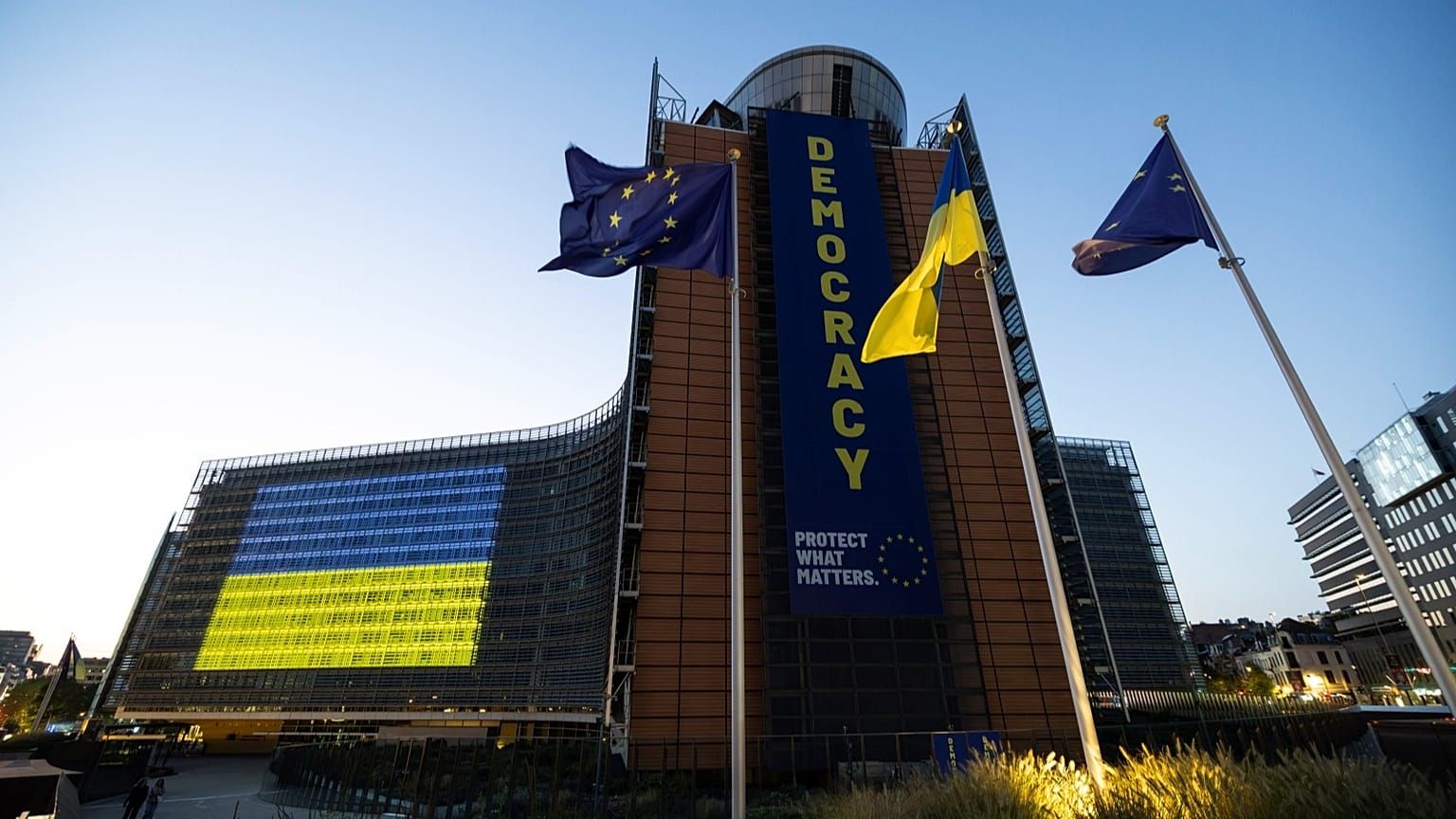













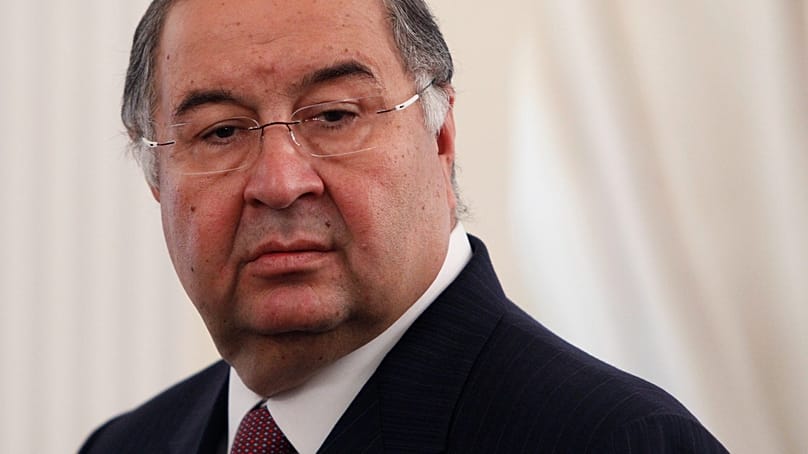
France's successful push to remove Uzbek-Russian oligarch Alisher Usmanov from the sanctions list has left a bitter aftertaste among officials and diplomats in Brussels, who now fear a dangerous precedent.
It was the kind of headline that seemed impossible to print: the European Union eases sanctions on Russia just as Russia escalates the war on Ukraine.
 ADVERTISEMENT
ADVERTISEMENT
ADVERTISEMENT
And yet, that is precisely what happened. After days of intense negotiations during which ambassadors repeatedly shuttled in and out of the room, the bloc decided to remove two high-profile Russian oligarchs, Alisher Usmanov and Mikhail Fridman, from its sanctions list.
The two had been targeted in the early days of the full-scale invasion due to their close personal ties with the Kremlin and their considerable footprint in the Russian economy. Both contested the reasoning and spent years striving to be delisted.
This week, their long-sought wish was granted. Usmanov and Fridman are once again free to enter EU territory and access their personal assets.
The news infuriated Ukraine, which had publicly urged member states to keep the blacklist untouched. The country is being hammered by Russia's jet-powered drones and ballistic missiles and wants allies to increase, rather than decrease, the pressure.
"The decision to delist Usmanov and Fridman is shameful and unjustifiable," Foreign Minister Andrii Sybija said. "Moscow is celebrating because it got what it wanted: a sense of impunity, the humiliation of the EU, and division among Europeans."
In Brussels, officials and diplomats are now reeling from the bruising episode and scrambling to contain the awkward optics it has left in its wake.
For the EU, which prides itself on doing "whatever it takes" to stand by Ukraine, the publicised removal of two Russian billionaires is hard to stomach.
As a way to offset the pain, member states agreed to roll over the list of nearly 3,000 names for an unprecedented 36 months and prevent undesirable vetoes in the future.
Still, the bitter aftertaste lingers.
"It was a low moment," a diplomat said.
"No one is happy about this," another one said.
Ireland, which brokered the fragile compromise, said it was "difficult".
Most point the finger at one country in particular: France.
Earlier this month, France shocked its peers when it suddenly joined Slovakia and asked that Usmanov be dropped from the list. The French ambassador succinctly argued a matter of "national security", leaving other envoys scratching their heads.
It later emerged that the "national security" issue was an attempt to free two French nationals detained in Azerbaijan. The revelation intensified media interest in the story. France, however, never spelt out the reasons during the negotiations.
The day after Usmanov was removed from the list, Azerbaijan pardoned and released Martin Ryan, who had been condemned to 10 years in prison for allegedly spying on behalf of the French government.
"This is a humanitarian gesture that France welcomes," the French foreign ministry said.
The extraordinary sequence of events was a reminder of the diplomatic heft that France, as the second-largest member state, still retains in Brussels, despite the political instability and swelling deficit that besets the country.
Some diplomats believe that without France on board, Slovakia would never have succeeded in scratching Usmanov off the blacklist. In fact, the country, which has ruffled feathers with its abrupt vetoes, has tried and failed the task in the past.
Though there is sympathy for the French effort to free its captive citizens, there is concern that Paris has opened a Pandora's box and set a dangerous precedent that will encourage oligarchs to buy their way out of the sanctions.
"The whole affair shows that unanimity hurts everyone, even France. We urgently need to push for a qualified majority in sanctions," a third diplomat said.
"Unanimity made them vulnerable to blackmail."
An uncertain future for sanctions
The Usmanov saga comes at a time when the EU shows growing signs of strain in its years-long crusade to cripple Russia's war machine.
Though the core of the sanctions regime remains intact, recent events have raised questions about the political will behind the pressure campaign. After all, sanctions are ultimately a political choice. Their reach extends only as far as the politics will allow.
The first debacle unfolded in the spring, when Ursula von der Leyen, the president of the European Commission and a leading proponent of the strategy, proposed a full ban on maritime services for Russian oil tankers.
The ban was meant to raise material costs for Moscow, which still relies on European providers to ship a share of its Urals oil, and eat into its most crucial source of revenue. It was the sort of hard-hitting measure that the bloc had not attempted in a while.
But after the United States and Israel went to war with Iran, and the closure of the Strait of Hormuz sent energy markets into turmoil, the prospect of turning up the pressure on a major oil supplier suddenly looked far less attractive.
The ban was approved in theory, but its enforcement was left indefinitely on hold pending an agreement at the G7 level. That agreement never happened, and the proposal fell into limbo and eventually, off the radar.
Von der Leyen tried to turn the page with a new sanctions package, which she unveiled in early June, just as Ukraine enjoyed fresh momentum on the battlefield.
"We want to maintain the full intensity of our sanctions," she said.
The package, though, became embroiled in chaotic negotiations that played out in the media and exposed the diminishing appetite of capitals for enduring economic pain.
Bulgaria vetoed sanctions on Patriarch Kirill, the head of Russia's Orthodox Church. Germany and Portugal shot down an attempt to restrict imports of Russian fish. France and Italy downgraded a visa ban on Russian soldiers into a toothless declaration.
Greece went further by seizing the negotiations on the 21st package to retroactively challenge the 19th package and secure an exemption to transport Russian LNG.
The turbulent process prompted an honest debate among officials and diplomats over whether the EU should continue the strategy of big-tent packages that began with the war or should instead take smaller incremental steps. While specific measures could be easier to agree in practice, they would still require unanimity.
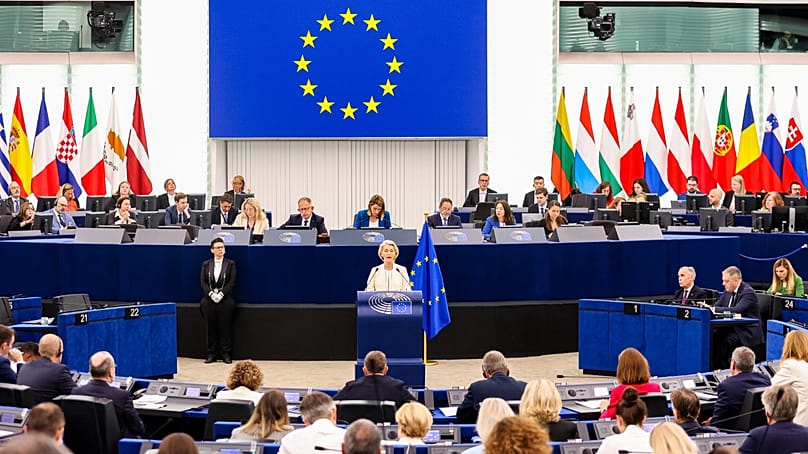
In her State of the Union speech, von der Leyen previewed a change of focus.
"Further pressure must be applied to Russia. What is needed is not necessarily new sanctions, but above all the enforcement of existing sanctions," she said.
Her remarks suggest the Commission will think carefully before it puts forward what should be the 22nd sanctions package since February 2022. After so many restrictive measures, the executive is running out of new sectors and products to target.
The next test will come in October, when member states will seek to expand the blacklist by adding over 1,600 names of individuals and companies, its largest top-up ever.
It remains to be seen whether the Usmanov saga will harden resolve or make governments more cautious around the table – or open the door to copycat requests.
The timing of the oligarch's removal is "unfortunate", says Maria Shagina, a senior fellow at the International Institute for Strategic Studies (IISS), pointing to the passage of Lindsey Graham's sanctions bill in Washington, which is yet to be enforced.
"The US is finally moving towards strengthening Russia sanctions, and visible splintering within the EU sends the wrong signal. This does not mean that EU sanctions have reached their political limit, but it does point to two issues," Shagina told Euronews.
"First, many member states have been hiding their concerns behind Hungarian and Slovak vetoes. Second, finding the required unanimity around 'heavy' sanctions will become more politically sensitive, driving more horse-trading behind the scenes."