
















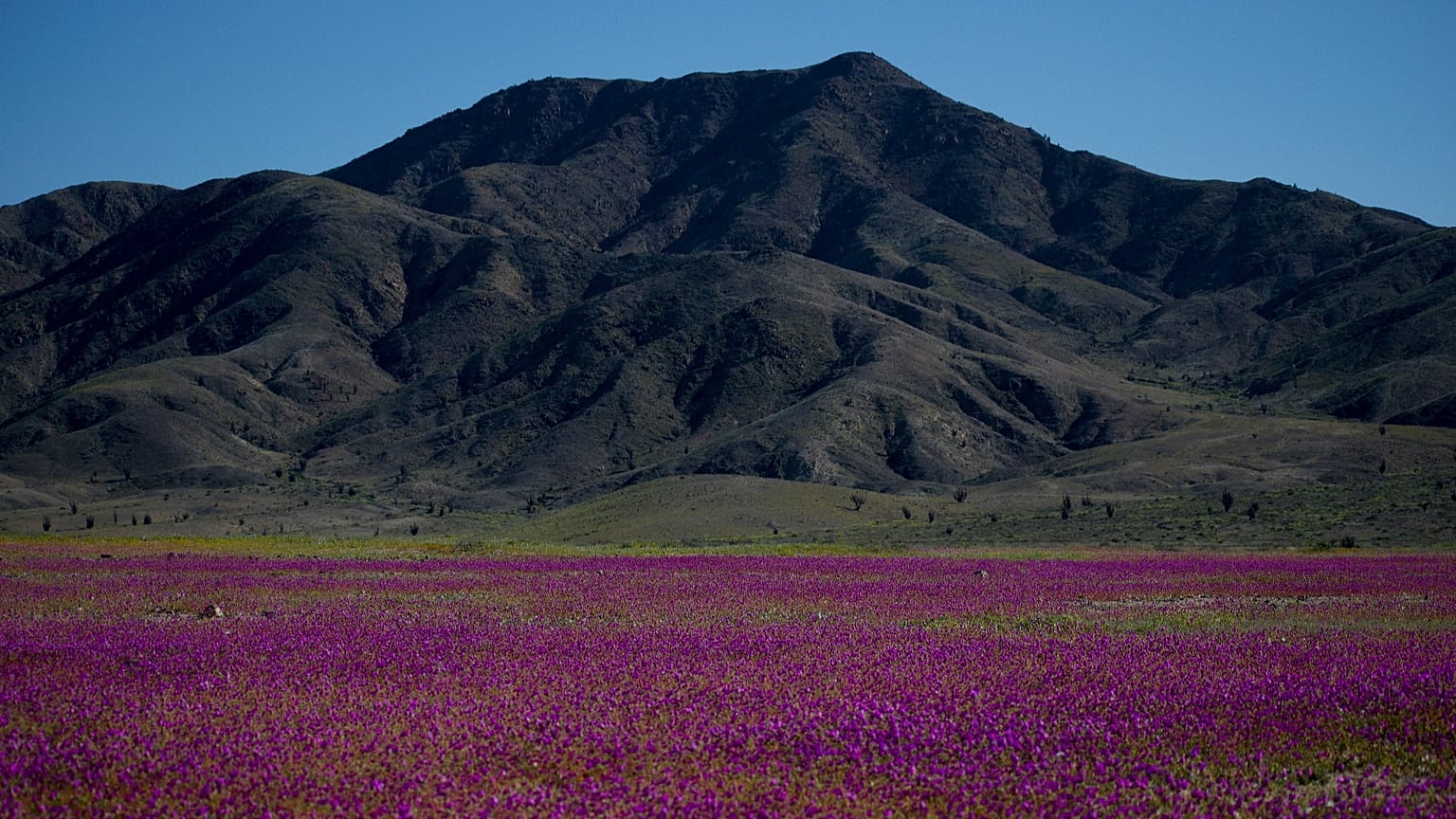













Exceptionally heavy El Niño rains have awakened millions of seeds lying dormant underground, carpeting vast swathes of one of the planet's driest places with flowers.
The Atacama Desert, one of the driest places on Earth, has changed appearance after heavy rains in northern Chile. Vast stretches of land that are normally parched have been carpeted with violet and white blossoms in a natural phenomenon known as the "flowering desert".
 ADVERTISEMENT
ADVERTISEMENT
ADVERTISEMENT
Under the Atacama's soil, seeds and bulbs from around 200 different species lie dormant for long periods, waiting for the right conditions to germinate. Rainfall linked to the El Niño climate phenomenon has allowed many of them to bloom. The result has transformed parts of the desert landscape and drawn large numbers of visitors, who stop to photograph the unusual flowering.
Rainfall has been particularly heavy this season. In some areas it has exceeded 180 millimetres of rain, an amount that "had never been recorded before", said César Pizarro, Atacama biodiversity manager at Chile's National Forestry Corporation (Conaf), speaking to AFP.
The water has soaked into the sand deeper than usual, encouraging vegetation to appear in the nature reserve about 800 kilometres north of Santiago. According to Conaf's forecasts, the spectacle will reach its peak in October. The agency estimates that around 15,000 hectares could be blanketed in flowers.
El Niño behind the exceptional rains
The blooming follows a period of intense rainfall linked to El Niño, a climate phenomenon characterised by the warming of surface waters in the central and eastern equatorial Pacific.
This warming can disrupt wind and rainfall patterns in different regions of the world and trigger extreme weather events. The current El Niño episode could be the most intense since comparable records began four decades ago.
The rains that hit Chile in July also had serious consequences. At least 13 people were killed and around 4,000 homes were destroyed or suffered major damage.