


















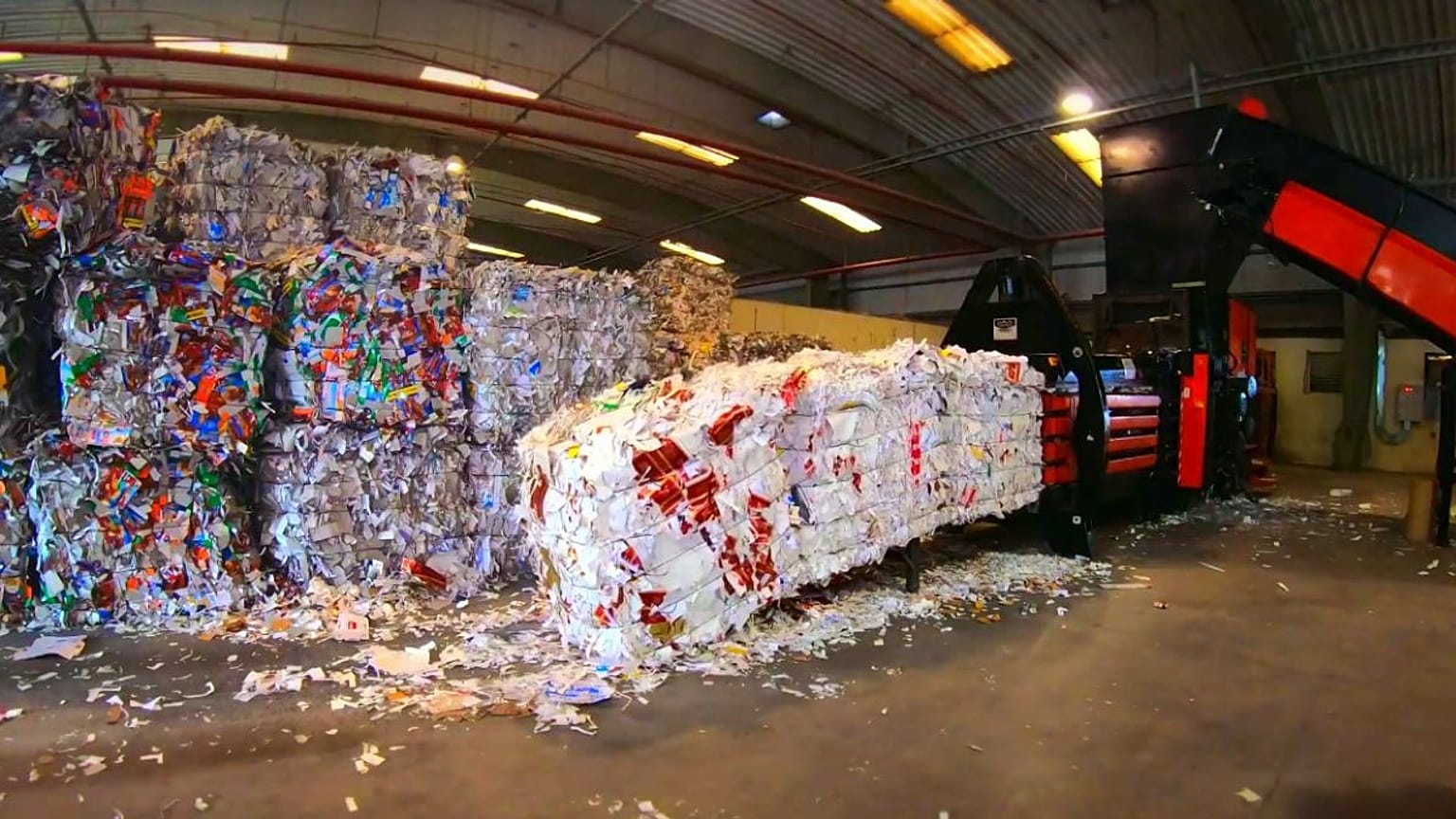














From advanced sorting in Sharjah to new waste infrastructure in Uzbekistan, efforts to recover materials and generate energy are changing what happens to rubbish.
Every year, the world produces more than 2 bn tonnes of municipal waste — much of it disappearing from view the moment it is thrown into a bin. But that is where the story of waste really begins.
 ADVERTISEMENT
ADVERTISEMENT
ADVERTISEMENT
A discarded plastic bottle might be recycled into something new. Food waste can become compost or biogas. Material that cannot be recycled may be burned to generate electricity. And what cannot be recovered may ultimately end up in landfill. The more materials that can be recovered and put back to use along the way, the less waste reaches the end of that journey.
That is the principle behind a circular economy: keeping resources in use for as long as possible, first by using less, then by reusing and recycling materials rather than simply throwing them away.
Separating what still has value
At BEEAH’s waste management complex in Sharjah, municipal waste moves through a sorting line. Machines separate plastics, metals, paper and cardboard, turning what arrived together as rubbish into materials that can potentially be used again.
Plastics can be processed into new packaging and consumer goods, while paper and cardboard can re-enter the manufacturing cycle.
But not everything can be recovered. In Sharjah, some residual waste goes to a waste-to-energy plant, where it is burned to generate electricity rather than being sent directly to landfill.
“Recycling preserves material. Waste-to-energy addresses what remains, ensuring residual waste still creates value,” says Alya Al Obeidli, Lead Engineer at Emirates Waste to Energy.
Recycling keeps materials in use; waste-to-energy comes later, recovering energy from material that cannot be recycled. Whatever cannot be recovered ultimately leaves the circle and ends up in landfill.
It is this entire journey that Uzbekistan is now trying to reshape.
Rethinking where Uzbekistan’s waste goes
Uzbekistan generates roughly 15 ml tonnes of household waste annually. Government figures suggest that only around 5% to 6% is currently recycled or processed by specialist companies.
For much of the rest, landfill remains the end of the journey.
A new 24-hectare landfill outside Tashkent receives roughly 1,500 to 2,500 tonnes of waste a day, depending on the period and season, according to Shahzod Safarov, Chief Specialist of the Agency for Waste Management of Uzbekistan.
For decades, the capital’s rubbish was deposited at an older landfill nearby. At the newer facility, waste is compacted and covered with soil, while protective layers underneath are intended to prevent contaminated liquid from seeping into the ground.
But buried waste can continue to have an environmental impact. As organic material decomposes without oxygen, it produces methane, a powerful greenhouse gas.
“There was a very large build-up of methane gas at the old landfill site,” says Rafael Bekmullin, Director of the Waste Recycling and Disposal Branch. “Now, there’s actually a project underway there to extract that gas and generate electricity from it.”
Officials say 47 landfills have been closed and rehabilitated over the past several years, while Uzbekistan aims to halve the number of landfills by 2030.
But closing landfills does not make the waste disappear. If less rubbish is buried, it needs somewhere else to go.
Turning waste into electricity
One part of the answer is taking shape outside Samarkand.
A new waste-to-energy plant is being built to process around 1,500 tonnes of household waste a day and is expected to generate around 240 ml kilowatt-hours of electricity annually once operational.
Aziza Nazarova, Head of the Investment Department at Uzbekistan’s Agency for Waste Management, says the longer-term aim is to separate waste into different streams: recyclable materials returning to production, organic waste going towards compost or biogas, and residual waste to waste-to-energy plants.
The order matters. Waste-to-energy can reduce the volume going to landfill, but recovering recyclable materials first keeps more of them in circulation.
And that brings the journey back to where it began: the bin.
The circle begins at home
In Angren, east of Tashkent, private waste company Zero Waste distributed 10,000 bags to residents in a pilot encouraging households to separate their rubbish.
According to Sobir Mashrabov, the company’s regional representative, only around 1% were returned with the waste separated.
“Without sorting the waste, nothing is achievable,” Mashrabov says.
For him, infrastructure alone cannot solve the problem. Separating waste, he argues, has to become an everyday habit, taught from kindergarten and school through to university.
The experiment brings the waste journey full circle. Once plastic, paper, food and everything else are thrown together, recovering useful materials becomes harder. Separating them earlier creates more opportunities for recyclable materials to return to production rather than move towards incineration or landfill.
Sharjah and Uzbekistan are tackling different stages of that journey, from sorting and recycling to landfill management and energy recovery.
But all this infrastructure deals with what society has already decided to throw away.
A circular economy begins earlier — by using fewer resources, keeping products in use for longer and recovering valuable materials before they become waste.
