














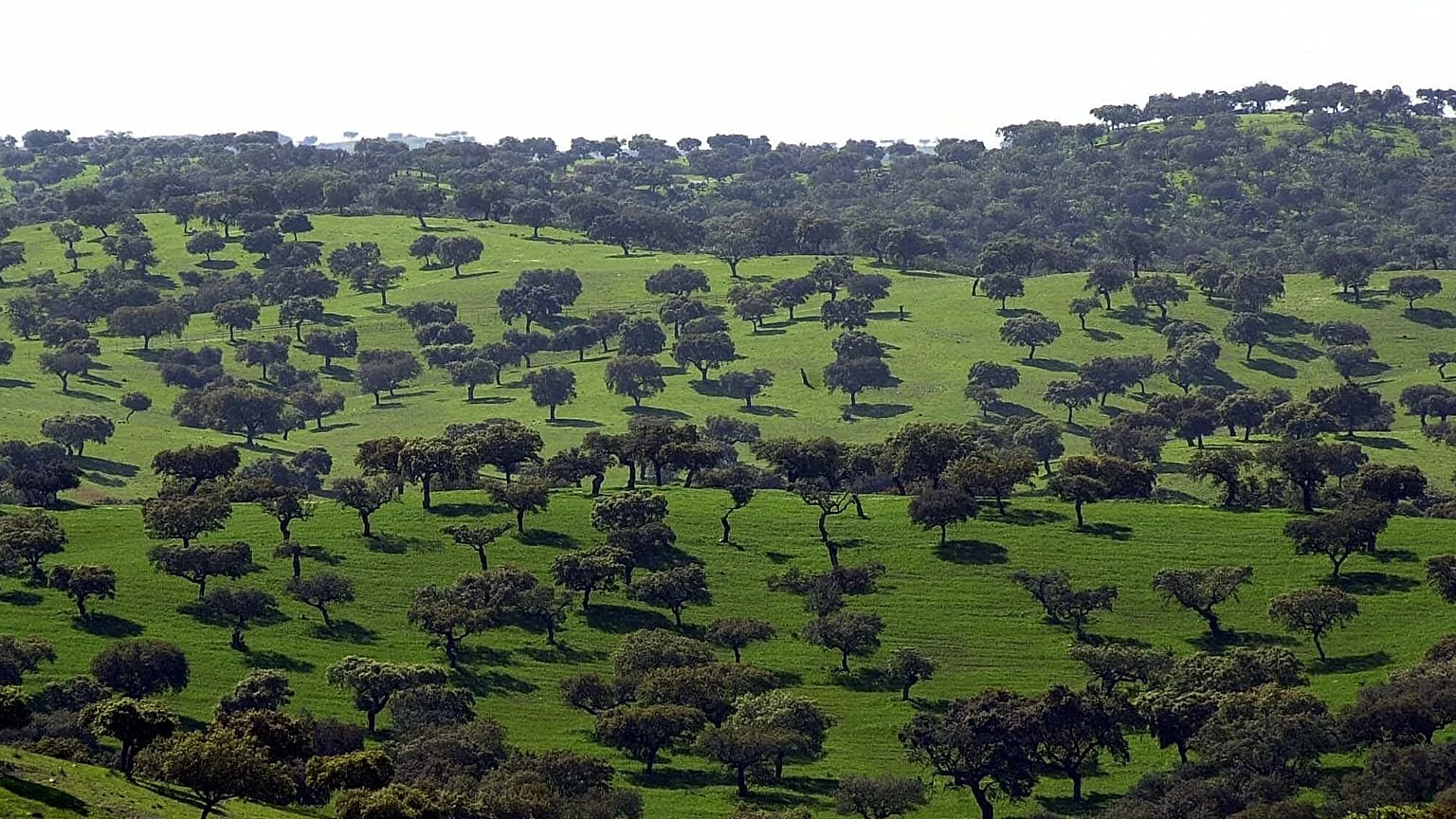













How Portugal's University of Trás-os-Montes and Alto Douro works out the age of hundreds of ancient olive trees.
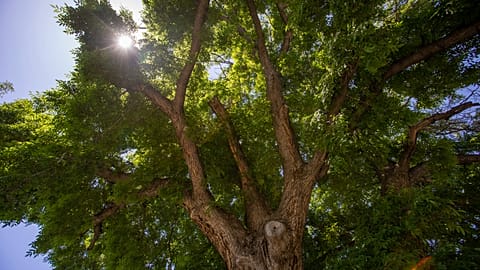
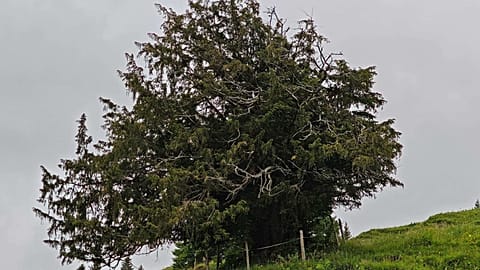
A tree was recently discovered in Germany which may be the oldest known in the country, at around 1,100 years old.
 ADVERTISEMENT
ADVERTISEMENT
ADVERTISEMENT
But in Portugal there are hundreds of trees estimated to be at least 2,000 years old, particularly olive trees, which over the years have been certified by the University of Trás-os-Montes and Alto Douro (UTAD)
The tree known as 'Oliveira do Mouchão', found in the municipality of Abrantes, is thought to be the oldest in the country at 3,350 years old.
It is an olive tree and "a contemporary of the Phoenicians, Celtiberians and Romans". According to UTAD, at the beginning of 2022 it was still "producing olives as if in the flower of youth, despite a trunk gnawed away by the ravages of time".
It has survived the passage of "invading peoples, barbarians and displaced peoples" over millennia, "thanks to the deep roots it has put down" in the soil. It was also one of the candidates in the 2022 European Tree of the Year contest, finishing fifth in the national competition.
The 3,350 year estimate was obtained using a method developed by UTAD researchers, already patented, which allows scientists to calculate the age of countless specimens, both in Portugal and abroad. It is based on a mathematical model that relates a tree's age to characteristics of its trunk, such as diameter, height or circumference, according to information published on the Florestas.pt portal, an initiative of The Navigator Company and Raiz – Forest and Paper Research Institute.
By the time the discovery in Abrantes was made, it was already possible to certify "many other millennial olive trees" spread across various parts of the country. Another noteworthy example is in Santa Iria de Azóia, in the municipality of Loures: a tree whose age was calculated at around 2,850 years at the time of analysis.
What is the oldest tree in Portugal?
Oliveiras Milenares, which has been working with UTAD on this certification mission since 2007, say that another olive tree has since been identified that is even older than the previous ones. It is in the Alentejo, more precisely on the Herdade do Peso estate, in Vidigueira, in the district of Beja, and is thought to be more than 3,700 years old, according to the assessment made in 2021.
'Oliveira do Peso', as it is known, also contested the title of Portuguese Tree of the Year 2024, a national competition in which it came third, the winner of which goes on to represent Portugal in the equivalent European competition.
Its candidacy was justified by the "heritage significance" of what is "the oldest millennial olive tree on the Herdade do Peso estate", located on a plain where there is "a group of olive trees whose combined ages exceed 7,000 years", according to a statement from the estate.
Other examples highlighted by the university are in Monsaraz, in the district of Évora, where there are several millennial olive trees, one of which is around 2,450 years old.
But there are many others in Portugal, scattered across places such as Estremoz, Montemor-o-Novo, Lagoa, Beja, Vilamoura, Évora and Serralves Park, in Porto, according to UTAD.
Abroad, the university says it has also been invited to date olive trees in countries such as Spain and France, notably in Bordeaux, Girona, Málaga and on the island of Menorca, where it has certified the existence of a tree more than 2,300 years old.
How do olive trees live for so long?
José Luís Louzada, a researcher at UTAD who developed the dating method, says that the olive tree is "without doubt one of the living beings that best withstand the passage of time, thanks to its strong capacity for rejuvenation". In this way, "a piece of trunk, no matter how old it is, has the capacity to sprout again", allowing the tree to continue "producing olives".
The researcher attributes this longevity, among other factors, to the fact that it is a species "very well adapted to our Mediterranean climate", which enables it to achieve "remarkable longevity".
In Portugal, these olive trees are found "especially to the south of the Mondego" and can, "in theory", live "for eternity", outlasting the many generations that pass through the same territory.