




























Filming Spain's rare eclipse on 12 August? Pointing an unprotected phone camera at the Sun could fry its sensor within minutes.
The Moon will completely blot out the Sun on 12 August along a narrow strip crossing northern and eastern Spain.
 ADVERTISEMENT
ADVERTISEMENT
ADVERTISEMENT
It will be the first total eclipse visible from the Iberian Peninsula in more than a century; the previous one took place in 1912.
The shadow cast by the Moon will sweep in over Galicia and race across the country from west to east, finally reaching Palma de Mallorca just as the Sun sets.
On the Spanish mainland, the partial phase will begin at around 7:30 pm CEST, with the moment of greatest darkening arriving between 8:27 pm and 8:35 pm, depending on location.
The phenomenon will end shortly before 9:30 pm, with the Sun already very low on the horizon and, in some places, practically set. Where it does occur, totality will last just under two minutes.
That same night also coincides with the peak of the Perseid meteor shower, so anyone lingering at the observation site is in for a double treat.
Why your phone is at real risk
The reason to take care is not just your eyesight.
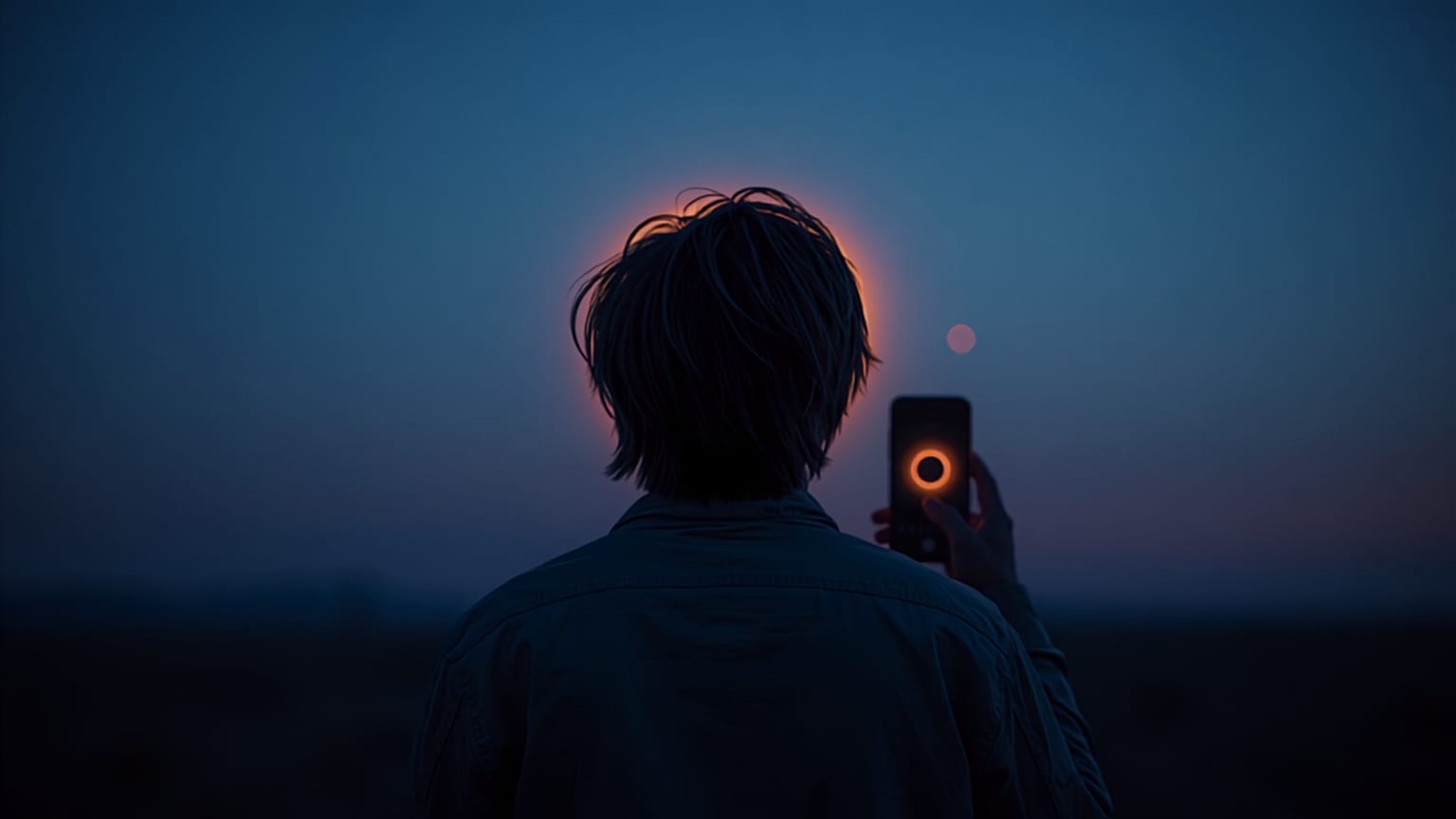
A smartphone's optics work, in a way, like a magnifying glass: they concentrate the light entering through the lens onto a tiny surface, the camera sensor.
Pointing that lens at the Sun for several minutes with no protection can overheat the camera module and permanently burn the photodiodes that make up the sensor, leaving blotches or dead pixels that cannot be recovered.
It can also trigger the phone's thermal protection, shutting it down abruptly.
There are no public statistics on how many phones have been damaged during previous eclipses, but there are known cases of users whose photodiodes have been harmed, leaving gradients or black spots on their images.
There are caveats: some specialists point out that a quick, one-off shot does not usually damage sensors as small as those in a phone, which are far smaller than those in a professional camera, and that the risk increases when the zoom is used for long periods or an external telephoto lens is attached.
The longer the lens spends pointing at the Sun without a filter, the higher the chance the sensor will fail, leaving black spots in the footage as photodiodes burn out and stop working for good.
How to film it without your phone being harmed
The rule repeated in every guide consulted is simple: as long as the Sun is even partially visible, the camera needs a solar filter, no exceptions.
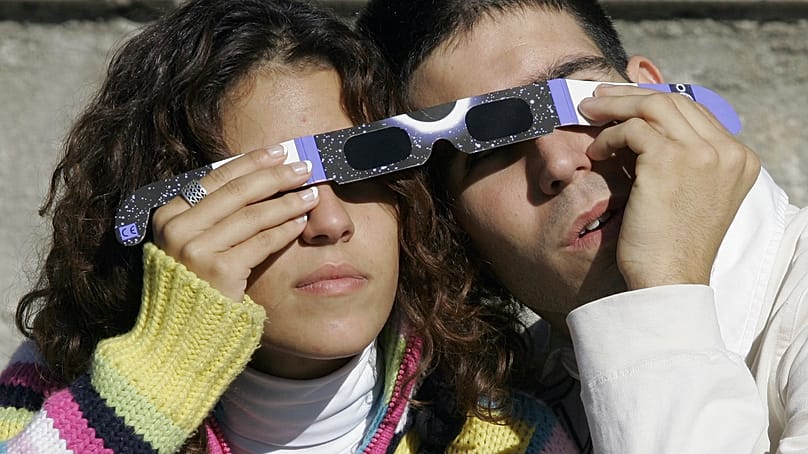
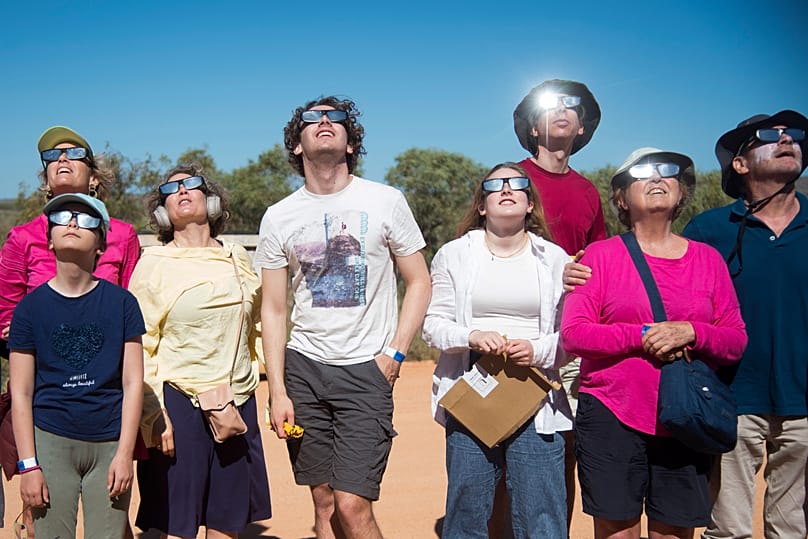
The only standard endorsed by NASA and astronomical societies is ISO 12312-2:2015, the same one eclipse glasses must comply with.
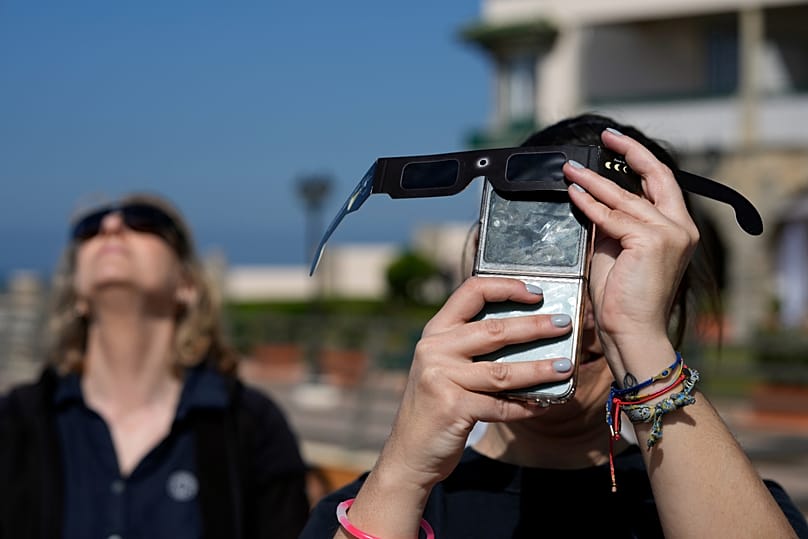
There is no need to splash out on an expensive accessory. An affordable option is to cut a lens from a pair of certified eclipse glasses and tape it over your phone's camera, covering the whole lens with no gaps where light can leak in.
Anyone after something sturdier can turn to high-density ND100000 solar filters, purpose-built for smartphones and available for under €40.
Tips for filming or photographing the eclipse
Lock exposure and focus on the Sun before you start recording. Every phone's camera software differs slightly, but in most cases this means tapping on the Sun and holding your finger there until a small padlock icon appears.
Switch on the camera's manual or professional mode, with a low ISO between 100 and 200 and a fast shutter speed below 1/1000. In automatic mode, the image often comes out overexposed even with the filter on.
Use a tripod and the self-timer shutter to avoid shaky and blurred photos and videos.
During the partial phase, a time-lapse with intervals of one or two seconds captures the eclipse's progress better than real-time video, since the Moon moves very slowly.
If you are within the band of totality, switch to real-time video, without protection, only during the seconds when the disc is completely covered, to capture the glowing ring around the Sun.
Favour optical zoom over digital zoom, which merely enlarges the pixels and degrades image quality.
Keep an eye on your phone's temperature, too: the August heat, combined with the Sun itself, can overheat it and trigger an automatic shutdown, so it is best to keep the phone in the shade between shots and carry a power bank.
What you must not do under any circumstances
Do not keep your phone recording for several minutes at a stretch, pointing directly at the Sun, not even with the filter in place.
Do not remove the filter at any point except during the exact seconds of totality, and only if you are within the area where the eclipse will be total.
Do not attach binoculars, telescopes or telephoto lenses to your phone without a certified solar filter.
Do not look at the Sun through the viewfinder or lens of a camera, telescope or binoculars, even while wearing eclipse glasses: the concentrated rays can burn through the filter and seriously damage your eyesight.
And do not leave your phone exposed to the Sun for long periods between shots.