













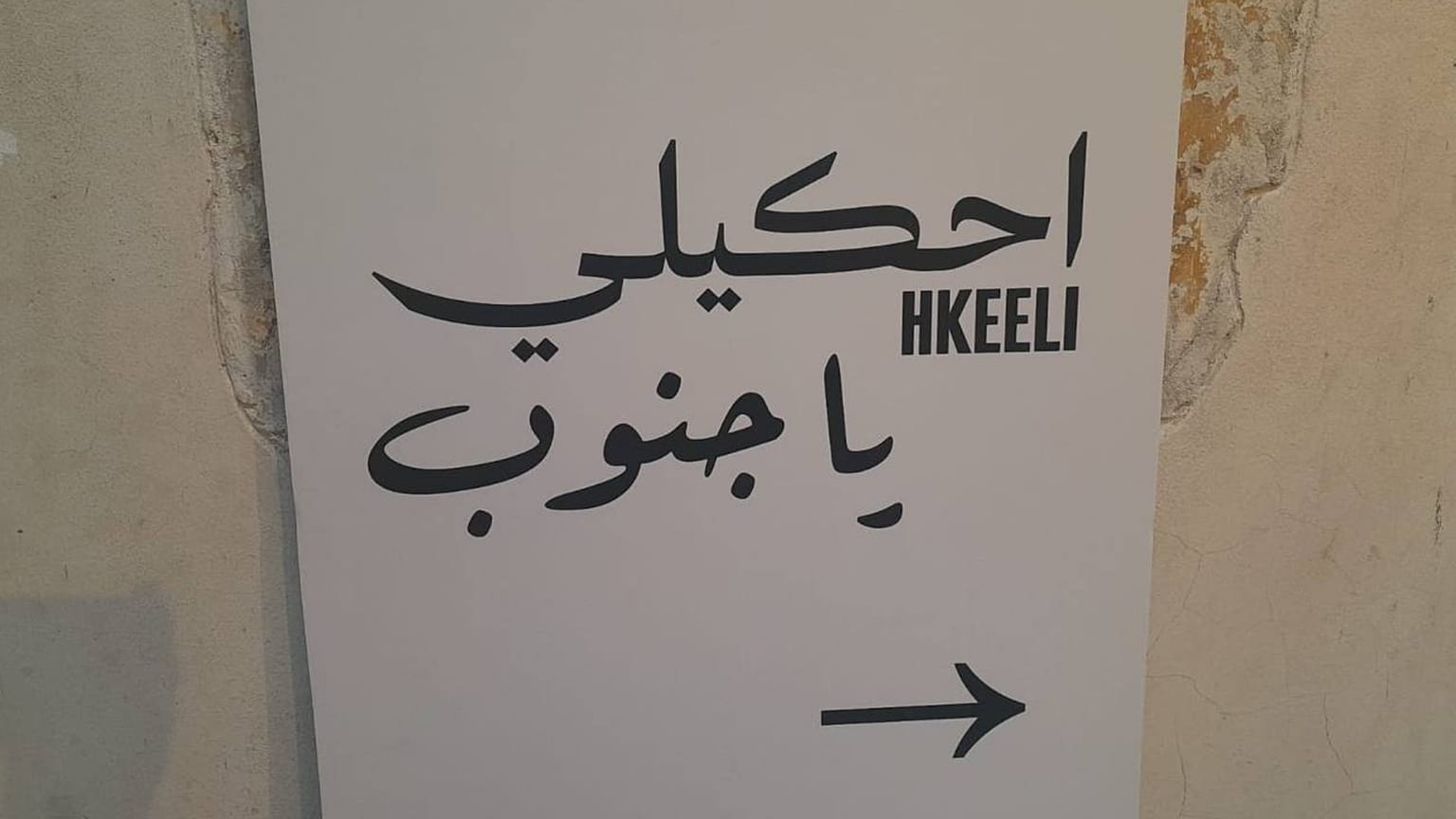














While south Lebanon is still reeling from a war that has left deep scars on people and places, a new exhibition "Tell me, South" explores local emotions and feelings through people's images, memories and letters.
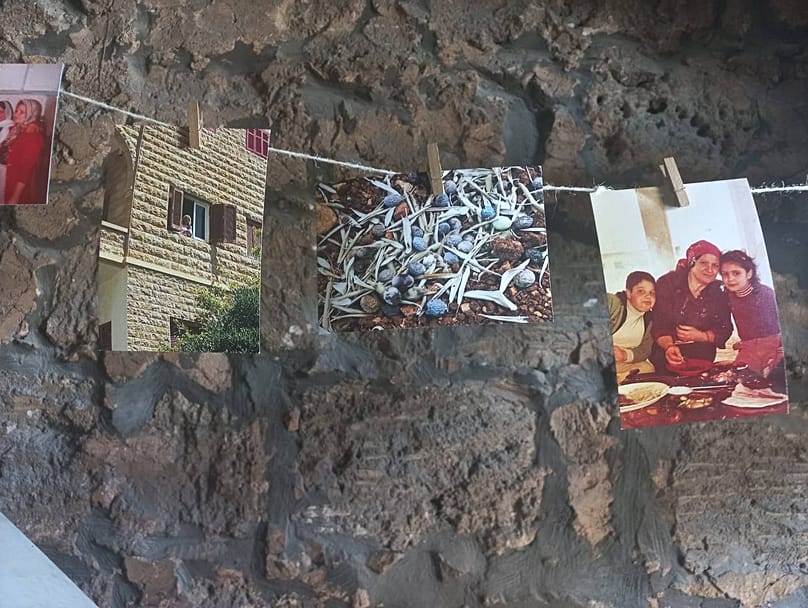
The Beit Beirut museum's "Tell Me, South" exhibition has had a constant stream of visitors since its opening back in May. The Sodeco district venue in the Lebanese capital has attracted almost unprecedented attention due to its display of family photos, testimonies and personal stories that have made their way to the city.
 ADVERTISEMENT
ADVERTISEMENT
ADVERTISEMENT
The aim is to show South Lebanon through its people, far from an image that reduces it to devastation, so that the South’s past does not slip into oblivion and war does not wear it down to death in the memories of its sons and daughters.
Despite the engagement it has enjoyed, the exhibition was not the result of months of preparation; it was born in haste at an exceptional moment. The decision to launch it was taken just three weeks before it opened, at a time when the latest war was still weighing heavily on the South.
The question the team faced from the outset was: is this even the right time to hold an exhibition about the memory of a region whose wounds have yet to heal?
After just six weeks from its opening, the exhibition has clearly left its mark on visitors, and turnout has exceeded the organisers’ expectations, revealing how many people feel a need to explore the South’s reality and stories in a different way. Before wrapping up its first phase ahead of a month long break from the start of August, the moment seemed right to pause and reflect on the show's impact so far. Has the exhibition, and the engagement it sparked, been able to achieve the organisers’ goals?
The executive director of the "Tell me" initiative, Delphine Abi Rached, tells Euronews that for people working in culture, the project felt like the only response they could offer to what was happening. But she notes that anxiety was present from the beginning, especially over how people from the South would receive the exhibition, for fear they might feel that their experience or their loss was being reduced to what fits inside an exhibition space.
According to Abi Rached, what happened was the opposite of all those fears. The exhibition has so far welcomed more than 7,200 visitors, without any negative reactions being recorded, while visitors have left more than 130 messages, 90 drawings and hundreds of stories that have themselves become part of the exhibition.
Asked about criticism that it was still too early to hold an exhibition about South Lebanon, Abi Rached said that although the team was gripped by doubts at the beginning, words often fail to describe what is happening, let alone to make sense of it. "We find ourselves suspended between past, future and present, with the future seeming as though it has already been written, while history is still incomplete and continues to unfold in front of us," she adds.
Abi Rached explains: "What can we do in moments like these? Perhaps we can open a space, create a place to be together in this moment. The truth is that there is no perfect time. How can we not talk about the South? It is also clear that people from the South feel a need and a desire to share their experiences, in circumstances as exceptional as these."
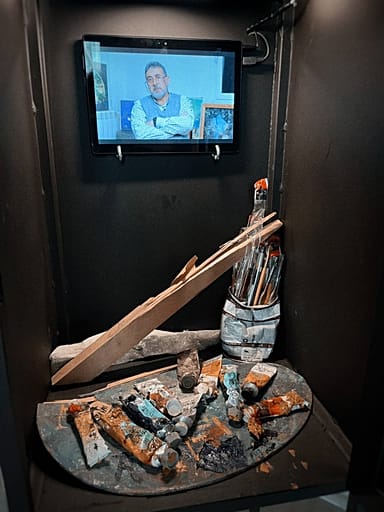
For those who lived it and those who never knew it
From the outset, the organisers did not want the exhibition to be aimed only at people from the South, but also at Lebanese whose knowledge of the region is limited to what nightly news bulletins convey – a reality that is hard to deny. Abi Rached believes that Lebanese people have lived the war in different ways, and that the South has been present in public debate, but the experiences of its inhabitants have not truly been listened to.
She adds that the family album photos coming from villages in the South could be photos of any family in Lebanon, stressing that the core idea is not to separate "us" and "them", but to look for the common ground that brings Lebanese together, whatever their regions or experiences. In this sense, talking about the South becomes a way of talking about Lebanon as a whole, rather than a single region.
Abi Rached believes that archives, keepsakes and artistic documentation constitute a recognition of people’s histories and experiences, and safeguard roots, identity and shared memory. The project is meant to document the exceptional beauty of South Lebanon, the intimate relationship between residents and their land, the stories passed down through generations and the traditions that gave meaning to everyday life – alongside the shocks and repeated losses endured by people in the region over decades.
She argues that efforts to preserve memory should extend to all parts of Lebanon, since any attempt to reinterpret the country’s history and present is inseparable from this process, just as pre-war archives have helped shed light on Lebanon’s current reality.
Interactive intentions
A visit to the exhibition does not end with viewing the works and drawing a curtain over them. Spaces have been set aside for writing messages and memories, turning the audience into a vital contributing partner in creating the content.
Curator Nour Nasr explains that more than 130 messages have now become part of the exhibition itself, after many visitors wrote to their villages in South Lebanon, to homes that no longer exist, or to loved ones who have left this world. She says this embodies the idea behind "Tell me, South" from the start: that it should not be a finished, definitive exhibition, but one that is constantly growing through the memories and contributions of its visitors.
In an interview with Euronews Nasr shares that reading these messages was one of the most powerful moments for the team, as feelings of loss and longing recurred strikingly throughout. Some visitors wrote that the first place they wished they could visit was the graves of their loved ones, while others recalled grandparents, summer evenings and the simple everyday life they once knew in the South.
According to Nasr, these messages showed that people’s relationship with the South is not just tied to a place, but extends to family, memory, belonging and identity. For that reason, the organisers were keen to provide spaces that invite visitors to remember and share, whether through notebooks with open questions or through the design of the exhibition itself.
Nasr stresses that what affected the team most was the generosity shown by visitors in sharing their stories and memories. She hopes every visitor will leave knowing that South Lebanon is bigger and more complex than the image condensed in the news, and that they will carry away a story, a memory or even a new question. Most importantly, she hopes they will feel that everyone’s story deserves to be heard, because sharing memories makes them a collective responsibility that brings people closer to one another.
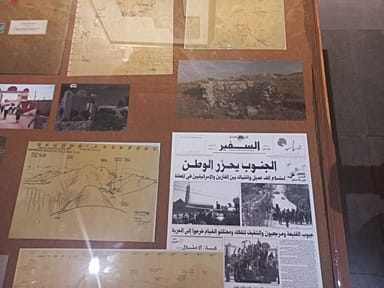
"As if I were seeing the South for the first time"
Jana, a 22-year-old visitor, says she had always heard about the liberation of the South (in 2000) and the Khiam detention centre, but felt as if she had actually lived those moments inside the exhibition after watching the recordings and listening to testimonies from those who experienced them. She was seized by an urge to cry.
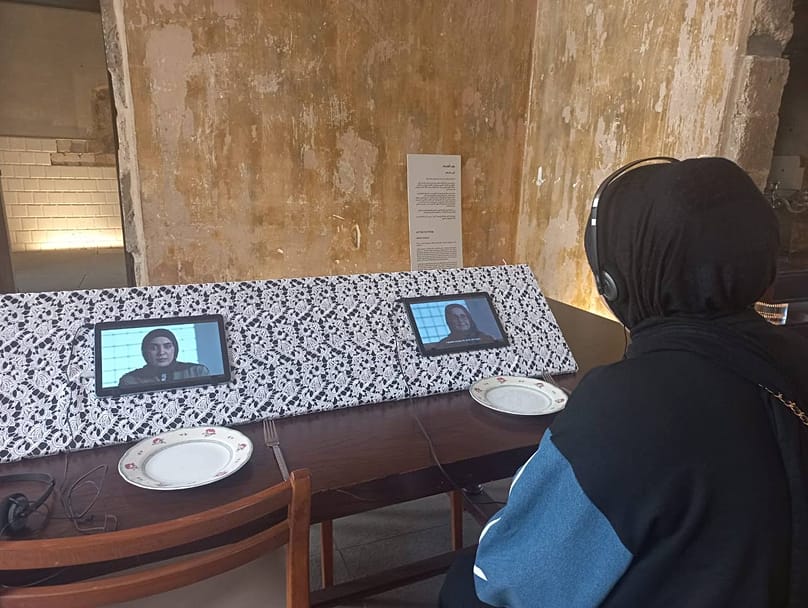
She believes what sets the exhibition apart is that it does not simply display pain, but places it alongside hope. On one side she listened to stories of people who lost their homes or lived through displacement, and on the other she saw photos of villages and everyday life before the destruction. That made her feel that the South is not just a battlefield, but a place full of life and memories.
She says that throughout the war she never felt she truly understood what people in the South were going through, because social media was awash with conflicting narratives and political divisions. The exhibition, by contrast, gave her the chance to listen to people themselves, through their voices and images, far from any attempt to convince her of a specific point of view. She adds that combining sound and image made the experience more powerful, and she left captivated by the idea of the South’s inhabitants’ determination to hold on to their land and their profound attachment to it.
Nawal, who's 47, also went through the experience. Her tour of the exhibition brought back memories dating back 26 years, when she and her family returned to their village after the liberation. She says those moments were among the happiest days of her life, and that the exhibition took her back to them, with all the feelings, joy and nostalgia they held.
A different return in September?
In recent weeks, many people have brought photos and family albums to be added to the exhibition, according to Abi Rached. Among them are around a hundred photos donated by a woman from the Bint Jbeil district, along with dozens of other images from Nabatiyeh al-Fawqa and the occupied Beaufort Castle, which will be displayed when the exhibition reopens in September.
Abi Rached believes the importance of the project lies not in collecting archives in themselves, but in acknowledging what people have lived through and protecting their stories from being forgotten. For her, an archive is not a simple retrieval of the past or revival of memory, but an affirmation of existence, a safeguarding of roots and identity, and a refusal to allow these experiences to be erased from collective memory.
One last question remains before the exhibition closes its doors for the summer break: will it return in the same form in September? For Abi Rached the answer is clear: "Since it opened, the exhibition has been changing constantly, with every drawing, photo and new memory visitors leave behind. Its essence, however, will remain as it is, because six weeks were not enough for an exhibition of this kind."