
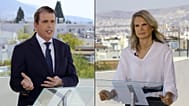
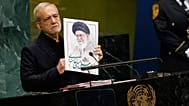



























Also in this newsletter: Former US commander general Ben Hodges reacts to the signing of the US-Iran peace deal, and former French Economy Minister Bruno Le Maire tells Euronews the EU needs to function as a core group of six.
Hello and welcome to Thursday. I'm Mared Gwyn.
 ADVERTISEMENT
ADVERTISEMENT
ADVERTISEMENT
In the last few hours, the presidents of the US and Iran have signed copies of the US-Iran Memorandum of Understanding, with mediator Pakistan saying the peace deal is now in effect.
Oil prices are down this morning on the prospect of the re-opening of the Strait of Hormuz, with Brent crude futures falling below €70 per barrel, the lowest level since the war began at the end of February.
But there are lingering doubts. Speaking live to Europe Today earlier, former US commander general Ben Hodges said that the “fact that Israel and Lebanon are not in the deal means potential for Israel and Hezbollah to restart fighting is very high”. Watch.
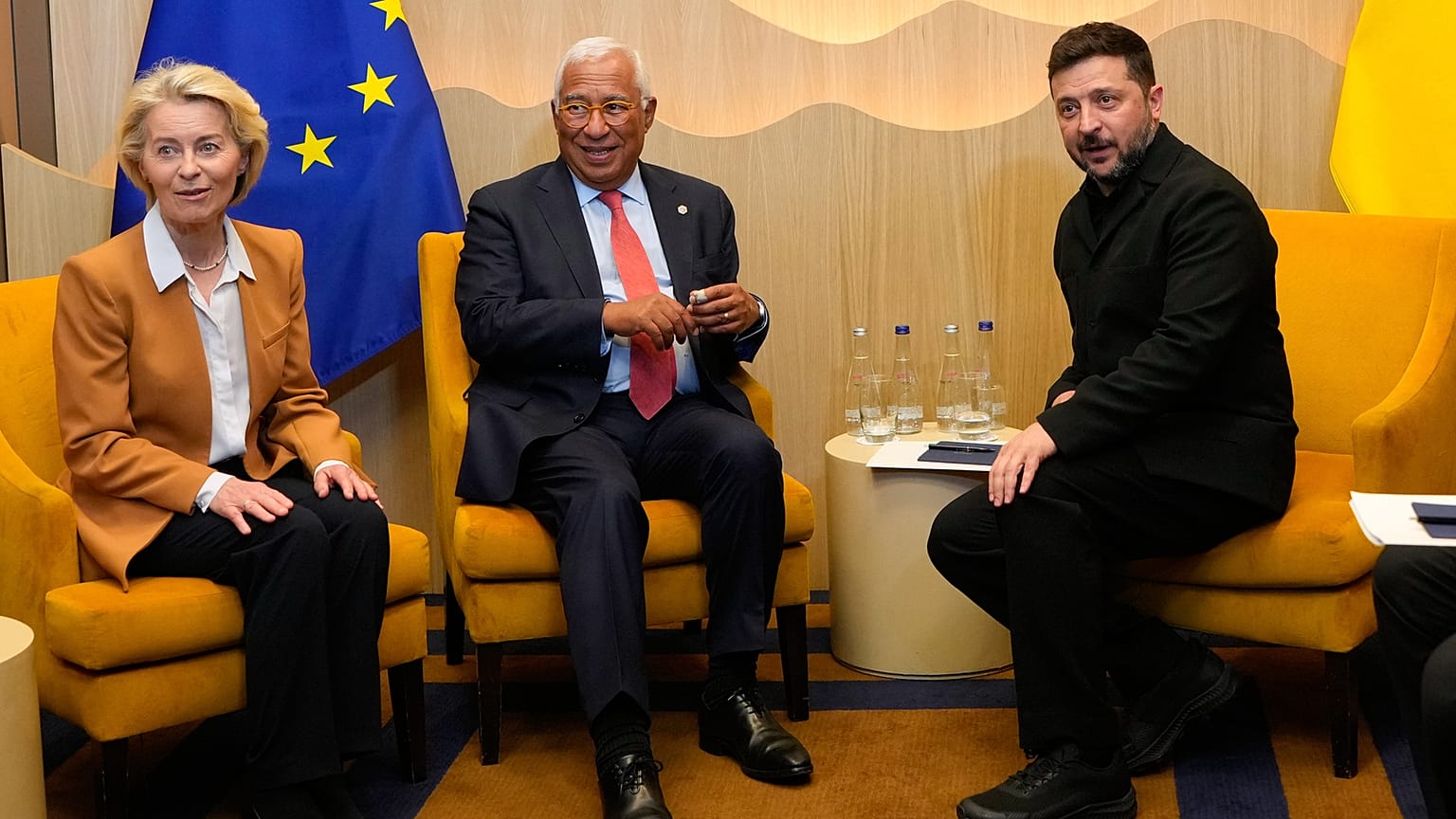
From Évian to Brussels: Meanwhile, after three intense days of G7 talks on the shores of Lake Geneva, the focus shifts to Brussels this morning. As our Ukraine correspondent Sasha Vakulina reports, Ukrainian President Volodymyr Zelenskyy is set to attend a gathering of the Ukraine Defence Contact Group today before joining the EU leaders’ summit later tonight.
It comes after a G7 summit where Ukraine secured significant new pledges of support from world leaders, bolstering its defences and diplomatic leverage against Russia after months of fractious transatlantic debate.
The G7 joint statement – endorsed by President Trump – committed to increased deliveries of weapons, including air defence systems and long-range capabilities, while signalling the "right moment" has come to tighten the screws on Russia's energy sector.
It’s a major win for European leaders who have struggled to secure Trump’s endorsement on their Ukraine policy, and after the White House waived sanctions on Russian commodities in a bid to cushion the impact of the Iran war on the global economy.
But details and timelines are ambiguous, and the focus now shifts to how European leaders can make the G7 commitments a reality, as the EU’s 27 leaders gather in Brussels for a two-day summit.
As my colleague Jorge Liboreiro reports, today’s talks will focus on Russia's invasion of Ukraine, and the shockwaves from the Chinese economy. The issue of the EU’s long-term budget will be left until tomorrow.
Focus on Ukraine: Joined by Zelenskyy, European leaders are likely to want to capitalise on new momentum in finding a sustainable, lasting peace for Kyiv – after Trump promised to shift his focus to Ukraine after cutting a peace deal with Iran,
António Costa, the President of the European Council, has made "brief contacts" with Russia at a "diplomatic level” to “open communication channels, but nothing was discussed on substance", an EU official confirmed ahead of the summit.
But member states remain sharply divided on the idea of direct talks, with the process of appointing an EU envoy to the negotiations still in limbo.
Italian Prime Minister Giorgia Meloni, one of the first proponents of naming an envoy, told the G7 summit that the appointee should not come from a big member state, but rather from a “middle power”.
China shock: Talks will then shift to what leaders see as an unsustainable trading relationship with China.
As Jorge reports, Brussels has concluded something must change in the relationship to avoid an all-out confrontation. Last year was the first on record that the 27 member states, without exception, posted a trade deficit with Beijing. Fears of de-industrialisation have gone from abstract to tangible.
"We're not naive anymore. China's five-year plan is an attack on our market," a second senior diplomat said. "The cost of action will be less than the cost of inaction. That's something that's not disputed now and that you wouldn't have heard a few years ago."
Though the grim diagnosis is widely shared, the prescribed medicine is still under careful consideration. Some member states, like France, Poland, Belgium, the Netherlands, Sweden, Denmark and Lithuania, favour a more assertive stance to correct the profound imbalances in trade relations and crack down on Beijing's subsidies.
But others, like Germany, Spain and Greece, are hesitant to come out guns blazing against China, fearing devastating retaliation and loss of business opportunities.
The divisions are set to play out during dinner on Thursday, which has been designed as an open exchange to allow leaders to speak their minds. Jorge has more details in this must-read preview.
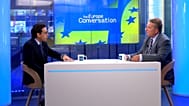
Le Maire pitches E6: In other news, former French Economy Minister Bruno Le Maire told Euronews last night that a “Europe with six core countries – France, Germany, Italy, Spain, Poland, and the Netherlands – instead of 27 countries is the best way of reinforcing Europe, of facing the threat posed by many empires around the world.” Watch his comments and the reactions on our live morning show.
NATO defence ministers huddle in Brussels; Rutte headed to Washington to smooth NATO tensions
NATO defence ministers are meeting in Brussels amid cautious optimism over Trump’s Iran deal. Allies hope US President Trump will be more convivial towards them if he's no longer consumed by a costly conflict, our correspondent Shona Murray reports.
US Secretary of Defence Pete Hegseth will join his counterparts to discuss – among other things – the role NATO allies can play in reopening the Strait of Hormuz, the critical waterway which has been effectively shut down since the US-Israel war on Iran.
A coalition of NATO allies led by France and the UK are due to begin a mission aimed at re-securing the Strait using minesweepers, naval assets and expert personnel.
Thursday's gathering at NATO HQ is also the final staging post ahead of the annual NATO summit in Ankara from 7-8 July.
As first reported by Euronews, NATO Secretary General Mark Rutte is traveling to the White House to meet US President Trump om Tuesday to lay the groundwork ahead of the summit.
NATO countries had been bracing themselves for the wrath of Trump after he accused them of abandoning the US during the war. Allies said they were under no obligation to get involved as the US-Israel war was not a matter for NATO.
As scooped by Shona, NATO Secretary General Mark Rutte will head to Washington next week as allies seek to smooth over transatlantic tensions ahead of NATO's annual summit in Ankara, Turkey, in July.
European-led efforts to restore freedom of navigation through the Strait of Hormuz following the US-Iran agreement to end hostilities are expected to feature prominently in the discussions.
More from our newsrooms
UK minister ‘very confident’ of getting triple EU reset deal done at July summit. Minister for EU relations Nick Thomas-Symonds tells Euronews he’s “very confident” London and Brussels will close new pacts on agri-food exports, electricity and youth mobility when they convene for a summit in July, as domestic pressure mounts on his government. Watch the interview.
Synthetic opioids: can Europe keep up with a new drug created every week? Fifty new drugs were detected across Europe in 2025 alone, many of them highly potent synthetic opioids. Can the EU’s drugs strategy keep pace with an increasingly dangerous and fast-moving drug landscape? Evi Kiorri breaks it down.
We're also keeping an eye on
- NATO defence ministers gather at the NATO HQ in Brussels. US Defence Secretary Pete Hegseth will be in attendance. Ukraine’s Zelenskyy to join ministers for a meeting of the Ukraine Defence Contact Group.
- The EU’s 27 leaders gather in Brussels. Zelenskyy expected to join at 17.00 CET.
That’s it for today. Jorge Liboreiro, Sasha Vakulina and Shona Murray contributed to this newsletter.