












A new cultural project from Uzbekistan is challenging how the history of science is usually told. Known as Echo of Enlightenment, the initiative places Central Asian scholars back into a global narrative that often begins in Europe and skips several centuries of intellectual exchange along the way.
 ADVERTISEMENT
ADVERTISEMENT
ADVERTISEMENT
Led by the Center for Islamic Civilization in Tashkent, the project is part of a broader effort to present Uzbekistan not only as a historical crossroads, but as a birthplace of global ideas that continue to shape modern life – from algebra and astronomy to medicine and cartography.
Reframing a familiar story
The initiative builds on a message voiced by Uzbekistan’s President Shavkat Mirziyoyev at his United Nations address in 2017: that Islam’s historical emphasis on learning, inquiry and tolerance offers an alternative to narratives shaped by extremism and ignorance.
Rather than addressing this argument through policy or politics, Echo of Enlightenment takes a cultural route – using film to spread knowledge and showcase the thinkers of the Islamic Golden Age whose work later fed into European scientific traditions.
History, told cinematically
At the centre of the project is a 10-part documentary series, each episode dedicated to a scholar or cultural figure from the Islamic Golden Age with connections to the territory of present-day Uzbekistan. The films combine dramatic reenactment, expert commentary, historical research and modern animation to explain complex ideas and bring the stories to life.
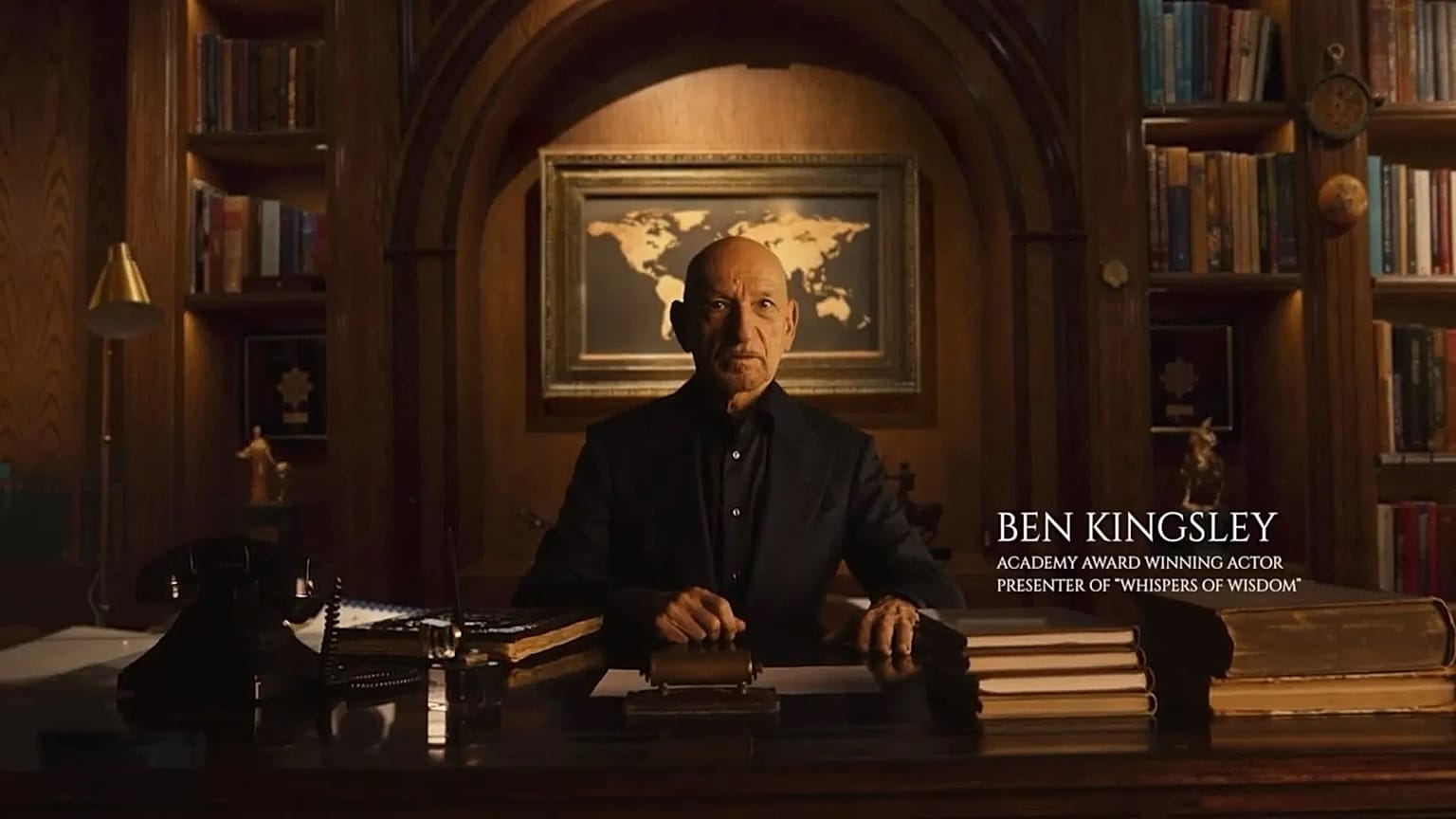
Narrated by Oscar-winning actor Sir Ben Kingsley, known for his roles as Mahatma Gandhi, Nizam from The Prince of Persia and Avicenna in the film The Healer, the series adopts a cinematic tone familiar to global streaming audiences, providing a perfect balance of entertainment and education. Manuscripts, architectural remains and historic sites across Central Asia and beyond provide the visual backbone, while recent scholarship anchors the storytelling.
Among the featured figures are Muhammad al-Khwarizmi, whose work laid the foundations for algebra and algorithms; Ahmad al-Fergani, whose astronomical calculations later influenced explorers like Columbus; and Abu Rayhan al-Biruni, a polymath and early pioneer of fields such as geography and anthropology.
Another episode focuses on Ibn Sina, known in Europe as Avicenna, whose Canon of Medicine remained a standard university text well into the early modern period.
Central Asia’s ‘Second Renaissance’
The series also devotes significant attention to the Timurid era, often described by historians as Central Asia’s “Second Renaissance”. Viewers are introduced to figures such as Amir Timur, the first Timurid ruler who turned Samarkand into a centre of learning; Mirzo Ulugbek, the 15th-century astronomer whose calculations of the Earth’s year were among the most accurate of his time; and Ali Kushchi, who helped spread astronomical knowledge westward.
Cultural life is not neglected. Episodes on Alisher Navoi, Kamoliddin Behzad and Zahiriddin Muhammad Babur explore how literature, miniature painting and political leadership developed alongside scientific inquiry, reinforcing the idea that knowledge systems rarely exist in a vacuum.
One of the most visually striking instalments recreates Ulugbek’s 15th-century observatory and astronomy school in Samarkand, highlighting their influential role as beacons for scientific inquiry.
From screen to institution
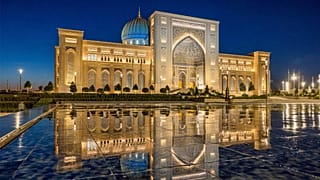
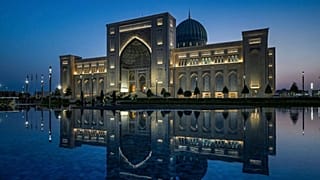
The documentary series feeds directly into the wider work of the Center for Islamic Civilization, which is set to open fully to the public in Tashkent in April 2026. Its architectural and curatorial centrepiece is the Mushaf of Uthman – one of the world’s oldest surviving Qur’an manuscripts, dating back to the 7th century and listed on UNESCO’s Memory of the World Register.
Displayed beneath a vast dome alongside 114 rare Qur’ans tracing the evolution of Islamic calligraphy, the manuscript anchors the Center’s broader narrative of faith, scholarship and cultural continuity. The complex also houses the Spiritual Administration of Muslims of Uzbekistan.
Located in Tashkent’s historic Hastimom district, the Center combines exhibition spaces with research laboratories, manuscript archives, restoration workshops, conference halls and offices for international research teams.
A global conversation
Beyond national storytelling, the project aims to recover manuscripts and artefacts linked to Central Asia that now sit in foreign collections, and to reconnect them – physically or digitally – with their place of origin. Dynasties such as the Samanids, Karakhanids, Khorezmians and Timurids form part of this wider historical map.
In doing so, Echo of Enlightenment makes a broader argument: that modern science emerged through centuries of cross-cultural exchange, not in isolation. For European audiences, the series offers a reminder that ideas long taught in Western universities often have roots further east.
Rather than nostalgia, the project presents continuity – a case for seeing Islamic civilization not as a closed chapter, but as an active contributor to the shared intellectual history of today’s world.