




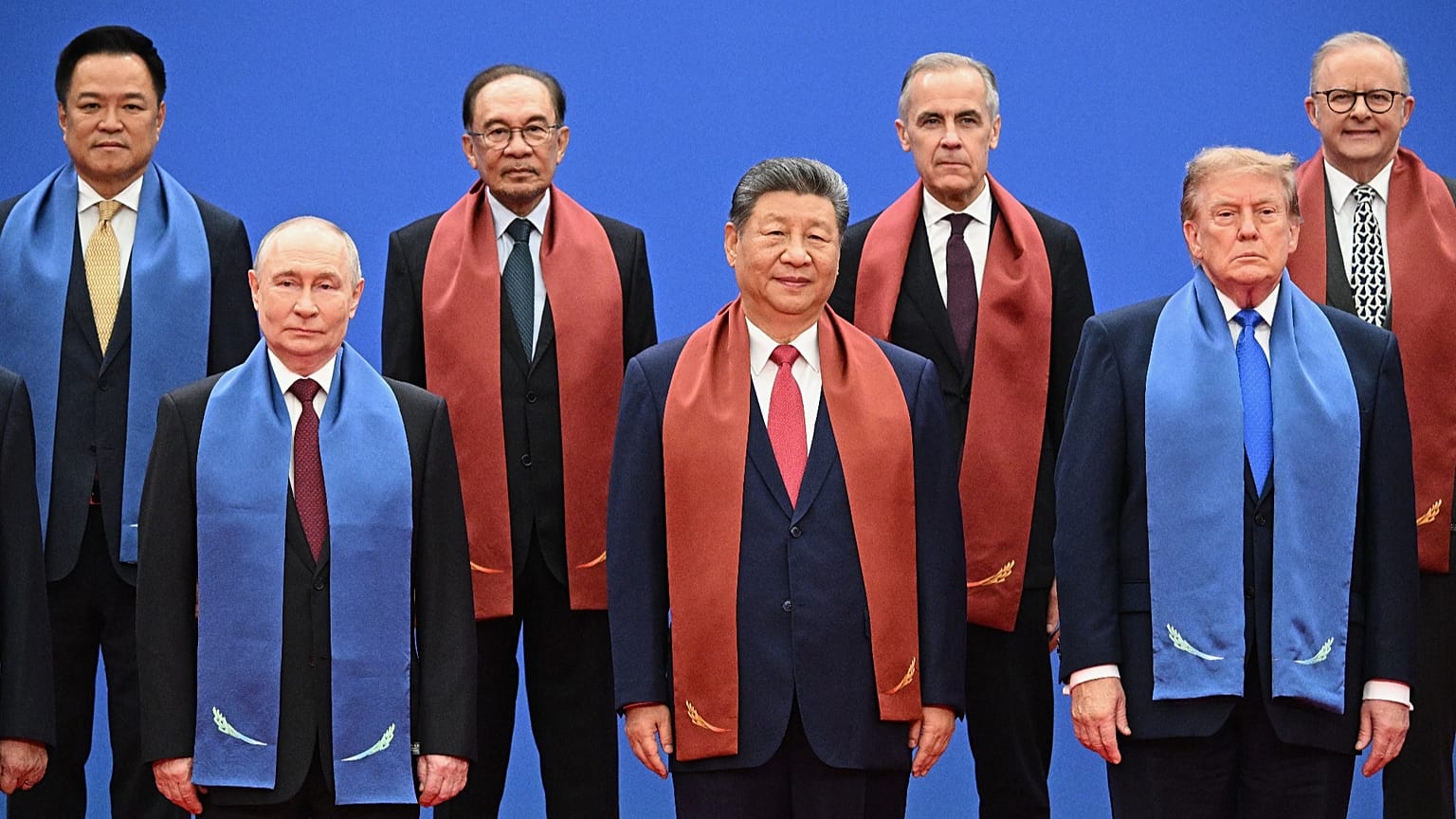














Trump declared that “we have great responsibilities to solve problems that affect the entire planet,” as he joined China's Xi and Russia’s Putin for the historic trilateral summit in China, while Xi said “the world is at peace when great powers live in harmony.”
The unprecedented trilateral meeting between US presidents Donald Trump with China’s Xi Jinping and Russia’s Vladimir Putin began on Thursday in Shenzhen as the first such summit between the leaders of three global powers, possibly marking a pivotal moment in world history.
 ADVERTISEMENT
As the leaders met, US president Donald Trump said that they “will talk about all problems that are being discussed in the world,” and that “we have great responsibilities to solve problems that affect the entire planet.”
“Let’s see if we can get something done,” Trump said, adding that the “three countries are uniquely positioned to discuss nuclear weapons” as “too often past leaders avoided talking to leaders they had disagreements with.”
“No peace is ever forged by declining opportunities,” the US president said.
Chinese president Xi Jinping joined Trump in declaring that their summit “has groundbreaking significance” as “the world is at peace when great powers live in harmony” and that the “three countries should work together to address global challenges.”
“Adversity reveals true responsibility,” the Chinese president said.
Russian president Vladimir Putin said that Russia’s war in Ukraine will be part of the talks, stating that “we have shared interests in Ukraine.”
The United States and China want to help end the war in Ukraine, Trump said on Thursday as he met his Chinese counterpart Xi Jinping right before the trilateral, as their third substantial meeting this year.
Xi said that relations between the United States and China have been “generally stable and improved” during Trump’s presidency.
“The efforts you have made are there for all to see and will go down in history,” Xi said.
The US president praised their friendship and their shared interest.
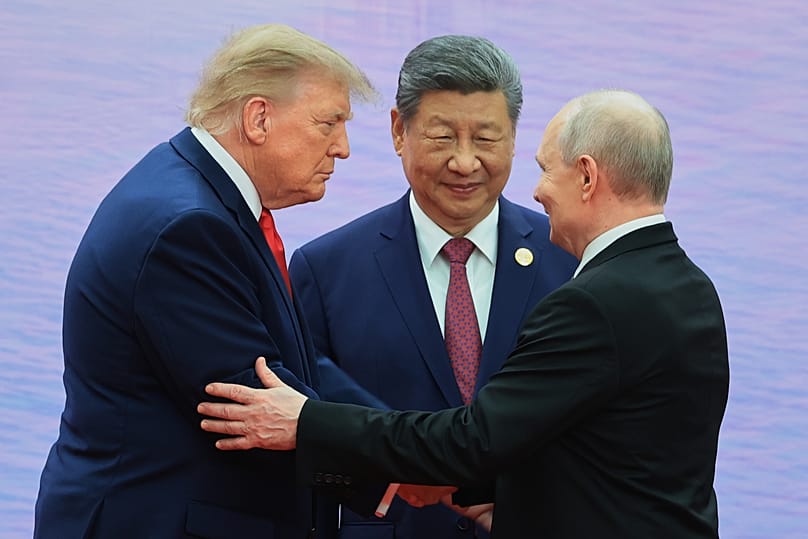
Trump also held talks with Putin, marking the first time the leaders have held talks since their discussions in Alaska last year that failed to broker a deal to ease Russia's all-out war in Ukraine.
“Wonderful things can come out of this — or at least start,” Trump said after joining Putin for the one-on-one meeting on the sidelines of the Asia-Pacific Economic Cooperation Summit, greeting him with "who is he ? He is my friend !"
The three-president meeting at the Kylin Villa in Shenzhen, which analysts expect to be heavier in symbolism than concrete breakthroughs, comes with Russia's offensive in Ukraine approaching the five-year mark.
The US is bogged down by his war with Iran that has choked oil supplies and pushed up consumer prices worldwide, while an ascendant China is looking to strengthen its hand in East Asia. Russia is hoping for a momentum in its favour as it continues to push with its maximalist demands from the West as it continues its all-out war in Ukraine.
The summit has stoked fears that the three powerful men may seek to divide the globe into spheres of influence, for example by making decisions impacting the fate of Ukraine over the heads of Kyiv or Europe.
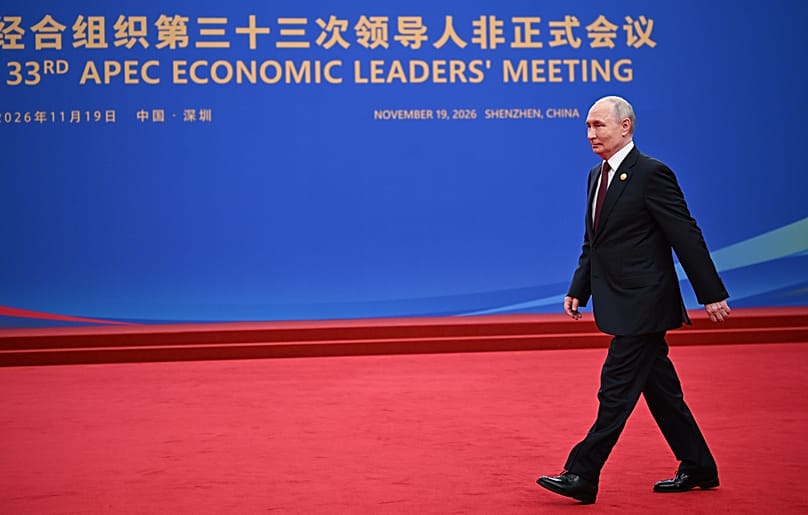
A wider debate is raging among observers on social media whether the summit can be dubbed a Yalta 2.0, while others claim it should rather be dubbed Munich 1938, given the fundamental differences in time, space and the protagonists.
To underline the weight of the summit and in balance with the focus by European and wider Western media, the Asian television stations and newspapers are focusing on the possible consequences for their own countries.
The Chinese state media, particularly Xinhua and People's Daily, are framing the APEC summit, including the trilateral, around Xi Jinping's diplomatic leadership, multilateral cooperation and China's commitment to free trade. Beijing is presenting the trilateral summit as an opportunity to promote global peace and strategic stability among major powers.
In the South Korean media, the recurring theme is concern over a potential “Yalta 2.0” conference, in which the leaders could discuss the future of the Korean Peninsula without Seoul's participation. Yonhap reports that the South Korean government has conveyed these concerns to both Washington and Beijing, while coverage is also focusing on the possibility of renewed US–North Korea dialogue and the risk of tacit acceptance of North Korea's nuclear status.
The Japanese media are focusing on strained Sino-Japanese relations, with one main TV channel reporting on the first face-to-face encounter between Japanese Prime Minister Sanae Takaichi and Chinese president Xi Jinping in approximately a year, while another one drew attention to the contrast between China's warm reception of Trump and Putin and its comparatively muted welcome for Takaichi. No formal bilateral meeting between Takaichi and Xi has been scheduled and the Japanese media reported that Takaichi was seeking a phone call with Trump following the trilateral summit.
Germany was also due to host Ukraine's allies for a "Coalition of the Willing" meeting on Thursday involving US envoys Jared Kushner and Steve Witkoff.
This is a developing story and our journalists are working on further updates.