

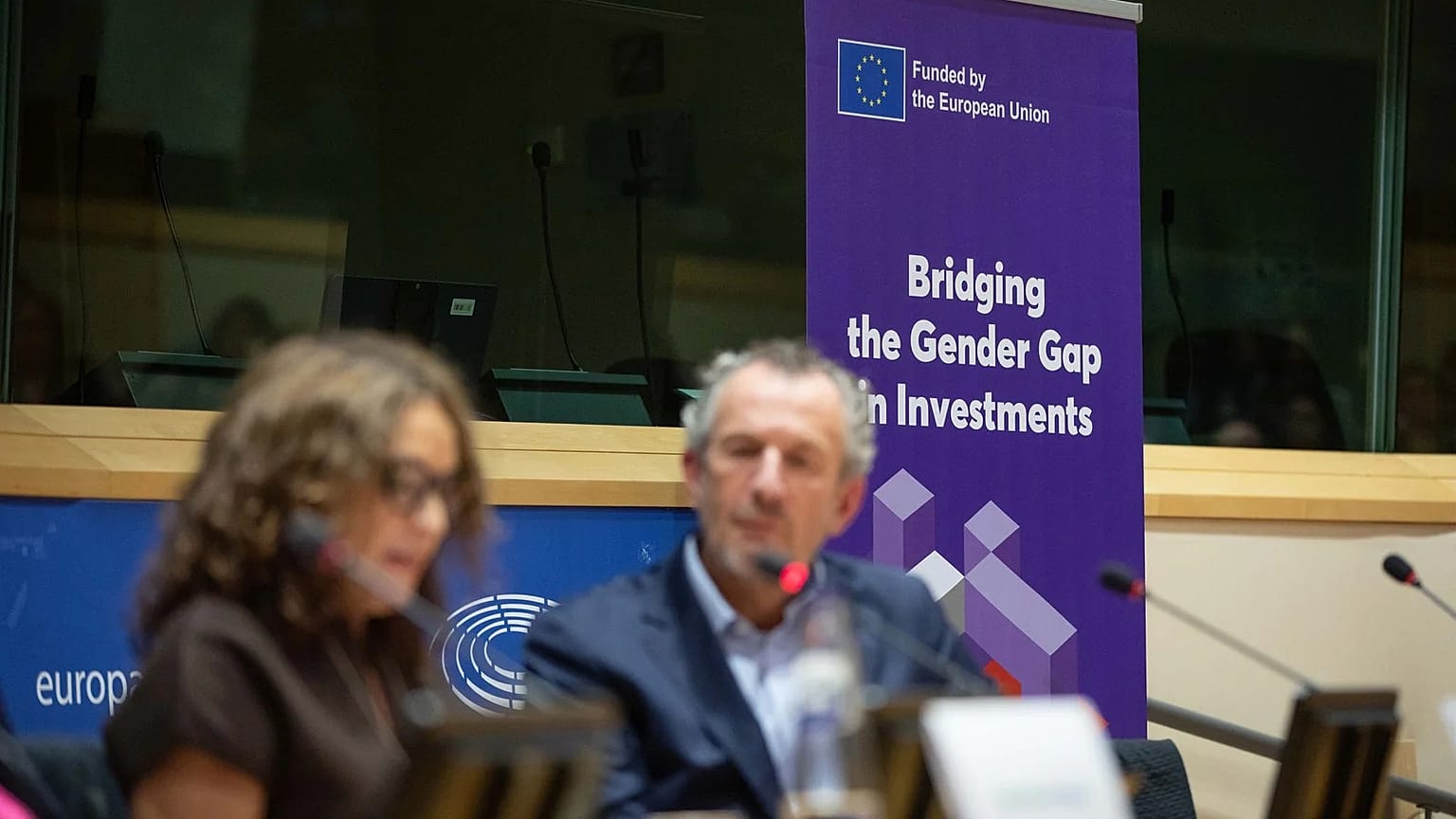













A new EU-backed study has laid bare the scale and structure of Europe’s gender investment gap, with a sharp focus on deep tech. These technologies will shape the continent’s economic resilience, security and industrial competitiveness over the coming decades.
 ADVERTISEMENT
ADVERTISEMENT
ADVERTISEMENT
Deep tech companies are built on scientific breakthroughs and advanced engineering, often emerging from universities and research laboratories. They span fields such as artificial intelligence, advanced materials, semiconductors, robotics, quantum technologies, climate and energy systems, and health and biotech. Unlike consumer-facing digital startups, these firms usually require long development cycles, specialist expertise and substantial upfront capital before they can reach the market.
For the European Union, this matters. Deep tech underpins both the green and digital transitions and plays a central role in reducing reliance on external technologies in critical sectors such as energy, health and security. Who gets funded – and who does not – directly shapes which technologies Europe will be able to scale.
Measuring a gap that has long been visible but poorly defined
The study was designed around two goals. The first was to consolidate data which can measure the gender investment gap across Europe both consistently and transparently. The second was to understand why the gap persists, particularly in deep tech, and what could help close it.
Gender-disaggregated data exist, but they remain fragmented. Definitions differ, coverage varies by country, and many datasets are not publicly comparable. As a result, policymakers and investors struggle to track progress or design targeted interventions.
“We have very good visibility in research. We know the numbers for scientists and project leaders,” said Katerina Svíčková, Head of the Gender Sector at the European Commission’s DG Research and Innovation. “But once you move into innovation and venture funding, the trail goes colder.”
A first step: the Gender Gap in Investments Dashboard
One of the project’s main outputs is a prototype data repository: the Gender Gap in Investments Dashboard, developed by Dealroom. The dashboard brings together data on founding teams and venture capital outcomes across Europe in a single, accessible interface.
It is not intended as a finished product. Instead, it serves as a foundation that can expand over time, incorporate additional public and private data sources, and offer a more detailed picture of how gender, sector, funding stage and geography interact. The longer-term ambition is to support a shared European data infrastructure on gender and investment.
“Once investors start benchmarking themselves, they want to improve,” said Lucrezia Lo Sordo, Senior Research Officer at Invest Europe. “Data create peer pressure – and peer pressure works.”
What the numbers already show
Even at this early stage, the patterns are clear.
Across Europe, startups with at least one woman founder account for just 14.4% of venture capital rounds and receive 12% of total VC funding. In deep tech, the imbalance is sharper still. Around 80% of deep-tech companies are founded by all-male teams, which attract nearly 90% of venture funding.
Given the capital-intensive nature of deep tech, these disparities have long-term consequences. Early funding decisions influence which technologies survive long development cycles and which fall away before they reach scale.
“Empowering women innovators is not just a matter of fairness – it is vital for Europe’s competitiveness, resilience, and future growth,” said Jean-David Malo, Acting Director for the European Research Area and Innovation at the European Commission.
Beyond the data: what founders and investors say
Alongside the data analysis, the project team conducted 81 in-depth interviews and held 12 events across Europe, engaging more than 1,000 participants. Across countries and sectors, similar barriers came up repeatedly: difficulty accessing early and scale-up capital, credibility gaps in fundraising, especially in deep tech, fragmented support systems and a lack of diversity in investment decision-making roles.
Several founders were blunt about what they felt was missing. “We don’t need more mentoring – we need money,” said Maria Teresa Pérez Zaballos, founder of EndoGene. “Men get funding; women get advice.” This also applies to EU-supported programmes. WomenTechEU, which provides €75,000 in early grant funding and visibility to women-led deep-tech startups, received very positive feedback. However, in a sector where ideas must be tested and re-tested in expensive laboratories, funding intended to last a year can be used up within a month or two. The next available EU instrument – the EIC Accelerator – offers up to €2.5 million but requires a much higher level of technical maturity. “There’s a huge gap between €75,000 and €2.5 million,” said Pérez Zaballos. “That gap is where many women-led deep-tech companies fail.” And that gap, the study recommends, ought to be closed.
Others pointed to differences in readiness and risk-taking. “Many women wait until they feel ‘ready’ – and that delays entrepreneurship,” said Aneta Ozieranska, founder of Oligofeed. The report highlights the importance of earlier, hands-on exposure to entrepreneurship and innovation. Programmes such as HK Unicorn Squad in Estonia show how structured, practical learning in technology and problem-solving can normalise experimentation from an early age. Building on such models, the report recommends embedding entrepreneurial skills and innovation pathways earlier to widen the pipeline and reduce self-selection out well before funding decisions are made.
Why public investors matter
The study highlights the role public investment can play in shaping market behaviour. As major investors, EU-level and national public institutions have the ability to influence incentives, standards and expectations – and to crowd in private capital. “As public investors, we need to lead by example – in our teams, our governance and our investment decisions,” said Antigoni Lymperopoulou, CEO of the Hellenic Development Bank of Investments. “Diversity does not happen by accident.”
The European Innovation Council and the European Investment Fund were cited as key actors with the scale to influence how capital is deployed.
Changing who makes decisions
Several interviewees stressed that addressing the investment gap is not about lowering standards, but about broadening access to decision-making power.
“We don’t want to lower the bar. We want to widen the gate,” said Hanadi Jabado, Managing Partner at Sana Capital. “It’s not enough to have women on the website. We need women with carry, with votes, and with the power to invest.”
In the Netherlands, Invest-NL has taken a more explicit approach. “Incremental change is not enough — that’s why we decided to be more ambitious,” said Ulrike Kostense, Investment Principal at Invest-NL. “With our Diverse Manager Programme, we deliberately set a high bar: at least 50% of fund partners must be women or team members from a culturally or ethically diverse background. More diverse teams make better investment decisions.”
From insight to action
The evidence from both the data and research points to clear priorities for action: building a permanent European data hub on gender and investment; aligning definitions and reporting standards; closing the gap between early support and growth funding; using public capital more strategically to attract private investment; and improving connections across Europe’s fragmented funding ecosystem.
The study’s central conclusion is direct. Europe does not lack women innovators. It lacks systems that consistently measure, fund and scale them, particularly in deep tech.
“Gender equality isn’t just a fairness goal,” Svíčková said. “It’s a competitiveness goal. Europe can’t afford to waste talent – especially in deep tech.”