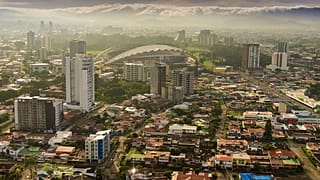














Amid profound transformations in the global economy, Costa Rica positions itself as a hub for resilient and forward-looking investment.
 ADVERTISEMENT
ADVERTISEMENT
ADVERTISEMENT
Global supply chains are being redrawn. Geopolitical tensions, trade fragmentation and pandemic-era shocks have pushed companies to rethink where they manufacture and invest.
In this shifting environment, resilience has become a defining factor in investment decisions. Companies are increasingly prioritising destinations that offer not only cost competitiveness, but also political stability, regulatory certainty, and strong connections to resilient supply chains — alongside high sustainability and ESG standards.
Adapting to this complex landscape has proven challenging for many players, but others have spent years building the foundations needed to thrive in a more uncertain world.
Costa Rica is one such Latin American nation emerging as a model for how to turn stability, talent and sustainability into a competitive advantage.
A long-term strategy for competitiveness
For four decades, Costa Rica has pursued a development strategy centred on education, trade openness and environmental stewardship. Over this time, the country has gradually transformed into one of the region’s most dynamic investment destinations, with leadership in advanced manufacturing, specialised services and high-value exports.
Today, more than 1,000 multinational companies operate in Costa Rica, 626 under the Free Trade Zone Regime, across industries ranging from life sciences and advanced manufacturing to digital services and corporate operations.
A large share of foreign investment in recent years has also come from reinvestment by companies already established in the country. Firms such as Boston Scientific, Bayer, Hologic and Resonetics have continued to expand their operations, reinforcing Costa Rica’s role within global value chains. In parallel, investment projects secured in recent years are expected to generate more than $830 million and over 12,000 jobs, underscoring the scale of ongoing activity. This trend is also evident in recent announcements such as the arrival of medical device company Insulet, which represents one of the largest capital commitments made by a multinational in the country in recent years.A study by the Trade and Investment Promotion Agency of Costa Rica (PROCOMER) also indicates that 49 per cent of service-sector companies plan to expand their operations in Costa Rica over the next three years, reinforcing sustained confidence in the country’s business environment.
Democracy, sustainability and human capital
Beyond industrial development, Costa Rica’s competitiveness is underpinned by one of Latin America’s longest-standing democratic systems, a strong rule of law and an open economic model supported by an extensive network of trade agreements — elements that provide investors with regulatory predictability and legal certainty.
Sustainability is another defining feature of Costa Rica’s economic model. The country utilises its natural resources —geothermal and wind — to power one of the world’s most renewable electricity systems.
According to the Costa Rican Electricity Institute (ICE), around 98 per cent of Costa Rica’s annual electricity needs come from renewable sources, reinforcing its appeal for companies seeking environmentally responsible production locations.
Human capital has also played a central role in the country’s economic transition. Costa Rica has one of the most highly educated workforces in Central America, with tens of thousands of students graduating each year from universities and technical institutes in fields such as engineering, business services and information technology.
In 2025 alone, more than 11,500 people were placed in jobs with companies operating in the country through talent programmes supported by the Trade and Investment Promotion Agency of Costa Rica (PROCOMER), reflecting the scale of workforce development efforts linked to the investment ecosystem.
“Long-term investment decisions aren’t made on impulse -they’re grounded in trust. They happen when a country consistently demonstrates stability, technical capabilities, and the ability to execute. Costa Rica has evolved from being an efficient destination to becoming a strategic partner within high-value global supply chains. That evolution is what now allows us to compete in sectors that were once out of reach”, said Laura López, CEO of PROCOMER.
The rise of high-value exports
Known globally in the past for agricultural exports such as bananas and coffee, Costa Rica’s export profile also reflects a significant economic transformation.
Today, high-technology goods and knowledge-intensive services play a central role in the country’s trade portfolio. Through sectors such as life sciences, advanced manufacturing and specialised services, Costa Rica has become integrated into global production and innovation networks, where research, engineering and manufacturing increasingly take place across multiple locations.
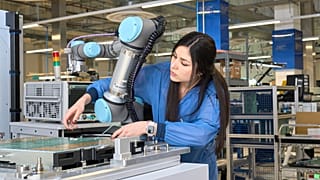
Nowhere is this transformation more visible than in the country’s growing leadership in precision manufacturing.
From endoscopy equipment to advanced surgical technologies, many of the medical devices used worldwide are now manufactured in Costa Rica.
Over the last eight years the medical equipment sector has quietly become the country's leading export Industry, doubling its export value in just four years to surpass €8.7 billion (USD$10 billion) in 2025 and representing 48 per cent of the country’s total goods exports.
Currently, more than 100 companies from the United States, Germany, Ireland, Sweden, Japan, Spain and other markets operate in the country, including Medtronic, Mozarc Medical and Trelleborg, producing a wide range of products, from surgical instruments to advanced diagnostic technologies.
As demand for healthcare technology rises globally, Costa Rica’s combination of skilled talent, supply-chain integration and political stability is reinforcing its role in the global health manufacturing ecosystem.
A sunny investment climate
As companies reassess their global operations in response to economic and geopolitical uncertainty, Costa Rica is strengthening its investment promotion strategy through the opening of its Investment Promotion Office (OPI) in California’s Silicon Valley in February 2026, aimed at deepening engagement with companies in advanced manufacturing and emerging technologies. A second office is also set to open in Singapore, expanding the country’s reach into Asian markets and reinforcing its position within key global innovation hubs.“Investment decisions today respond to a much more strategic and global logic. Companies are reorganizing their operations around ecosystems where they can develop critical capabilities and connect with innovation hubs. The opening of offices in markets such as the United States and Asia is a direct response to this dynamic, allowing us to be closer to where these decisions are being shaped”, said Mónica Umaña, Foreign Direct Investment Attraction Manager at PROCOMER.
As firms look to ‘nearshore’ production closer to North American markets, Costa Rica’s geographic proximity to the United States has become an additional advantage.
Efforts to expand technical education, encourage innovation and attract investment in emerging industries are expected to play a central role in the country’s next phase of development.
In an era where resilience is becoming a strategic priority for businesses and governments alike, Costa Rica shows how smaller economies can turn long-term stability into global relevance.