

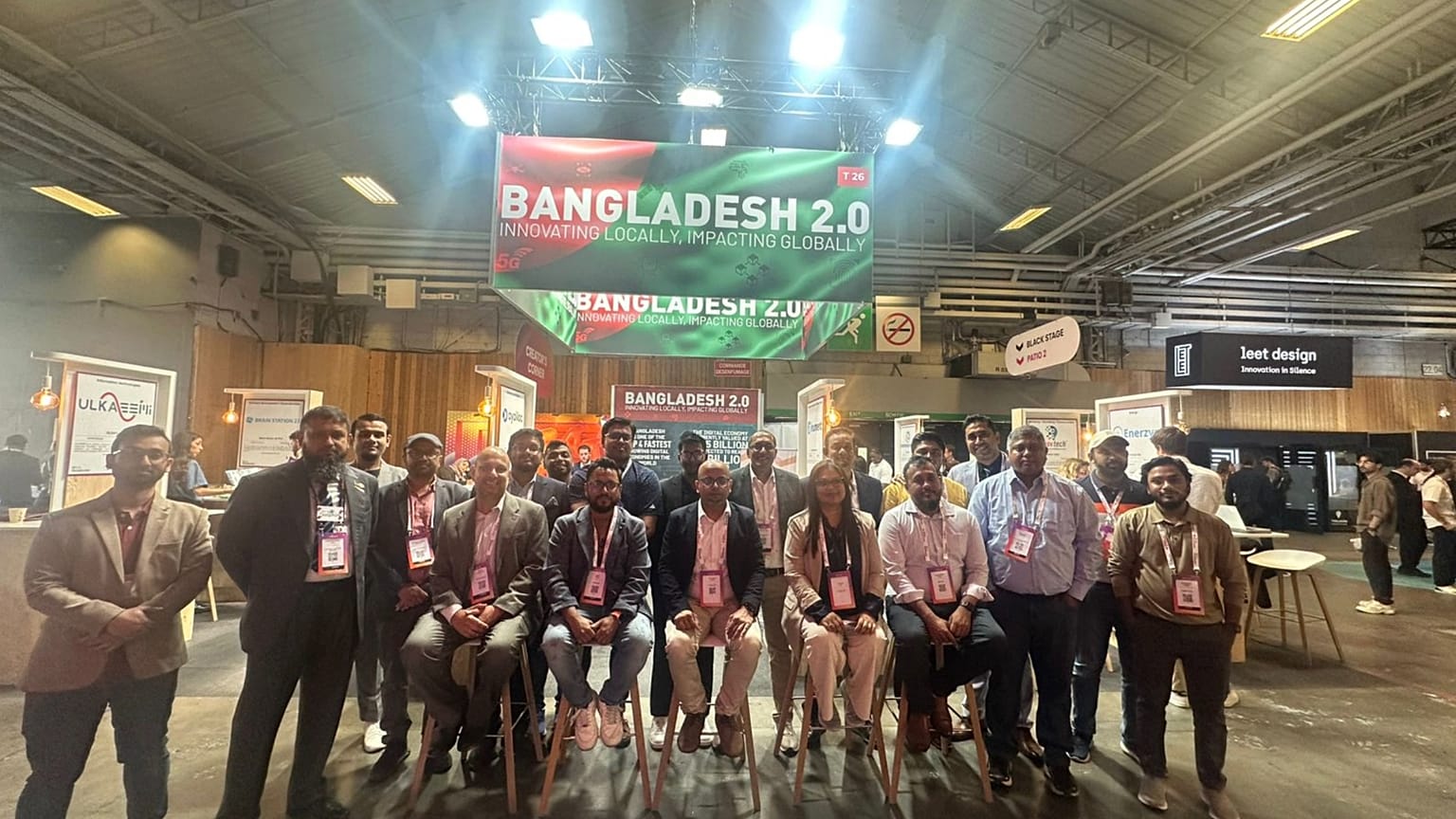














At VivaTech 2025, Bangladesh arrived with quiet confidence. Its national booth, emblazoned with the words: ‘Bangladesh 2.0: Innovating Locally, Scaling Globally’, was also the place where tech leaders and government representatives discussed the country’s strikingly ambitious digital vision.
 ADVERTISEMENT
ADVERTISEMENT
ADVERTISEMENT
We spoke to Faiz Ahmad Taiyeb, Special Assistant to the Chief Advisor within the Ministry of ICT, to discover how Bangladesh’s rising digital economy is making waves, backed by young talent, government ambition, and a globally relevant tech ecosystem.
Global cooperation, regional confidence
Often overlooked in South Asia’s tech narrative due to the presence of larger players, Bangladesh is increasingly drawing interest from international tech companies looking for a scalable workforce, long-term policy alignment and bold innovation.
From ‘cloud first’ policies to drone-powered data repositories, Bangladesh is building a future-focused ecosystem with leadership in diverse areas such as edtech, aggrotech, health tech, fintech and govtech. When asked whether Bangladesh is punching above its weight on the global stage, Taiyeb responded candidly:
“Bangladesh is a very young player in the [tech] industry. But, right at this moment, we are experiencing a completely new transformation, driven by Gen AI and other frontier technologies. With our talents available, [we] will not miss a thing.”
The power of youth: talent that scales
At the heart of Bangladesh’s tech rise is its young, tech-savvy population. Over half the country is under 28, creating a massive pool of trainable, digitally literate talent.
According to Taiyeb, Bangladesh “produces almost 25,000 IT, ICT and computer graduates, including electrical and related subjects” every year. This, he said, makes the nation “very well placed” in the regional ecosystem, increasingly attractive to software companies looking to discover and nurture tech talent.
As Europe grapples with skills shortages in advanced technologies, Bangladesh’s booming pool of ICT graduates presents not just an outsourcing solution, but a potential partner in innovation. “They can make their productions, software, and services scalable in a short time,” Taiyeb confirmed.
Bangladesh 2.0: comprehensive data-led governance
More than a promotional strapline, ‘Bangladesh 2.0’ represents a broader national push to accelerate the country’s digital transformation, acknowledging the importance of technology in governance to support sustainable future growth.
The government is placing digital development at the core of its national strategy. Central to this plan is a comprehensive digital framework aimed at modernising state infrastructure and supporting automation through the reshaping of civil service and digital legislation.
Part of this strategy is to introduce a national data repository uniting all the government ministries and divisions under a central database. The goal, Taiyeb explained, is to automate functions “from small city government to the city management or project management,” with legal frameworks and financial incentives in place to empower companies along the way.
Instead of developing this legislation independently, Bangladesh is bundling several key frameworks – including the Personal Data Protection Act, Cyber Safety Ordinance, National AI Policy, National Semiconductor Policy and National Cloud Policy – into a unified national strategy. “Bangladesh is one of the very young nations to integrate all these [frameworks] into one,” Taiyeb said.
Backed by proactive legal frameworks, Bangladesh is creating fertile ground for international partnerships, attracting frontier companies, boosting exports, and offering a roadmap for the next generation of innovation — all while keeping pace with fast-evolving technologies.
Guardrails for growth: regulating AI and digital safety
With scale comes the need for oversight. The government of Bangladesh is also placing a strong emphasis on safety, accountability, and oversight — particularly when it comes to emerging technologies like AI.
One of the country’s biggest moves is the publication of its first cyber safety law, alongside clearer and more consistent rules surrounding data usage and interoperability, particularly for critical infrastructure projects.
“[We] acknowledge AI as a kind of predator,” Taiyeb explained. “Our new cyber policy looks at the way that we adopt new technologies, mandating cyber operation centres for all providers of Critical IT Infrastructure (CII). This is one of the first [such laws] in the region. This type of policy will protect companies, both public and private.”
Taiyeb also cited the newly created National Data Governance and Interoperability Authority. “We will set the rules for data governance and support AI companies to position themselves in our ‘cloud first’ policies.” Beyond guardrails, the government also plans to introduce incentives as a way to encourage adoption of AI and other frontier technologies.
When taken together, these measures signal Bangladesh’s intent not just to attract investment, but to build a digital economy that is secure, competitive, and fit for the next wave of technological disruption.
Bangladesh
Bangladesh has emerged as a fast-growing hub for high-quality, cost-effective tech talent. The country has a strong pool of skilled software engineers, product designers, and AI/ML experts, increasingly sought after by startups and companies across Europe, the USA and Australia looking to scale quickly and effectively. High English proficiency, cultural alignment with Western markets, and a growing ecosystem of tech companies make Bangladesh an appealing choice for businesses in building offshore teams and accelerating product development.
For Europe, Bangladesh’s trajectory offers more than just an emerging market — it presents a serious opportunity for co-creation, particularly in a tech landscape that is rapidly adapting to new norms.
At a time when European companies are seeking scalable, secure, and policy-aligned partners beyond traditional tech powerhouses, Bangladesh can offer just that — not as a competitor, but as a strategic collaborator.